
How to Calibrate an Oscilloscope: ISO/IEC 17025 Step-by-Step
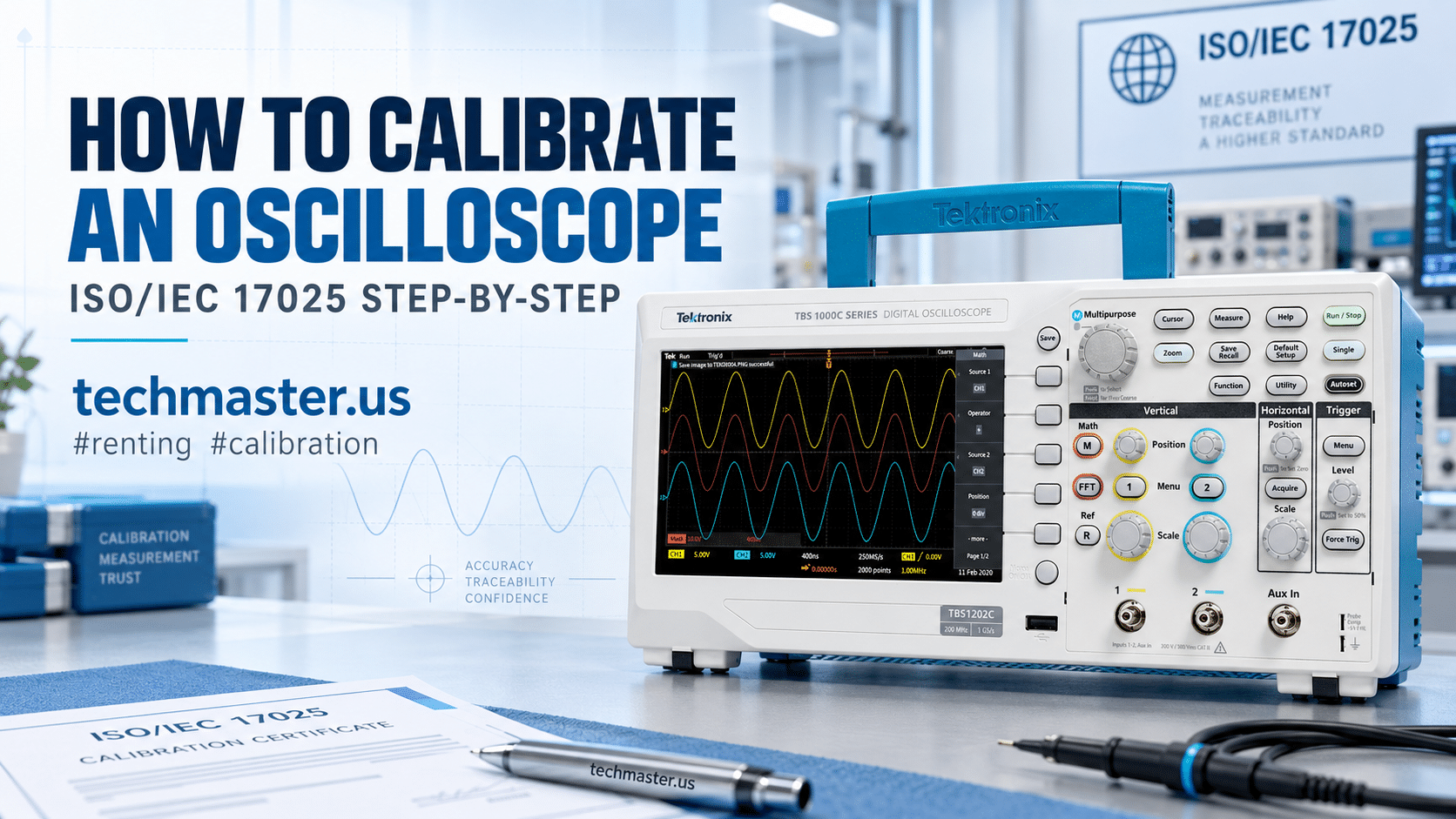
In electronics design and testing, the bench oscilloscope is the most vital tool on the workbench. Specifically, engineers rely on these devices to capture fast signals, check timing, and measure voltage limits accurately. However, an oscilloscope is only as reliable as its last calibration. If you want to know [how to calibrate an oscilloscope]([INSERT LANDING PAGE URL]), you must understand a key fact. Testing these sensitive devices takes much more than a basic internal check. In fact, proper setup requires strict climate controls, special reference tools, and exact lab rules.
Therefore, this guide explores the technical methods behind oscilloscope calibration. Furthermore, we explain why ISO/IEC 17025 approval is crucial for test tools, and what lab managers must know to keep measurements accurate.
1. What Is an Oscilloscope and Oscilloscope Calibration?
A bench oscilloscope is a complex electronic tool. It displays changing signal voltages over time. For example, top brands like Keysight, Tektronix, and LeCroy capture tiny electrical events. Then, they turn those events into clear visual waves.
On the other hand, oscilloscope calibration is a step-by-step process. Technicians compare the oscilloscope’s readings against a better, more accurate reference tool. Inside an approved metrology lab, experts use special, high-end calibrators. For instance, they might use the Fluke 9500B to send exact voltage, timing, and frequency signals into the test unit.
Ultimately, this process checks the scope’s vertical space, horizontal time, bandwidth, and trigger features. Thus, the lab makes sure every screen reading matches the true physical signal.
2. Why Knowing How to Calibrate an Oscilloscope Matters
Understanding the oscilloscope calibration procedure is vital for quality managers and engineers. These experts oversee product safety and performance. Above all, accurate measurements form the base of good quality control.
If a scope’s time settings drift or its voltage readings skew, the errors can ruin a production cycle. As a result, a bad oscilloscope might trick a team into passing broken circuit boards. Conversely, the team might fail perfectly good units. Consequently, these mistakes lead to costly rework, product recalls, and market delays.
Furthermore, proper calibration ensures clear tracking and rule-following. For companies with strict rules, using an approved Calibration service removes the risk of failed audits. As a result, you guarantee that your products meet high safety and quality standards.
3. Common Applications for Bench Oscilloscopes
Because bench oscilloscopes check the basic traits of electrical signals, many high-stakes industries use them daily. Specifically, these tools help in:
-
Electronics Manufacturing: Factories use them to test circuit boards, check power supplies, and fix part failures.
-
Aerospace and Defense: Engineers need them to check flight data buses, radar signals, and flight tech.
-
Medical Device Making: Builders ensure life-saving tools, like heart monitors, send exact electrical pulses.
-
Automotive Industry: Mechanics use them to test car networks, engine computers, and electric battery systems.
-
Telecommunications: Telecom workers rely on them to test fast data lines and keep signal quality strong.
4. Calibration Standards and Traceability
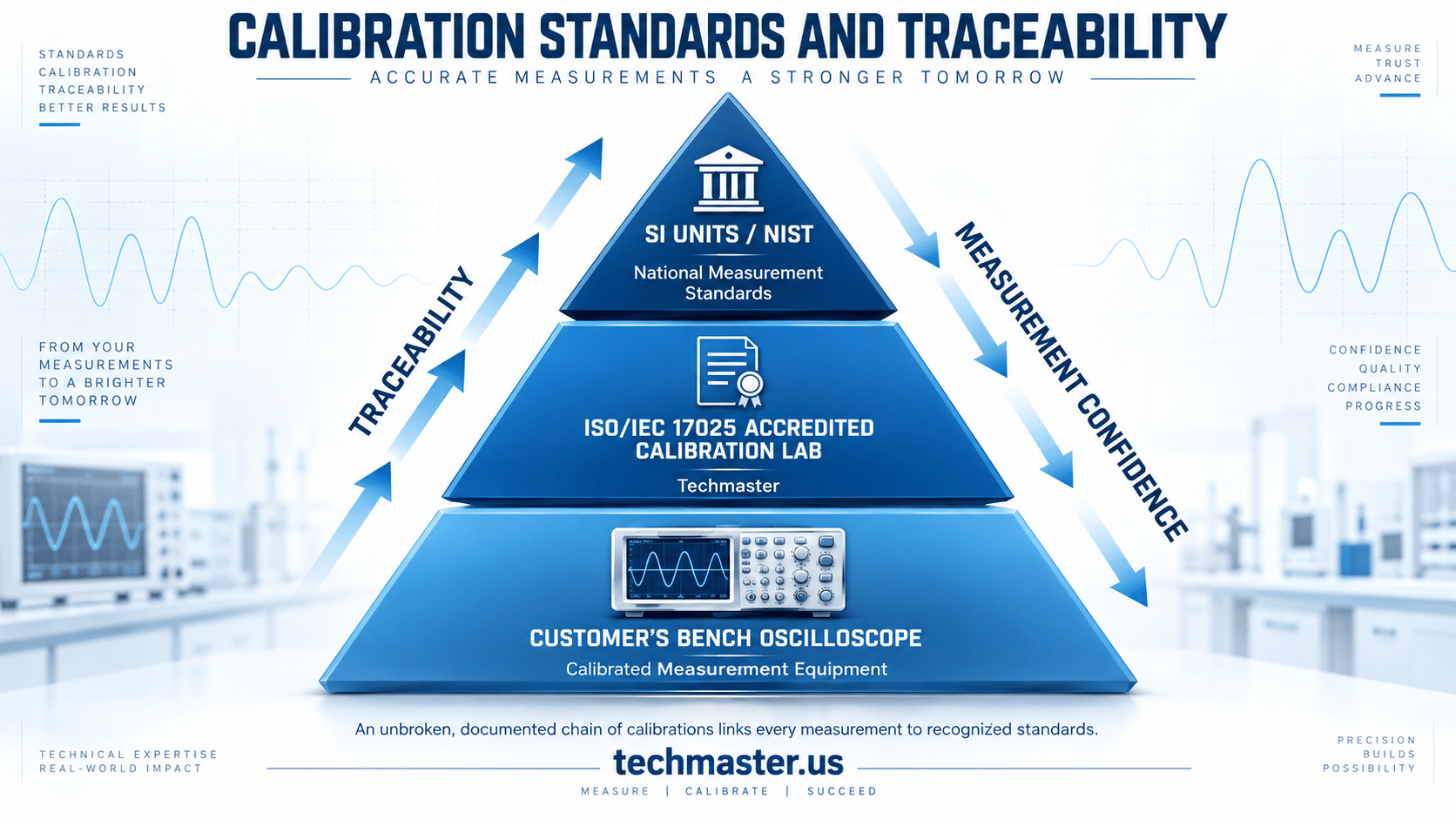
When deciding how to calibrate an oscilloscope, you must follow known global standards. Internal self-checks are good for daily baselines. However, they cannot replace formal, tracked lab work.
A proper ISO/IEC 17025 oscilloscope calibration links all measurements to national standards. For example, labs trace results back to the National Institute of Standards and Technology (NIST). Therefore, this high level of service requires:
-
Measurement Error Tracking: The lab must measure the exact error margin for every test.
-
Clear Test Rules: Workers must follow OEM-approved rules for every specific brand and model.
-
Climate Controls: The lab must manage room heat and moisture. Otherwise, changing weather can harm sensitive reference tools.
-
Detailed Records: The final paper must show “As Found” and “As Left” data. Thus, it proves the exact state of the tool before and after service.
5. The Oscilloscope Calibration Procedure: Step-by-Step
Key Stages of Oscilloscope Calibration
Performing a true traceable oscilloscope calibration takes special tools. While steps vary by brand, an approved lab generally follows these five key stages:
Visual Check and Warm-Up
First, experts look for physical damage, screen flaws, and worn ports. Then, they turn the unit on. Next, they let it warm up in a controlled room for 30 to 60 minutes. As a result, the internal parts stabilize.
Vertical Voltage Accuracy
Second, the worker sends a known DC voltage into each channel. The lab tests the scope’s ability to show the correct voltage. Specifically, they test this across all Volts/Division settings. This step ensures the signal size is exact.
Horizontal Timebase Accuracy
Third, the lab uses a highly stable time tool to check the horizontal sweep. This step proves that the time settings are exact. Consequently, users can safely measure frequency and pulse widths.
Bandwidth and Rise Time Checks
Next, a sine wave generator pushes the scope to its top frequency limit. For instance, they might test it at 500 MHz or 1 GHz. The lab checks the drop-off point to ensure the scope still meets its advertised bandwidth.
Trigger Sensitivity
Finally, the lab tests how well the scope captures complex signals. By feeding a fast, small signal into the tool, the worker checks the trigger. Thus, they confirm the trigger locks onto the wave without jumping.
6. Common Issues Found During Calibration
Bench oscilloscopes are tough tools. However, their sensitive inside parts wear down over time. During standard test equipment calibration, experts often find a few common issues:
-
Vertical Drift: The DC baseline drifts over time. Therefore, waves appear higher or lower on the screen than they truly are.
-
Loss of Bandwidth: Heat and aging reduce the high-speed response of the tool. Consequently, fast signals look slow or warped.
-
Trigger Circuit Failures: The scope might struggle to lock onto noisy signals. As a result, the screen shows a jumping, messy wave.
-
Port Wear: Plugging and unplugging probes wears out the input ports. Thus, this wear causes signal bounces and bad readings.
7. How Often Should This Equipment Be Calibrated?
Deciding the right time gap for a bench oscilloscope calibration depends on a few factors. For most uses, a 12-month cycle is the best standard practice. However, you might need to change this timeline based on:
-
Maker Rules: Always read the maker’s manual. Some high-end scopes need shorter gaps between tests.
-
Usage Rate: A scope running all day on a factory line wears out fast. Conversely, a scope in a quiet lab lasts much longer.
-
Room Conditions: Dust, extreme heat, or heavy shaking can harm the tool. Therefore, factory tools drift faster than cleanroom tools.
-
Internal Quality Rules: Your company’s ISO 9001 manual might demand strict timelines. Naturally, you cannot ignore these internal rules.
8. What to Look for in a Calibration Provider
Not all labs have the skills to service modern, fast bench scopes. When picking a provider, you should look for the following traits:
-
ISO/IEC 17025 Approval: This rule is a must-have. Make sure their official scope covers your exact needs.
-
High-Speed Skills: Check their tech specs. Specifically, ensure they can make clean signals up to your tool’s top limit.
-
Clear Papers: The provider must give complete data reports. In other words, they should show real numbers instead of just a “Pass/Fail” sticker.
-
Fast Service: Long waits for key tools can stop factory lines. Therefore, look for a lab that offers fast, reliable service.
9. Avoid Downtime: Techmaster Electronics Equipment Rental Services
10. Why Choose Techmaster Electronics?
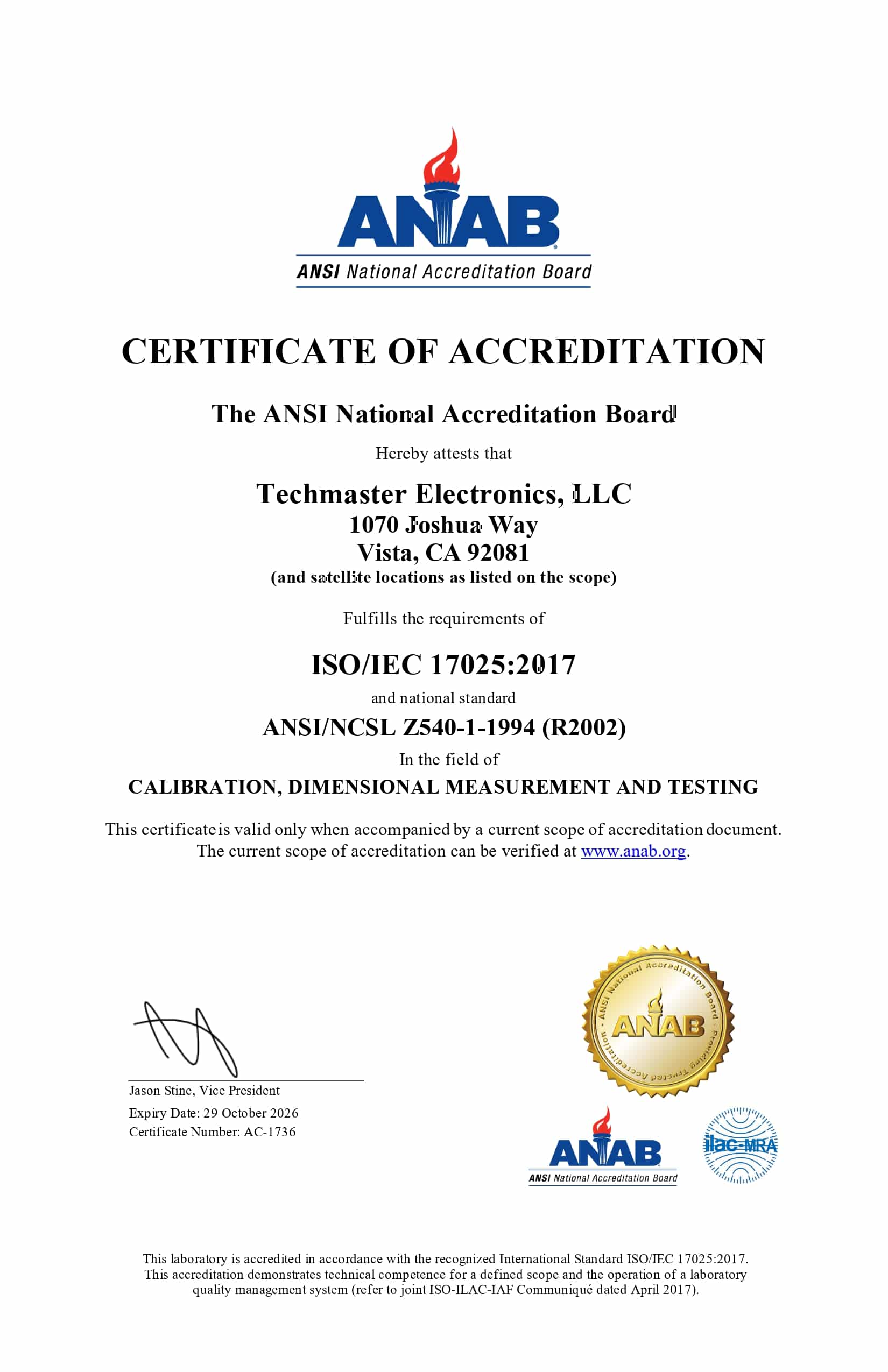
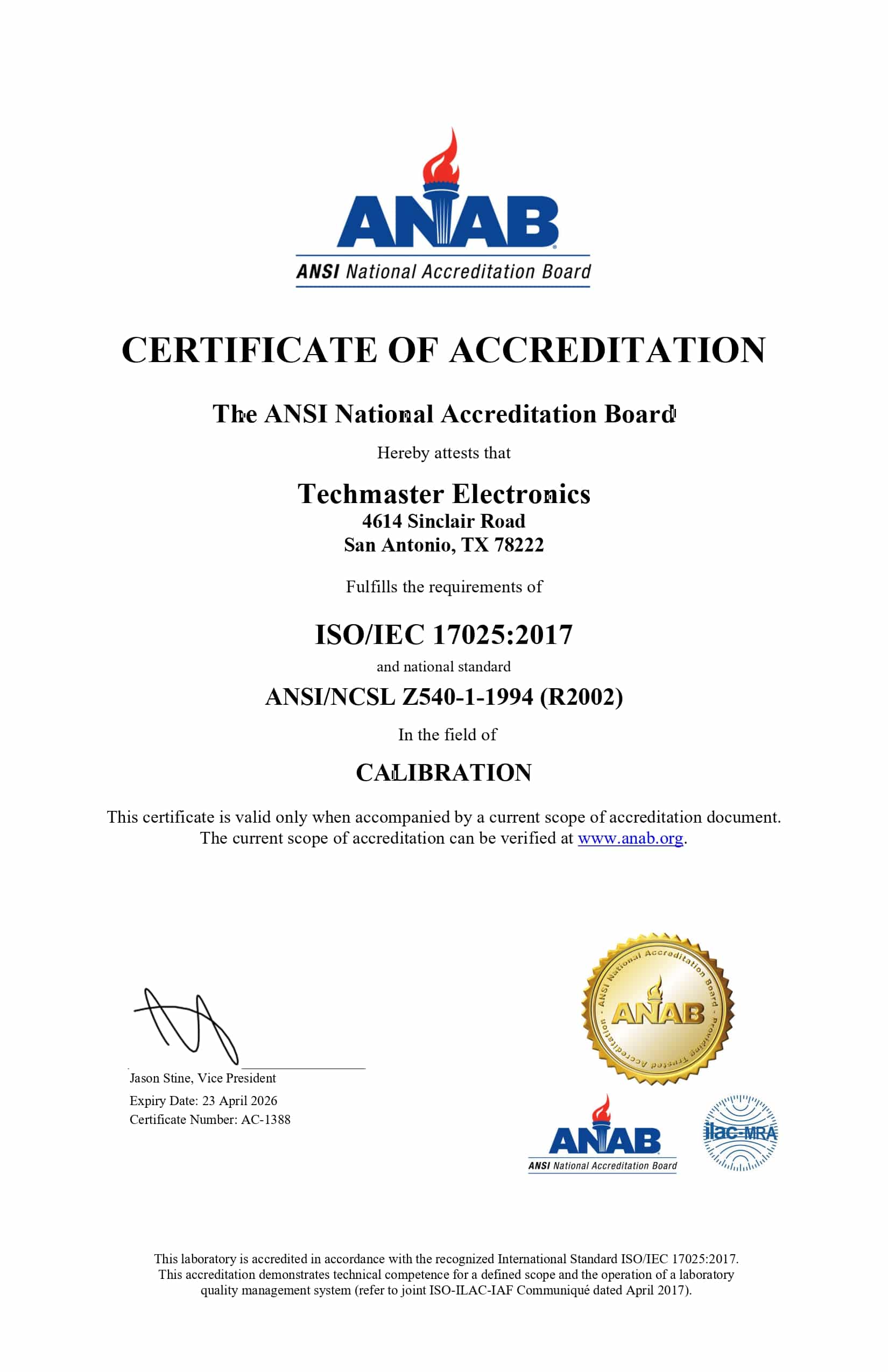
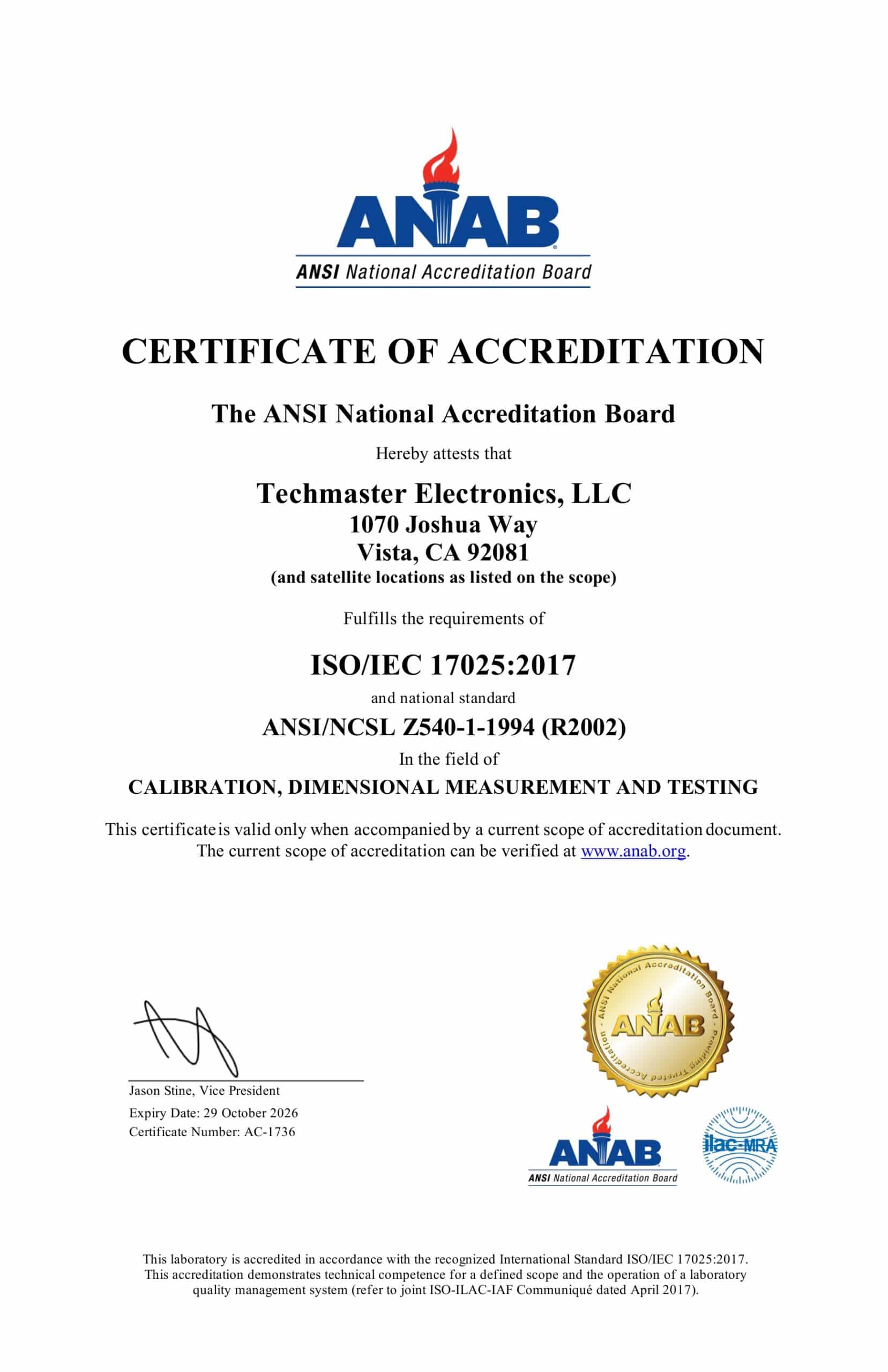
For decades, top groups in the flight, car, and medical fields have trusted Techmaster Electronics. Furthermore, electronic makers choose us as their top metrology partner. We provide full ISO/IEC 17025 approved services for many electronic test tools. Naturally, this includes advanced bench scopes.
Our top-tier labs feature industry-leading calibrators. Because of this, we can test fast, multi-channel scopes from every major brand. Additionally, we take pride in offering low error rates, clear papers, and fast service. Therefore, we keep your business running smoothly and safely.
11. Conclusion
Knowing how to calibrate an oscilloscope is crucial. However, doing it right takes the exact skills, room control, and tracking of an approved lab. First, regular service stops costly factory errors. Second, it ensures product safety. Finally, it keeps you in line with strict industry rules.
By partnering with a skilled lab and using rental programs, you avoid downtime. Ultimately, you ensure your measurements stay exact and trusted.
12. FAQ
Frequently Asked Questions

Calibration engineer at Techmaster Electronics, ISO/IEC 17025 accredited laboratory with 35+ years of metrology expertise.