Oscilloscope Buying Guide: How to Choose the Right One
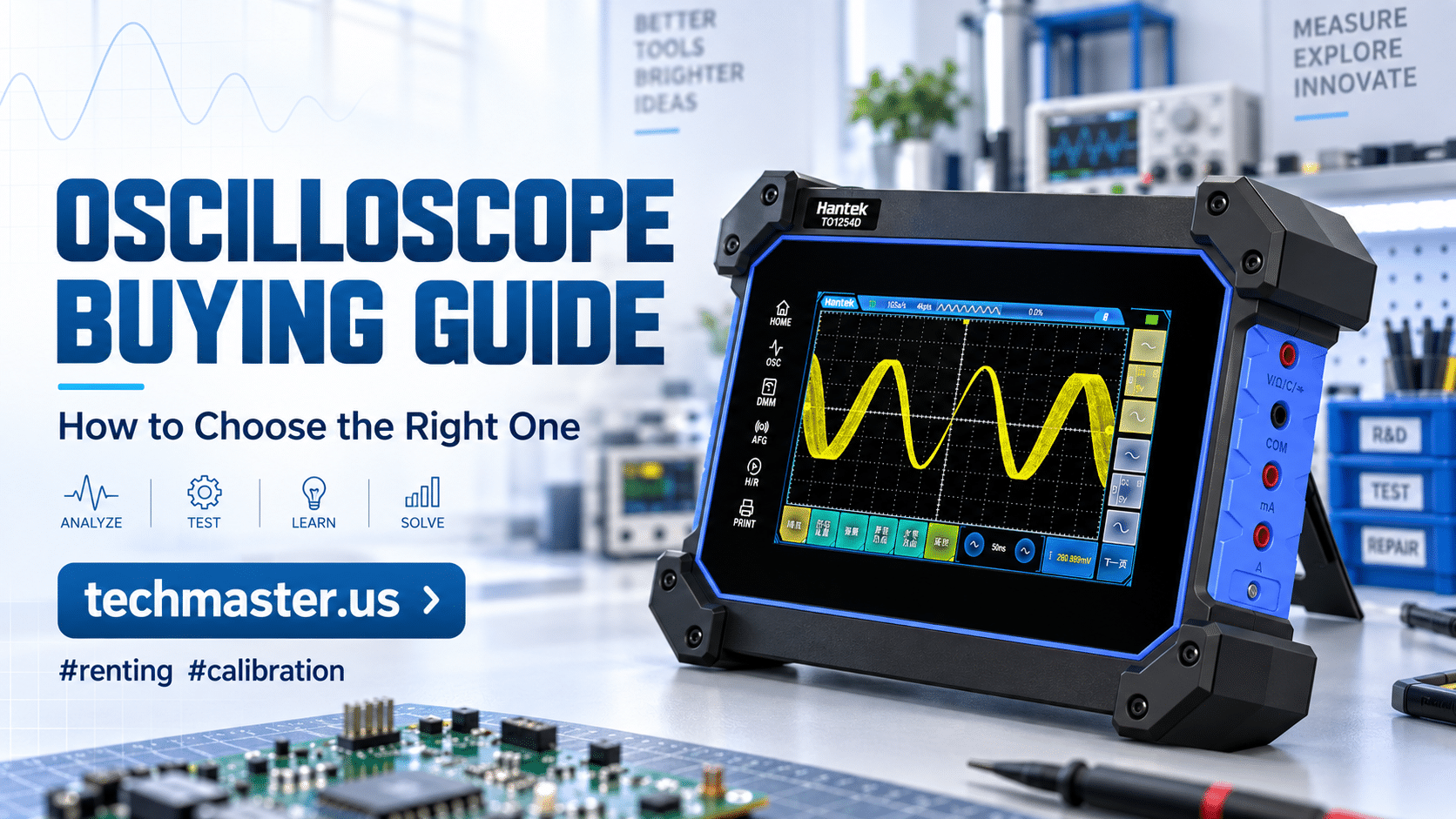
In today’s fast tech world, exact testing means everything. For example, engineers build complex smart systems every single day. Meanwhile, techs perform routine upkeep on large factory machines. In all these cases, teams need the exact right test gear. However, the market holds thousands of choices. As a result, finding the best tool takes time. Figuring out how to choose a oscilloscope can stress out lab leaders and test workers alike. A bad choice can easily cause warped signals on your screen. Consequently, you might miss sudden spikes in your data. Ultimately, a poor choice ruins your final product.
This full guide helps you check key specs, real uses, and long-term upkeep needs. Specifically, you must find a trusted Calibration service to keep your lab running. In short, we will help you make a smart, lasting choice for your whole facility.
1. What Is a Benchtop Oscilloscope?
An oscilloscope is a key test tool. It graphs changing signal voltages over time. A basic meter takes a single snapshot of a voltage. An oscilloscope, on the other hand, does much more than that. It gives you a live view of how a signal acts in real life. Therefore, users see the exact wave shape and speed. Furthermore, they can spot ugly noise in real time.
Today, most pro labs use a digital storage oscilloscope (DSO). Additionally, they use mixed-signal tools. These tools take analog signals and turn them into digital data. Then, they show the clear results on crisp screens. Perhaps your team plans to build a brand new factory line this year. Or, someone wants to upgrade an old research lab. In either case, following a solid benchtop oscilloscope buying guide helps you a lot. Ultimately, it helps you match the tool’s power to your exact testing needs.
2. Why How to Choose a Oscilloscope Matters
Exact measures change your product quality and safe daily work. For instance, a lab leader might pick a tool with poor specs. If this happens, the team risks missing fast spikes or quiet noise. Consequently, this hidden noise can make your product fail later in the field.
Knowing how to choose a oscilloscope goes far past your budget. Instead, it focuses on lowering your real risks. Think about strict fields like space travel, car making, and health devices. In these strict fields, poor signal checks cause huge problems. Specifically, a brand could break federal rules. Moreover, the firm might have to recall costly goods. Worst of all, bad parts could even hurt an end user. Therefore, by picking the right tool, you ensure correct measures every time. You keep your lab running well. Plus, you pass your quality checks with total ease.
3. Common Applications
People use oscilloscopes in almost every tech field today. In fact, their uses range from simple school classes to high-tech space labs.
-
Electronics Making: First, workers test printed circuit boards daily. Next, they check signal health and fix complex digital systems.
-
Space and Defense: Teams test flight gear, radar tools, and radios. Moreover, these tools must work well in very harsh settings.
-
Car Industry: Car makers check data signals in new vehicles. Additionally, they test electric car battery systems. Finally, they fix smart engine parts.
-
Health and Medical Tools: Drug makers test the tiny parts of health monitors. Specifically, they check drug pumps and advanced scan tools.
-
Field Service: Techs use small and large scopes on the go. As a result, they find flaws in factory machines and power grids.
Keep in mind, the needs of a research lab differ from a huge factory. For example, research workers need deep memory. Furthermore, they need flex triggers to catch rare events. Factory workers, however, care much more about pure speed. They want tests to repeat well. Ultimately, they just need clear pass or fail results on the floor.
4. Key Specifications to Consider
Match Technical Details to Daily Tasks
When you check your options, you must match the technical details to your daily tasks. Here is an exploration of the five key specifications you need to consider.
Bandwidth
Bandwidth stands as the most vital spec of all. Basically, it shows the highest speed signal the tool can read well. Your oscilloscope bandwidth requirements should sit high. In fact, they must be at least five times higher than your fastest signal. For instance, do you want to read a 100 MHz square wave? You need at least a 500 MHz tool. Otherwise, you will miss the sharp edges of the vital wave.
Sample Rate
The sample rate tells you how many times a second the tool records the signal. A high rate ensures you catch fast, short spikes. Look for a rate that equals three times your bandwidth (or four to five times for complex data).
Memory Depth
Memory depth tells you how much data the tool stores at once. To record for a long time yet maintain a fast sample rate, you need deep memory. Otherwise, the tool drops its speed to fit the time frame on screen.
Channel Count
Most scopes offer 2 or 4 channels. If teams test three-phase power or complex logic boards, a four-channel tool works best. Mixed-signal tools add 16+ digital channels to see everything simultaneously.
Probes and Extras
Your tool only works well with a great probe. Standard probes work for slow signals, but to measure fast digital signals, you need active probes. Their low load avoids draining the live circuit under test.
5. Navigating the Top Brands of Oscilloscope
After you know your specs, you must pick a good brand. The top 10 brands of oscilloscope feature many large names. Brands like Keysight, Tektronix, Rohde & Schwarz, and Fluke lead the big market.
For example, Keysight and Tektronix set the standard for high-end research. They work great for space flight and phone networks. Plus, they offer clear signals and great software tools. On the other hand, brands like Rigol or Siglent cost a bit less. Yet, they serve well for general making or school labs. Overall, a trusted brand gives you better hardware parts. It offers long software support. Finally, it gives you tighter reading stability over the coming years.
6. Calibration Standards and Traceability
Buying a great oscilloscope acts as just step one. Over time, all electronic parts drift. As a result, your readings become less exact as months pass. That is why NIST traceable oscilloscope calibration remains a pure must. In short, high-quality labs cannot skip this vital step.
Therefore, an ISO/IEC 17025 accredited lab must test your tool. This standard proves the lab truly knows its work. Furthermore, it proves they track exact measurement errors well. It also proves all tests tie right back to NIST. You need a trusted test paper on file. Without it, your data will fail a big ISO 9001 or FDA audit.
7. Common Issues Found During Calibration
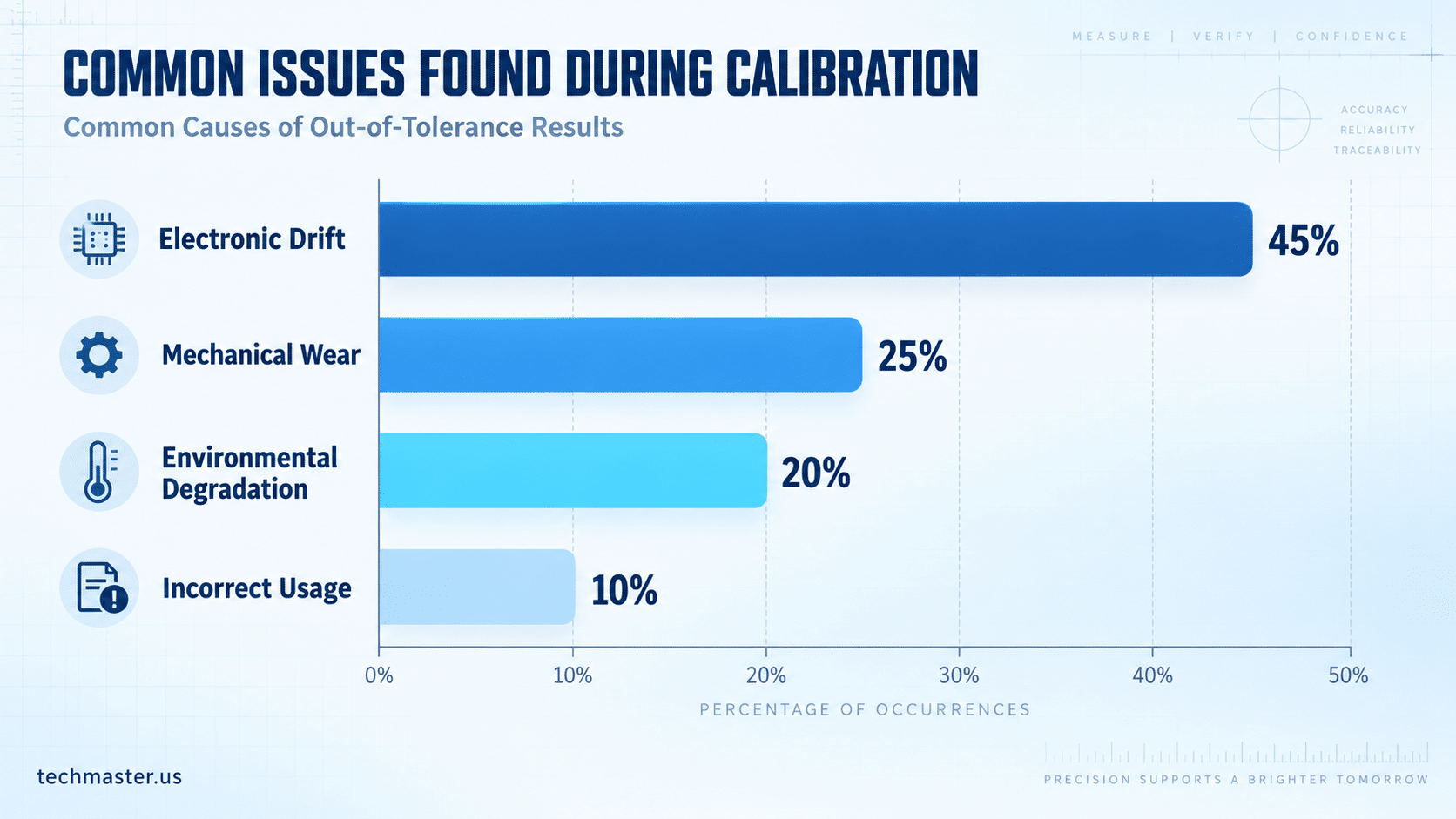
During normal digital storage oscilloscope calibration, metrology techs spot hidden flaws. These hidden flaws can easily ruin your daily tests:
-
Voltage Drift: Over time, the internal amps drift far away. Thus, this causes bad height readings on your main screen.
-
Time Errors: The internal clock can shift off pace. Consequently, this causes bad speed and timing readings.
-
Relay Wear: Hard use wears out the input switches. In turn, this causes quiet signals or messy lines on the screen.
-
Probe Flaws: Often, the main tool works fine. However, the passive probes fall out of tune. Bad probes warp your fast signals.
-
Heat and Water Effects: Extreme factory heat harms sensitive tools. Meanwhile, high moisture speeds up internal part decay.
8. How Often Should This Equipment Be Calibrated?
Test timing depends a lot on how you use the gear. Most factory and lab settings use a 12-month test cycle. This annual test remains the standard rule for most. However, you should think about a fast 6-month cycle in some cases. For instance, does your lab get very hot? Also, does the tool take hard hits? Do you work in strict space or drug fields? If you answer yes, test it much more often. In these fields, bad readings cause huge life risks. Therefore, always check the maker’s guide and your own strict quality rules.
9. What to Look for in a Calibration Provider & Rental Services
Picking the Right Test Lab
Picking the right test lab matters as much as picking the tool. To ensure your instruments perform flawlessly, look for a laboratory that excels in these three critical areas.
Active ISO/IEC 17025 Mark
First, you should find a lab with an active ISO/IEC 17025 mark. Check their full technical scope right away. It must cover your tool’s exact speed and exact accuracy needs.
Speed & On-Site Help
Next, you should also check their general return time. See if they offer on-site help to save you precious time during critical production schedules.
Digital Test Paperwork
Additionally, ask to see their digital test paperwork. Clear test papers save massive time during large regulatory or corporate audits.
Adding Flexibility with Techmaster Rental Services
Furthermore, machines break down from time to time. Sudden big jobs may ask for more test gear right away. A top-tier test lab does more than just fix broken tools. We proudly offer the helpful renting service of Techmaster.
Perhaps your main tool needs deep factory repairs. Or, a team might need a faster tool for a short, fast job. If so, you can rent a fully tested, audit-ready tool right from us. Ultimately, renting saves your company cash flow. It also keeps your daily work moving fast without pauses.
10. Why Choose Techmaster Electronics?
Techmaster Electronics has led the ISO/IEC 17025 test space since 1989. We fix, test, and sell top gear to great clients. In fact, we run high-tech labs across the United States. We give NIST-traceable checks for oscilloscopes, smart meters, and many other fine tools.
We know the tight rules of the space, health, and tech fields. Therefore, when you team up with Techmaster, you get highly trained techs. You gain easy web access to your test papers all day long. Moreover, we offer free local pickup and fast drop-off. You might need an urgent on-site test. Conversely, you might need a trusted rental tool to stop work delays. Whatever the case, our team stands ready to meet your high quality goals. Overall, we follow strict ISO rules every single day to keep you safe.
11. Conclusion
Picking the best benchtop tool takes very careful thought. First, you must check bandwidth, sample rate, exact memory, and channel count. But, the life of your test gear goes far past buying it. Facilities must keep their product quality very high. Furthermore, leaders want to keep the lab totally safe. In the end, everyone wants to pass tough audits with zero stress. To do this, you must seek normal, accredited test checks. Team up with a proven metrology lab. Ultimately, this smart choice keeps your test data exact for many years.
12. FAQ Section
Frequently Asked Questions
Frequently asked questions
What is oscilloscope calibration?
Oscilloscope Calibration is the documented comparison of a oscilloscope against NIST-traceable reference standards under ISO/IEC 17025. It quantifies the oscilloscope’s error and measurement uncertainty and confirms it performs within tolerance, with as-found and as-left data on the certificate.
How often should a oscilloscope be calibrated?
Most quality systems calibrate a oscilloscope every 12 months, or sooner after repair, overload, or before critical measurements. Set your interval from the manufacturer spec and your ISO 9001 / 13485 / AS9100 program and drift history.
Is Techmaster’s oscilloscope calibration ISO 17025 accredited?
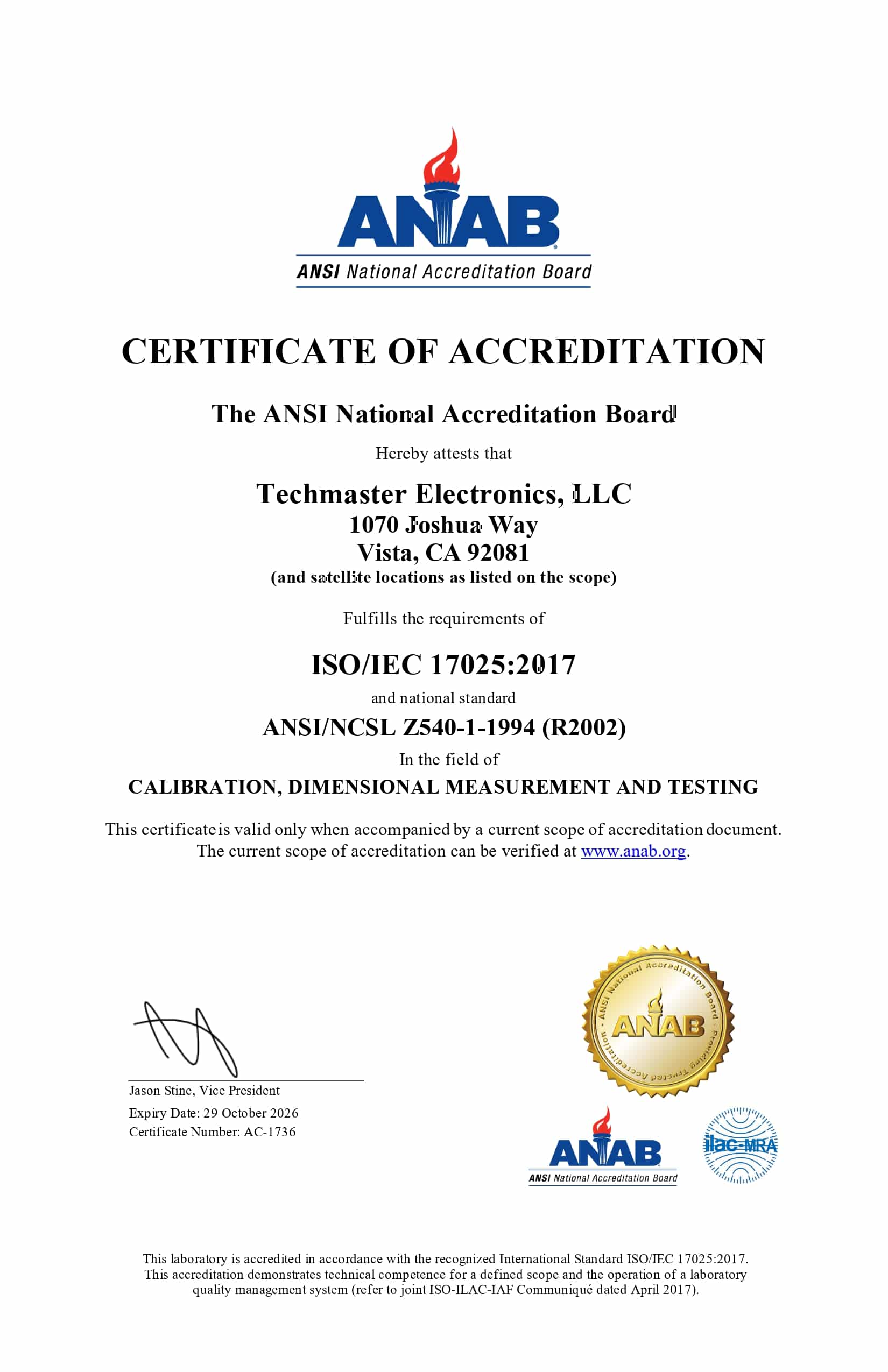
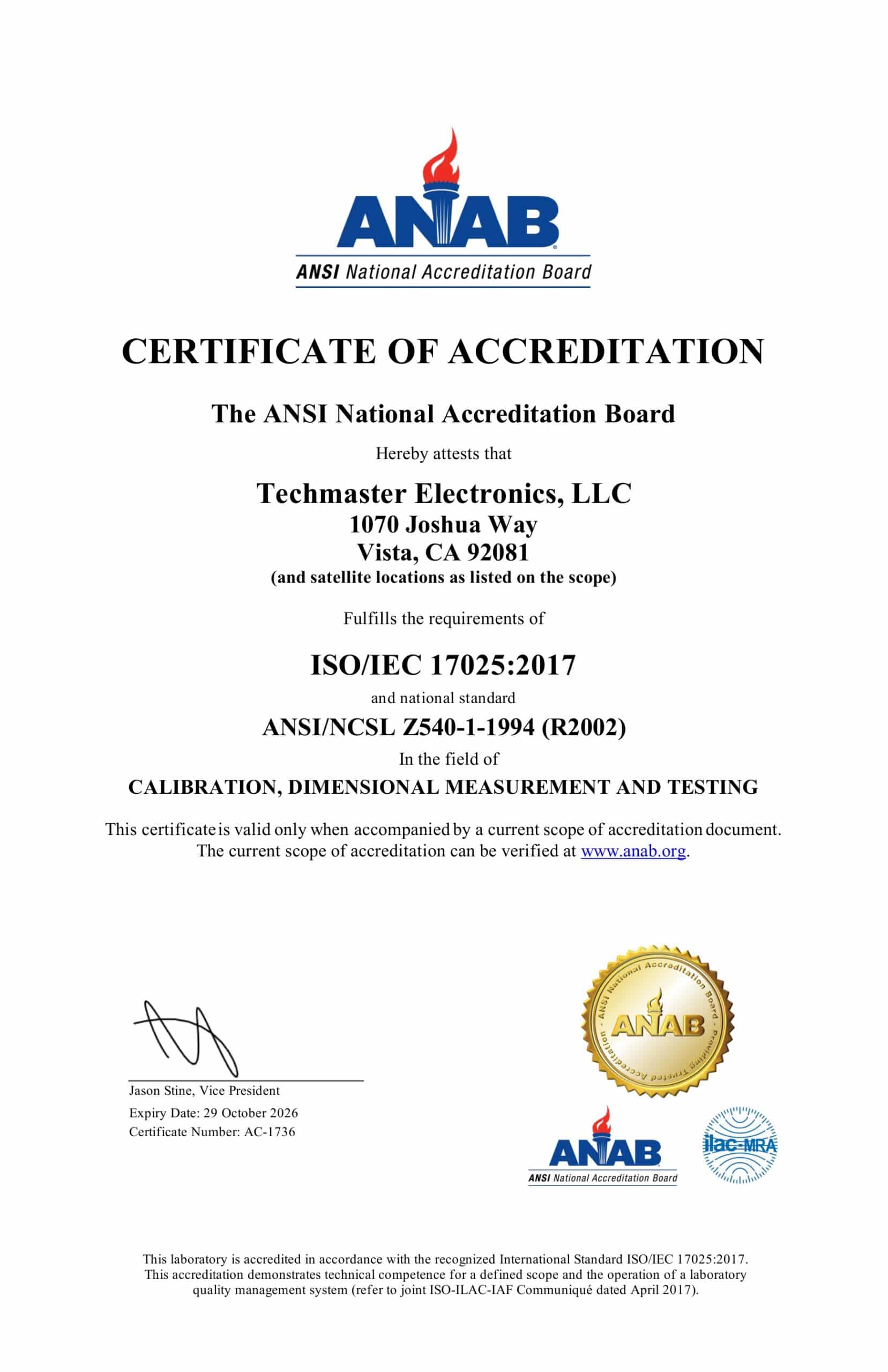
Yes. Techmaster Electronics is ISO/IEC 17025:2017 accredited by ANAB (Certificate AC-1736). Every oscilloscope calibration is NIST-traceable and issued with a full measurement-uncertainty budget.
What is the turnaround for oscilloscope calibration?
Standard turnaround is 5 business days, with 1–2 business-day expedite available. On-site calibration removes shipping time entirely for oscilloscopes that can’t leave the floor.
Do you calibrate oscilloscopes on-site or in-lab?
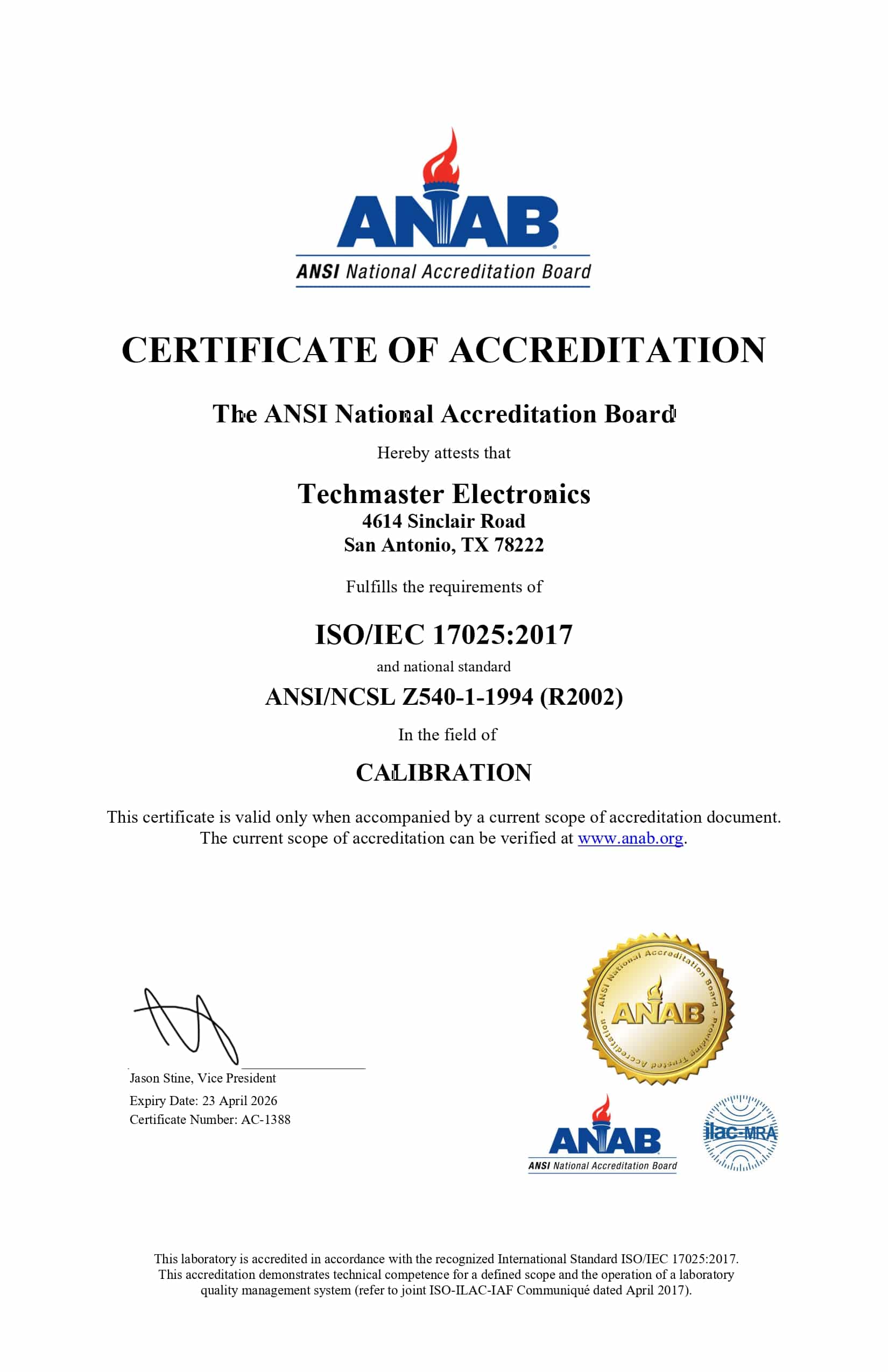
Both. Techmaster runs five US labs (Vista CA, Santa Clara CA, Orlando FL, San Antonio TX, Holly Springs NC) and offers nationwide on-site oscilloscope calibration to minimize downtime.

Calibration engineer at Techmaster Electronics, ISO/IEC 17025 accredited laboratory with 35+ years of metrology expertise.