
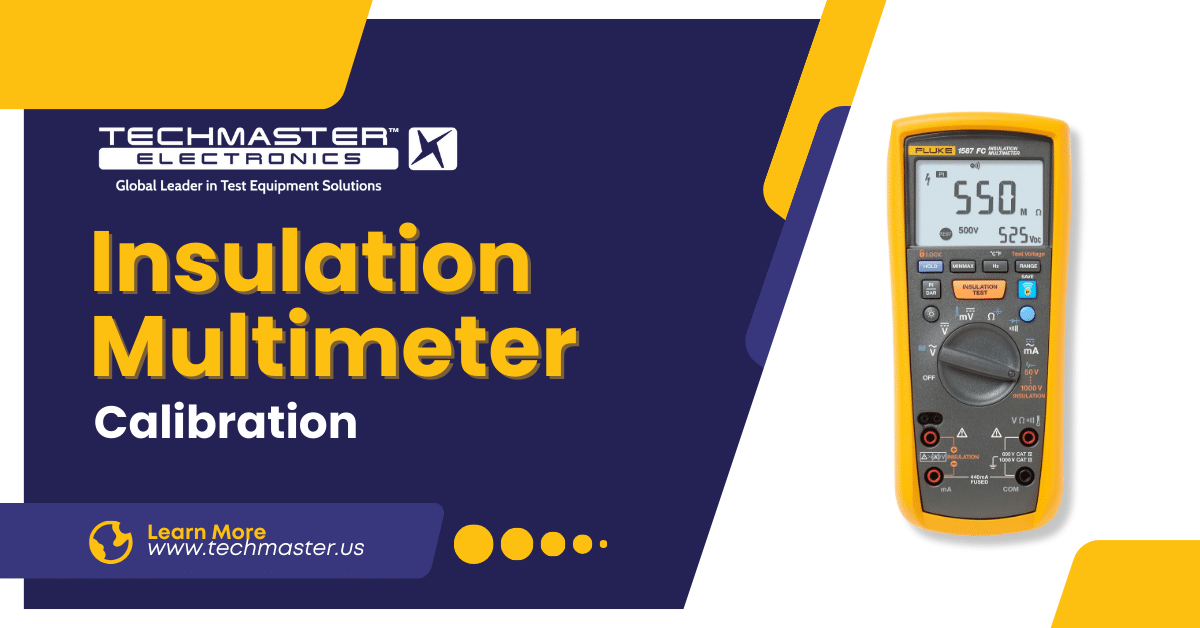
Insulation Multimeter Calibration
Accuracy across the range
How Insulation Multimeter calibration works
- Intake & visual inspection
- Environmental stabilization
- As-found measurement
- Comparison to NIST-traceable standards
- Adjustment if required
- As-left results & certificate
Your calibration, covered
In-lab vs on-site calibration
In-lab calibration
- Accredited bench with full reference standards
- Best achievable measurement uncertainties
- Pickup & return logistics handled
- Ideal for precision and reference work
On-site calibration
- We calibrate the Insulation Multimeter at your facility
- No shipping risk or transit downtime
- As-found data captured before any move
- Ideal for fixed, large or sensitive assets
In-depth guide
Introduction: Why Insulation Multimeter Calibration Matters
Insulation multimeters, also known as insulation testers or megohmmeters, play a critical role in electrical safety and preventive maintenance. These instruments are used to measure insulation resistance in motors, cables, transformers, and electrical installations, helping engineers detect insulation degradation before it leads to equipment failure or safety hazards.
However, the accuracy of insulation resistance measurements depends heavily on the condition and calibration status of the instrument itself. Without proper insulation multimeter calibration, test results may be misleading, leading to incorrect maintenance decisions, increased downtime, or non-compliance with regulatory requirements.
Calibration ensures that insulation testers provide reliable, traceable, and documented measurement results. It is essential for organizations involved in industrial maintenance, electrical contracting, testing and commissioning, and quality or compliance management.
Insulation Multimeter vs Megohmmeter: Are They the Same?
Definitions
A megohmmeter is a specialized instrument designed specifically to measure high insulation resistance values, typically in the megohm (MΩ) to gigohm (GΩ) range, using high DC test voltages such as 250 V, 500 V, or 1000 V.
An insulation multimeter is a more versatile device that combines standard multimeter functions (voltage, current, continuity) with insulation resistance testing capability.
Key Differences
While a megohmmeter focuses solely on insulation testing, an insulation multimeter offers additional measurement functions. In practice, both instruments perform insulation resistance measurements using similar principles and test voltages.
Terminology in Calibration Services
In calibration and metrology contexts, the terms insulation multimeter calibration and insulation tester calibration are often used interchangeably. Including both terms in technical documentation and service descriptions improves clarity for users and ensures alignment with common search intent.
What Is Insulation Multimeter Calibration?
Insulation multimeter calibration is the process of comparing the measurement results of an insulation tester against known reference standards with documented accuracy. The goal is to determine whether the instrument’s readings fall within specified tolerances.
It is important to distinguish between:
-
Calibration: Measurement comparison and documentation
-
Adjustment: Mechanical or electronic correction of the instrument
-
Verification: Confirmation that results meet predefined criteria
Calibration does not automatically involve adjustment or repair. Instead, it provides objective evidence of measurement performance at the time of testing.
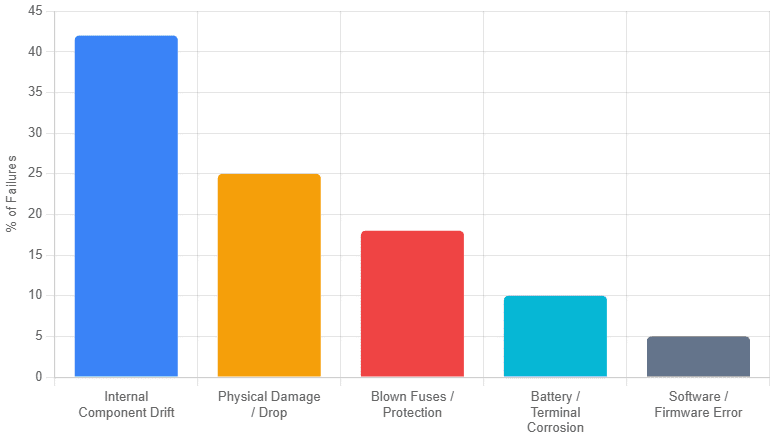
The Cost of Inaccuracy
Insulation multimeters operate in high-energy environments. When they drift, they don’t just give wrong readings; they expose technicians to arc flash risks and facilities to fire hazards.
Standard Interval
The recommended calibration cycle for most insulation testers to ensure compliance with ISO 9001 and safety standards.
OOT Rate
Percentage of field instruments found “Out of Tolerance” (OOT) upon annual receipt, requiring significant adjustment.
High Resistance
Measuring gigohms requires precision voltage generation (e.g., 1000V). Small internal voltage drifts cause massive reading errors.
Calibration Standards and Traceability
Applicable Standards
Professional insulation tester calibration is typically performed in accordance with internationally recognized standards, including:
-
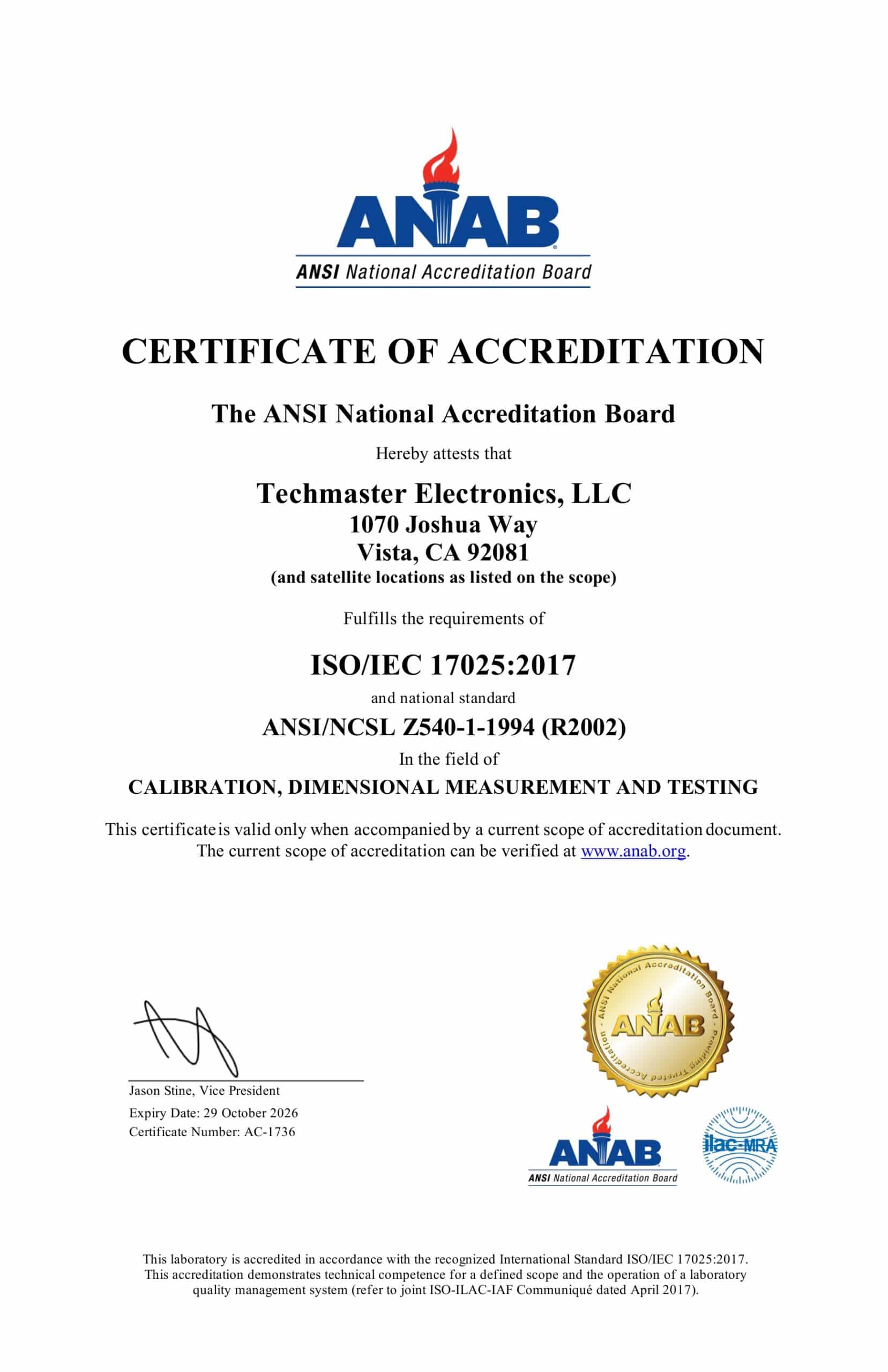
ISO/IEC 17025 for calibration laboratory competence
-
Relevant IEC standards related to insulation resistance measurement
Calibration conducted under these frameworks ensures technical validity and audit readiness.
Measurement Traceability
Traceability refers to an unbroken chain of comparisons linking measurement results to national or international standards. This ensures consistency and reliability across laboratories, instruments, and time.
For insulation multimeter calibration, traceability is established using certified reference standards such as high-value resistors and calibrated voltage sources.
Calibration Certificate Content
A proper calibration certificate should include:
-
Instrument identification details
-
Environmental conditions during calibration
-
Reference standards used
-
As-found and as-left measurement results
-
Measurement uncertainty
These elements are essential for quality systems, audits, and compliance documentation.
The Calibration Workflow
A professional calibration is more than just checking a number. It is a rigorous 5-step process ensuring the instrument performs safely across its entire range.
Cleaning & Inspection
Check for terminal corrosion, cracks, or battery leaks.
Battery & Fuse Check
Ensure power stability and safety fuse continuity.
Functional Test
Verify display segments, buttons, and buzzer logic.
Accuracy Verification
Compare against Standards at 25%, 50%, 75%, 100% range.
Certification
Issue traceable certificate with As-Found/As-Left data.
The Danger of “Good Enough”
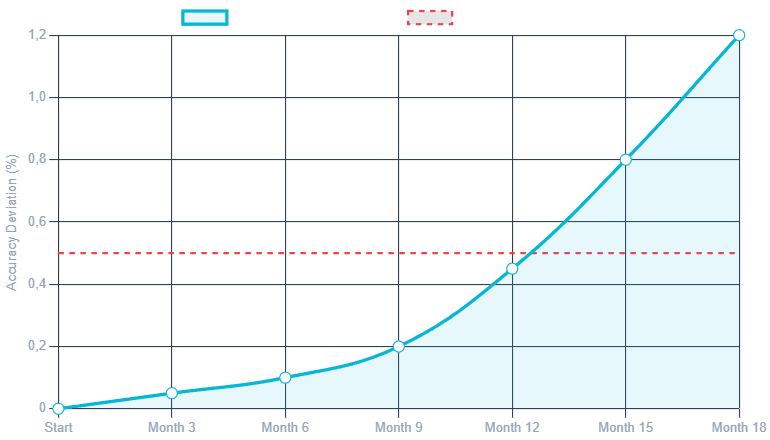
Electronic drift is rarely linear. As shown in the graph, a meter may remain stable for months (Phase A) before environmental factors cause a rapid acceleration in error (Phase B), crossing the tolerance threshold (Phase C).
Phase A: Stability
New components hold value well. Readings are reliable.
Phase B: Accelerated Drift
Temperature cycling and humidity begin to alter resistor tolerances.
Phase C: Out of Tolerance
The meter reads “Pass” on a dangerous circuit. Safety is compromised.
Calibration Interval: How Often Should You Calibrate?
A typical recommended calibration interval for insulation multimeters is 12 months, unless otherwise specified by the manufacturer or regulatory requirements.
Factors that may require shorter intervals include:
-
Frequent or intensive use
-
Harsh environmental conditions
-
Critical safety applications
-
Internal quality management policies
Regular calibration helps prevent measurement drift and reduces the risk of undetected insulation faults.
Safety Considerations During Insulation Testing and Calibration
Insulation testing involves high DC voltages, which can pose safety risks if not properly controlled. Key considerations include:
-
Ensuring circuits are de-energized before testing
-
Discharging capacitive components after testing
-
Using appropriate personal protective equipment
-
Performing calibration in controlled laboratory conditions
Safety-focused calibration practices protect both personnel and equipment.
Common Applications of Insulation Multimeter Calibration
Insulation tester calibration is widely used in:
-
Electric motor maintenance
-
Power cable and wiring system testing
-
Transformer insulation assessment
-
Switchgear and control panel inspection
-
Industrial equipment commissioning and maintenance
Accurate insulation resistance data supports informed maintenance decisions and long-term asset reliability.
Common Mistakes and Misconceptions
Common misunderstandings include:
-
Assuming calibration is unnecessary if the instrument “still works”
-
Confusing functional checks with formal calibration
-
Ignoring measurement uncertainty values
-
Using incorrect test voltages for specific applications
Addressing these misconceptions improves measurement integrity and safety outcomes.
The Chain of Trust: NIST Traceability
Your calibration certificate is only as valid as the standards used to test it. This hierarchy ensures your 1GΩ reading matches the national standard.
SI Units / NIST
National Institute of Standards & Technology
Primary Standards
High-precision commercial labs
Working Standards
The calibrator used on your meter (e.g., Fluke 5500A)
Process Instrument
Your Insulation Multimeter
FAQs – Insulation Multimeter Calibration
Is insulation tester calibration the same as megohmmeter calibration?
Yes. In practice, both terms refer to calibration of instruments used for insulation resistance measurement.
Can insulation multimeter calibration be performed onsite?
Some calibrations can be performed onsite, but laboratory calibration offers better environmental control and lower uncertainty.
What happens if an instrument fails calibration?
The results are documented, and adjustment or repair may be recommended before re-calibration.
Does calibration improve accuracy?
Calibration itself does not change accuracy but confirms and documents measurement performance.
Techmaster’s Insulation Multimeter Calibration Capability
Techmaster provides professional insulation multimeter calibration services for industrial and laboratory applications. Our capabilities include:
-
Calibration performed in accordance with ISO/IEC 17025 principles
-
Traceable reference standards
-
Detailed calibration certificates with uncertainty reporting
-
Support for insulation testers, megohmmeters, and multifunction electrical instruments
With experienced metrology engineers and controlled calibration environments, Techmaster helps customers maintain accurate measurements, regulatory compliance, and operational confidence.
Conclusion
Insulation multimeter calibration is a critical component of electrical safety, preventive maintenance, and quality assurance. By ensuring accurate, traceable, and documented measurements, organizations can reduce risk, improve reliability, and meet compliance requirements.
Regular insulation tester calibration should be an integral part of any electrical testing and maintenance program.
Frequently asked questions
What is Insulation Multimeter Calibration?
How often should a Insulation Multimeter be calibrated?
What standards apply to Insulation Multimeter Calibration?
What is included on the certificate?
Can you calibrate the Insulation Multimeter on-site?
Need Insulation Multimeter calibration?
ANAB-accredited, NIST-traceable, fast turnaround — in-lab or on-site across the USA.
Contact us for a quoteReferences & industry standards
- ISO/IEC 17025 testing & calibration laboratory requirements
- NIST calibration services and measurement traceability
- NIST Time and Frequency Division
- A2LA / ANAB accreditation for calibration laboratories
External standards bodies. Techmaster Electronics is an ISO/IEC 17025-accredited, NIST-traceable calibration laboratory.

Khanh Nguyen is the Marketing Manager at Techmaster Electronics, a B2B marketing leader covering the test, measurement, and ISO/IEC 17025 accredited calibration industry across the US and Vietnam markets.