
CALIBRATION
Data Acquisition and Logger Calibration: Every Channel, Not a Sample
TL;DR: DAQ and logger calibration verifies every channel (not a sample), thermocouple and RTD conversion,...
Calibration Labels and Status Tagging: What Belongs on the Label
TL;DR: A calibration label needs the unique instrument ID (matching your master list), the calibration...
What to Do If Your Calibration Lab Loses Accreditation
TL;DR: It is rare and survivable. Work performed while the lab held accreditation for that...
PXI and Modular Instrument Calibration: Why Self-Cal Is Not Enough
TL;DR: A modular rack is not one instrument. Traceability lives at the module, each card...
Shaker Table Rental: How to Size a Vibration System for Your Profile
TL;DR: A shaker table rental goes wrong on sizing, not availability. Four numbers decide whether...
Electronic Load Calibration Guide: Every Mode, Not Just Constant Current
TL;DR: Electronic load calibration verifies CC, CV, CR and CP mode accuracy, voltage and current...
LCR Meter Calibration Guide: Why Fixture Compensation Is Not Calibration
TL;DR: LCR meter calibration verifies capacitance, inductance, resistance and complex impedance across ranges, plus the...
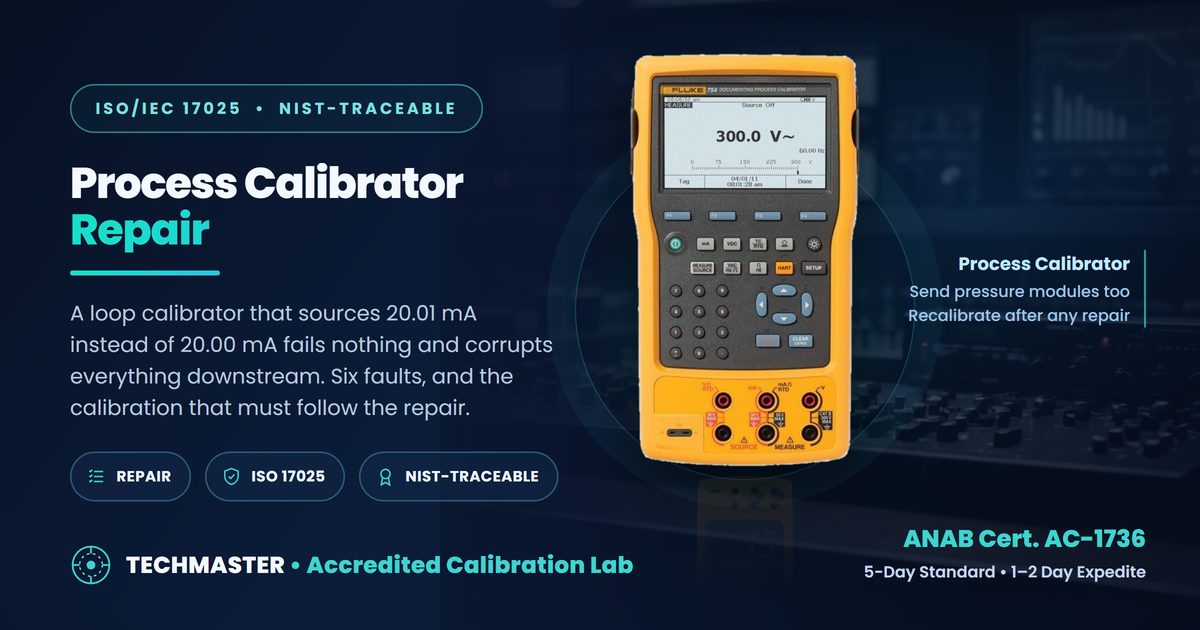
Process Calibrator Repair: Six Faults That Propagate
TL;DR: A process calibrator fails quietly: the mA source drifts, the battery degrades accuracy as...

12 Red Flags on a Calibration Certificate (Check These Before Filing It)
TL;DR: Twelve things should stop you before an instrument goes back into service: no as-found...
How to Read a Calibration Lab’s Accreditation Scope (Column by Column)
Reading an accreditation scope is simpler than it looks once you know which four columns...