
How Often Should You Calibrate an Earth Ground Resistance Tester? Intervals, Accuracy & Compliance
Knowing how often to calibrate an earth ground resistance tester helps electrical safety teams maintain reliable measurements and support safe grounding checks. However, the right interval depends on how often you use the tester, where you use it, and how well it has performed over time. Many organizations start with a 12-month calibration interval. However, this is a common starting point, not a universal rule. In demanding environments, a shorter interval may make sense. On the other hand, a tester with a strong history of stable results may support a different schedule under the organization’s quality system. Regular calibration helps teams check measurement accuracy, identify drift, and maintain records for audits. In addition, an accredited calibration service can provide documented results and measurement traceability within its applicable scope.
1. How to Choose the Right Calibration Interval
First, review the manufacturer’s guidance and your organization’s quality procedures. Next, consider the conditions in which your team uses the tester. Finally, use calibration history and measurement risk to set a suitable interval.
1.1. 12-Month Calibration Interval
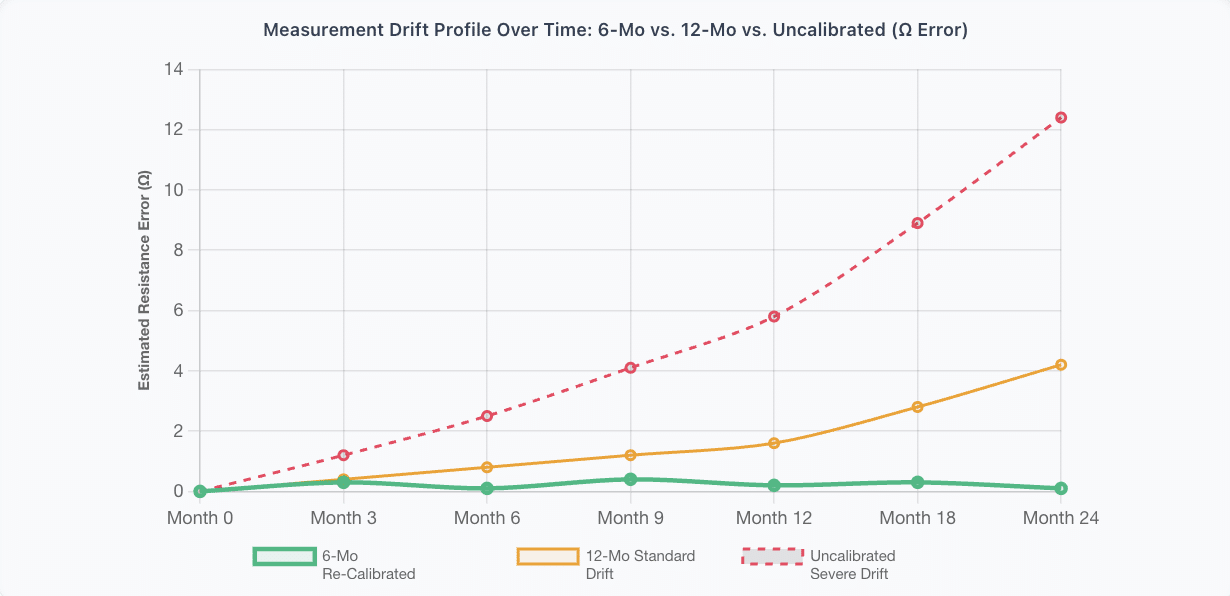
A 12-month interval can serve as a starting point for many earth ground resistance testers. For example, it may suit equipment used for routine facility maintenance in stable conditions.
However, do not treat this interval as a requirement for every tester. Instead, review the manufacturer’s recommendations, past calibration results, and any customer or industry requirements before setting your schedule.
1.2. Shorter Calibration Intervals
In some cases, a six-month interval may be more suitable. For instance, teams may need more frequent checks when testers face heavy daily use, frequent transport, vibration, dust, moisture, or large temperature changes.
Likewise, consider a shorter interval if past calibration results show significant drift or if inaccurate readings could create a high safety risk. Even so, base this decision on evidence rather than assuming that every harsh environment requires calibration every six months.
1.3. Factors That Affect Calibration Frequency
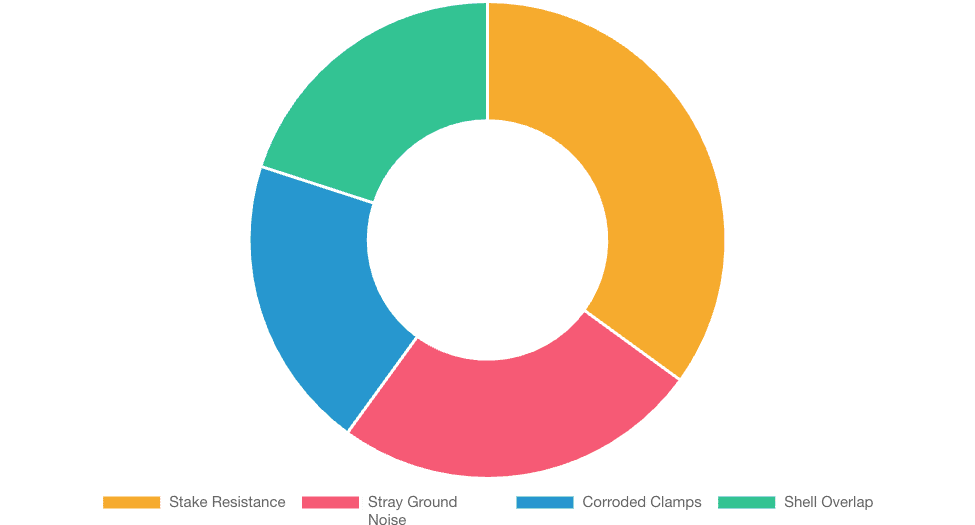
Several factors can help you decide how often to calibrate your tester:
- Environmental conditions: High humidity, dust, corrosive atmospheres, and temperature changes may affect the instrument, cables, and connectors.
- Usage frequency: Daily field work can increase wear on test leads, switches, connectors, and other parts.
- Transport and handling: Repeated movement between job sites may expose the tester to shocks and vibration.
- Calibration history: Compare past results to see whether the instrument shows stable readings or a pattern of drift.
- Measurement risk: Consider the impact of an inaccurate reading on electrical safety and maintenance decisions.
- Quality requirements: Follow applicable customer contracts, internal procedures, manufacturer guidance, and regulatory requirements.
As a result, a documented, risk-based schedule helps you choose an interval that fits the way your team works.
2. How to Check Earth Ground Resistance Tester Accuracy
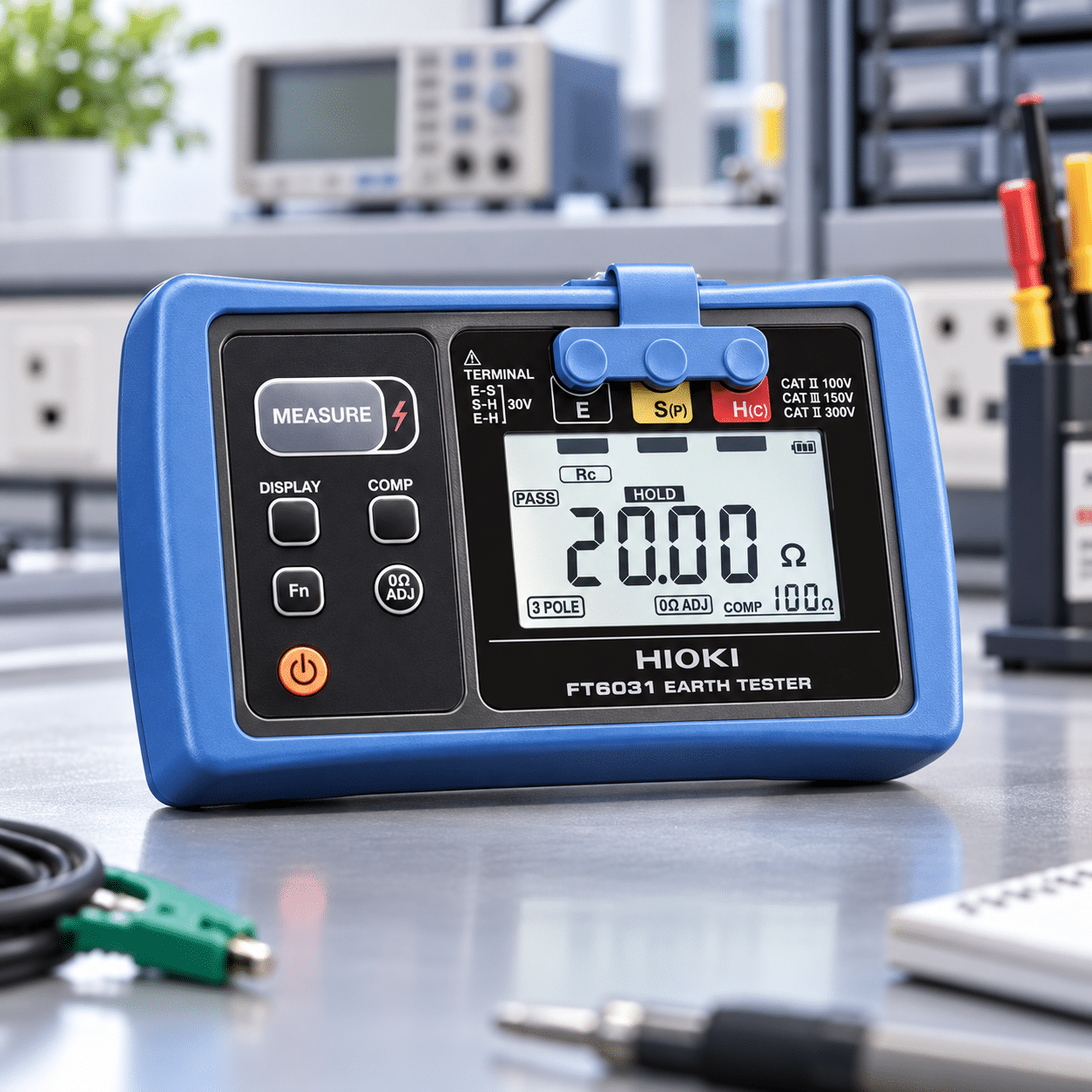
Routine checks can help you spot obvious problems between calibrations. However, these checks do not replace accredited calibration.
Follow these steps before using your tester in the field.
1. Inspect the Tester and Accessories
First, examine the case, test leads, probes, clamps, and connectors. Look for damaged insulation, loose connections, corrosion, or worn parts.
Next, check the battery and review the manufacturer’s instructions. If you find damage or suspect a fault, stop using the instrument until a qualified person checks it.
2. Review the Instrument’s Self-Test
Many testers include a startup check or other built-in diagnostic features. Use these features as the manufacturer directs.
However, remember that a self-test may check only basic functions. It does not confirm measurement accuracy across the instrument’s full range.
3. Check the Tester Against Suitable References
When your procedure allows it, compare the tester’s readings with suitable reference equipment or a known test setup. Follow the manufacturer’s instructions for the test method, connection arrangement, and expected results.
For example, a qualified calibration technician may use suitable resistance standards to check measurement performance at selected points. The technician should choose the test points and methods based on the instrument’s design and applicable calibration procedure.
4. Review Test Frequency and Other Functions
Some earth ground resistance testers use an AC test signal to measure resistance. The test frequency can affect how the instrument responds to electrical noise and interference.
Therefore, a calibration procedure may include a test frequency check when the instrument’s design and accredited service scope require it. Do not assume that every model uses the same frequency or needs the same test points.
5. Record Results and Take Action
Finally, record the checks, results, date, and instrument identification according to your quality procedure.
If readings fall outside the manufacturer’s limits or your approved acceptance criteria, remove the tester from service as appropriate and arrange further evaluation. In addition, review previous measurements when the issue could affect safety decisions or reported results.
3. Calibration and Compliance: What You Need to Know
Calibration helps organizations control measurement quality. However, calibration alone does not establish compliance with every safety or quality standard.
For example, ISO/IEC 17025 sets requirements for the competence of testing and calibration laboratories. It does not prescribe one universal calibration interval for all earth ground resistance testers.
Similarly, standards and rules related to electrical safety, grounding, and quality management may set requirements for particular applications. Therefore, check the exact requirements that apply to your equipment, workplace, and industry.
To support audits and reliable measurement practices, keep the following records:
- Current calibration certificates and instrument identification.
- Calibration dates and the next planned review date.
- As-found and as-left results, when the service reports them.
- Relevant acceptance limits and measurement uncertainty.
- Maintenance records and any repairs.
- The reason for choosing or changing the calibration interval.
In addition, use an accredited calibration provider when your quality system or customer requirements call for accredited results. Always confirm that the requested service falls within the laboratory’s accredited scope.
Frequently Asked Questions
1. How often should you calibrate an earth ground resistance tester?
An earth ground resistance tester should be calibrated at least once every 12 months under standard operating conditions to maintain ISO/IEC 17025 compliance and NIST traceability. Units deployed in severe field environments, extreme temperature ranges, or heavy daily utility service should be calibrated every 6 months to prevent calibration drift.
2. What factors dictate how often to calibrate an earth ground resistance tester?
Calibration frequency is dictated by usage intensity, environmental exposure (temperature extremes, humidity, corrosive atmospheres), historical drift trends, physical wear on test leads, and regulatory compliance mandates such as ISO 9001, IEEE 81, and NERC PRC-005.
3. Why is test frequency stability critical in earth ground resistance meters?
Test frequency stability is vital because earth ground testers rely on specific AC frequencies (such as 128 Hz) to distinguish the injected test current from stray power line harmonic noise (50 Hz / 60 Hz) and electrochemical earth potentials. Frequency drift reduces noise rejection performance.
4. Can field self-tests replace accredited laboratory calibration?
No, internal self-tests only verify basic circuit continuity and display operation. They cannot evaluate resistance measurement linearity, phase angle accuracy, or frequency stability across operating ranges, which require accredited laboratory standards.
5. What parameters are tested during accredited ground tester calibration?
Accredited calibration verifies low-range and high-range resistance linearity, AC test frequency accuracy, noise rejection performance, and battery voltage threshold sensing circuits across all measurement modes (Fall-of-Potential, selective, and stakeless).
6. Does Techmaster US offer on-site calibration for electrical safety testers?
Yes, Techmaster Electronics provides ISO/IEC 17025 accredited calibration services for earth ground testers, insulation resistance meters, and electrical safety analyzers across the United States, with laboratory and mobile on-site service options available.
Conclusion
Choosing how often to calibrate an earth ground resistance tester starts with the manufacturer’s guidance, your working conditions, and the instrument’s calibration history. A 12-month interval can provide a useful starting point; however, some applications may call for more frequent calibration. By reviewing performance records, documenting your decisions, and using an appropriate calibration service, your team can support reliable measurements and better equipment control.
Earth Ground Resistance Tester Field & Calibration Guide
Accurate ground resistance measurements safeguard electrical infrastructure, protect maintenance personnel, and verify fault-current dissipation pathways. Master Fall-of-Potential geometry, calibration intervals, field accuracy verification, and ISO/IEC 17025 compliance.
CONTACT USFrequently asked questions
What is earth ground resistance tester calibration?
Earth Ground Resistance Tester Calibration is the documented comparison of a earth ground resistance tester against NIST-traceable reference standards under ISO/IEC 17025. It quantifies the earth ground resistance tester’s error and measurement uncertainty and confirms it performs within tolerance, with as-found and as-left data on the certificate.
How often should a earth ground resistance tester be calibrated?
Most quality systems calibrate a earth ground resistance tester every 12 months, or sooner after repair, overload, or before critical measurements. Set your interval from the manufacturer spec and your ISO 9001 / 13485 / AS9100 program and drift history.
Is Techmaster’s earth ground resistance tester calibration ISO 17025 accredited?
Yes. Techmaster Electronics is ISO/IEC 17025:2017 accredited by ANAB (Certificate AC-1736). Every earth ground resistance tester calibration is NIST-traceable and issued with a full measurement-uncertainty budget.
What is the turnaround for earth ground resistance tester calibration?
Standard turnaround is 5 business days, with 1–2 business-day expedite available. On-site calibration removes shipping time entirely for earth ground resistance testers that can’t leave the floor.
Do you calibrate earth ground resistance testers on-site or in-lab?
Both. Techmaster runs five US labs (Vista CA, Santa Clara CA, Orlando FL, San Antonio TX, Holly Springs NC) and offers nationwide on-site earth ground resistance tester calibration to minimize downtime.

Calibration engineer at Techmaster Electronics, ISO/IEC 17025 accredited laboratory with 35+ years of metrology expertise.