
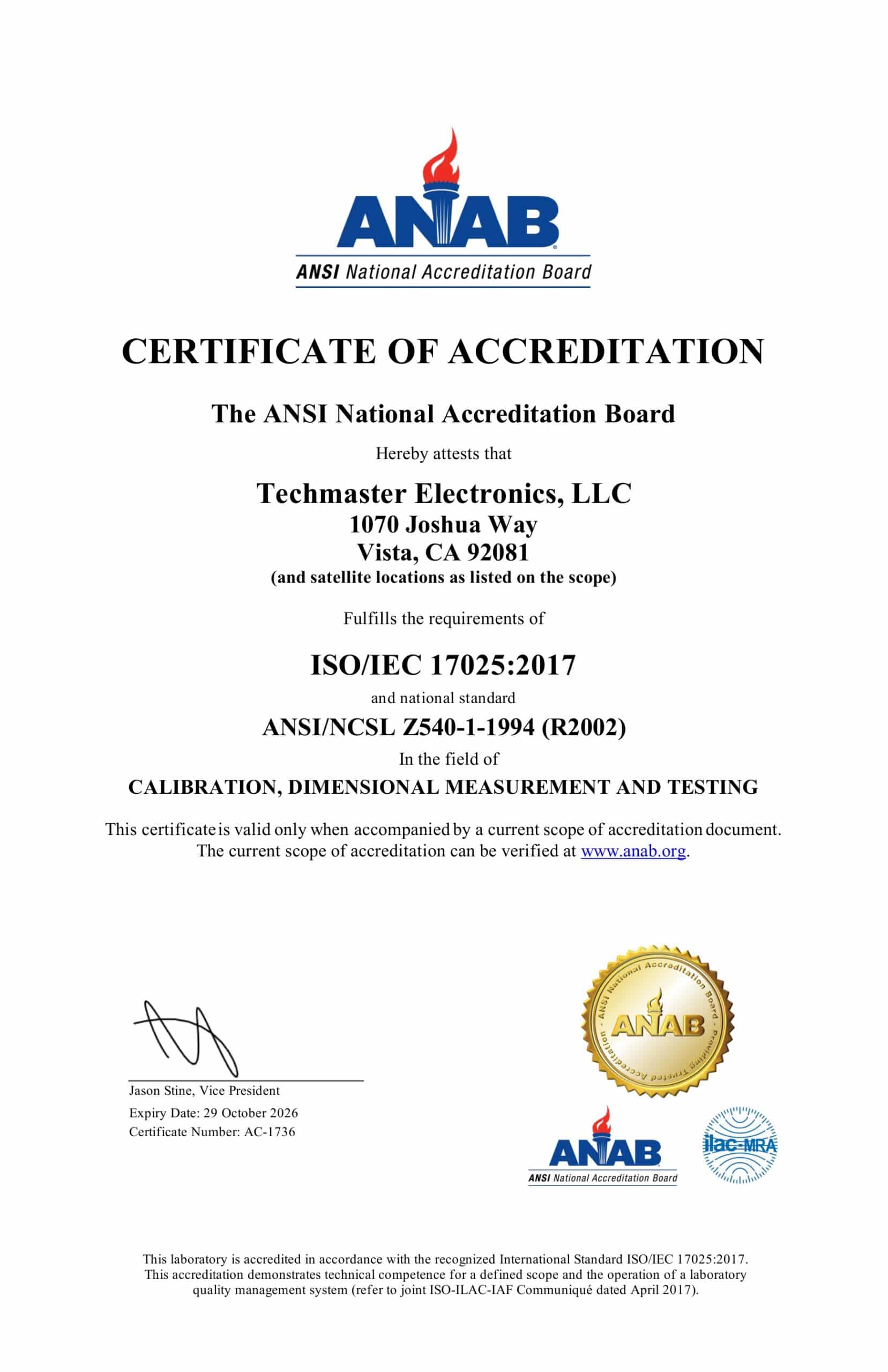
Vibration Meter Calibration
Accuracy across the range
How Vibration Meter Calibration works
- Intake & visual inspection
- Environmental stabilization
- As-found measurement
- Comparison to NIST-traceable standards
- Adjustment if required
- As-left results & certificate
Your calibration, covered
In-lab vs on-site calibration
In-lab calibration
- Accredited bench with full reference standards
- Best achievable measurement uncertainties
- Pickup & return logistics handled
- Ideal for precision and reference work
On-site calibration
- We calibrate the Vibration Meter at your facility
- No shipping risk or transit downtime
- As-found data captured before any move
- Ideal for fixed, large or sensitive assets
In-depth guide
Introduction to vibration
Vibration is a common phenomenon in industrial machinery. It refers to the periodic motion of parts within equipment that move away and return to a central position. While low levels of vibration are often normal, excessive or uncontrolled vibration can cause significant issues. These include accelerated wear and tear, decreased equipment efficiency, and even catastrophic failures. Such failures can halt operations and result in costly downtime. In various industries, controlling vibration is essential. For example, sectors such as manufacturing, construction, energy, and transportation rely on effective vibration management. This ensures operational efficiency, safety, and longer machinery lifespans. However, when vibration is left unchecked, it creates broader problems. It not only affects machines but also risks product quality and worker safety. In addition, it negatively impacts overall business performance.The critical role of vibration calibration
Calibration is the process of adjusting and verifying measurement instruments to ensure that they are operating accurately within specified limits. In the context of vibration, calibration is crucial because the precision of vibration measurements directly affects the reliability of your maintenance strategies and the safety of your operation.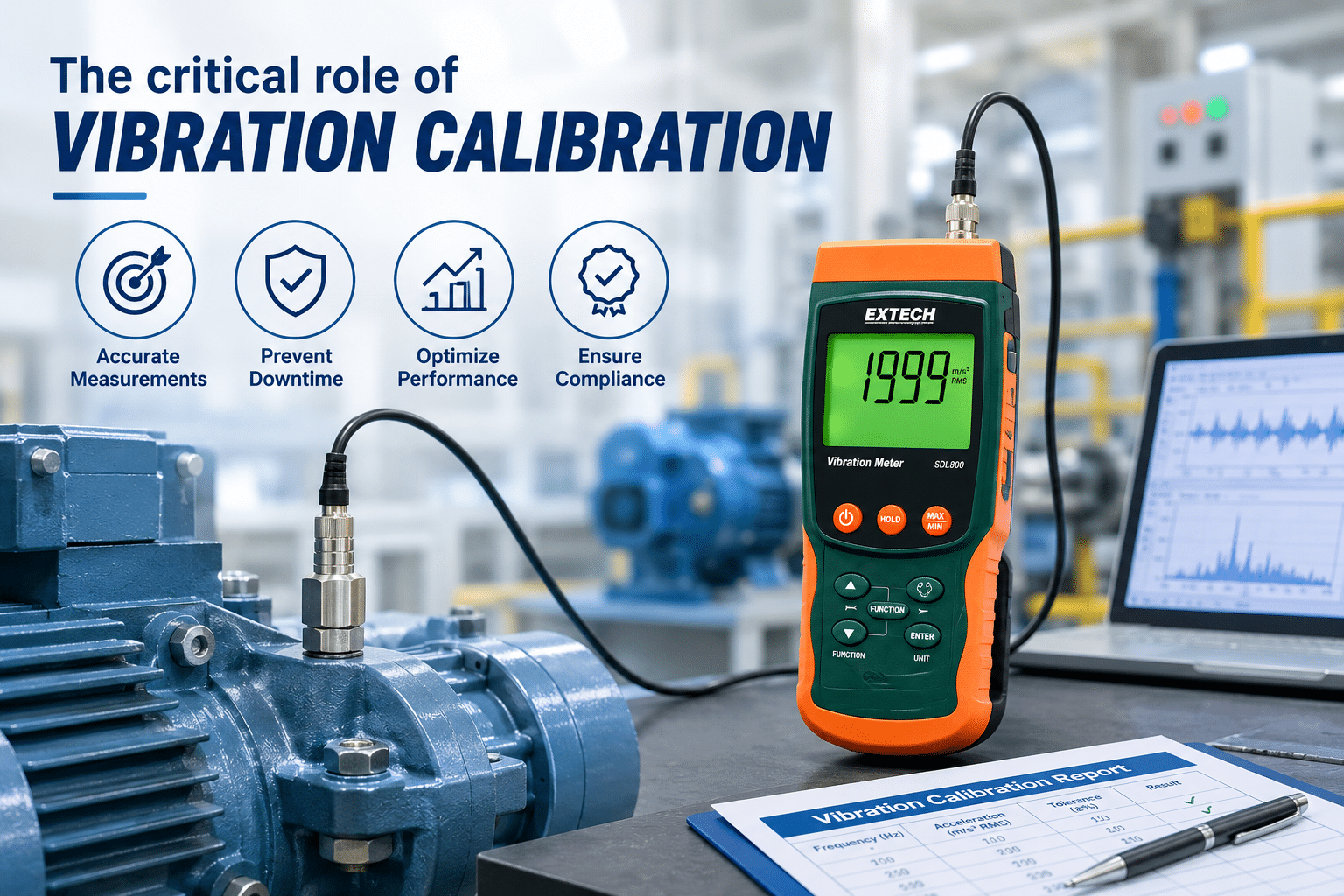
Why calibration matters in industrial settings
- Optimizing Equipment Performance: Accurate vibration measurement ensures that machinery operates efficiently. Calibration allows you to fine-tune your equipment to avoid unnecessary strain and minimize energy consumption.
- Preventing Unplanned Downtime: Proper calibration helps detect abnormalities early on. By identifying issues before they escalate, you can prevent equipment failures that result in unexpected downtime, which can cost businesses thousands of dollars in repairs and lost production.
- Ensuring Compliance with Industry Standards: Different industries must adhere to strict regulations concerning safety, quality, and operational efficiency. Calibration of vibration meters is crucial to meet these standards, particularly those related to machinery operation and maintenance. Relevant organizations such as the International Organization for Standardization (ISO), the American National Standards Institute (ANSI), and the National Institute of Standards and Technology (NIST) set guidelines followed across industries.
- Extending Equipment Lifespan: Through regular calibration, you can ensure that machinery is performing optimally, which in turn reduces wear and tear on equipment. This process can significantly extend the lifespan of machines and components, ultimately saving businesses money on repairs and replacements.
Key factors in vibration and calibration
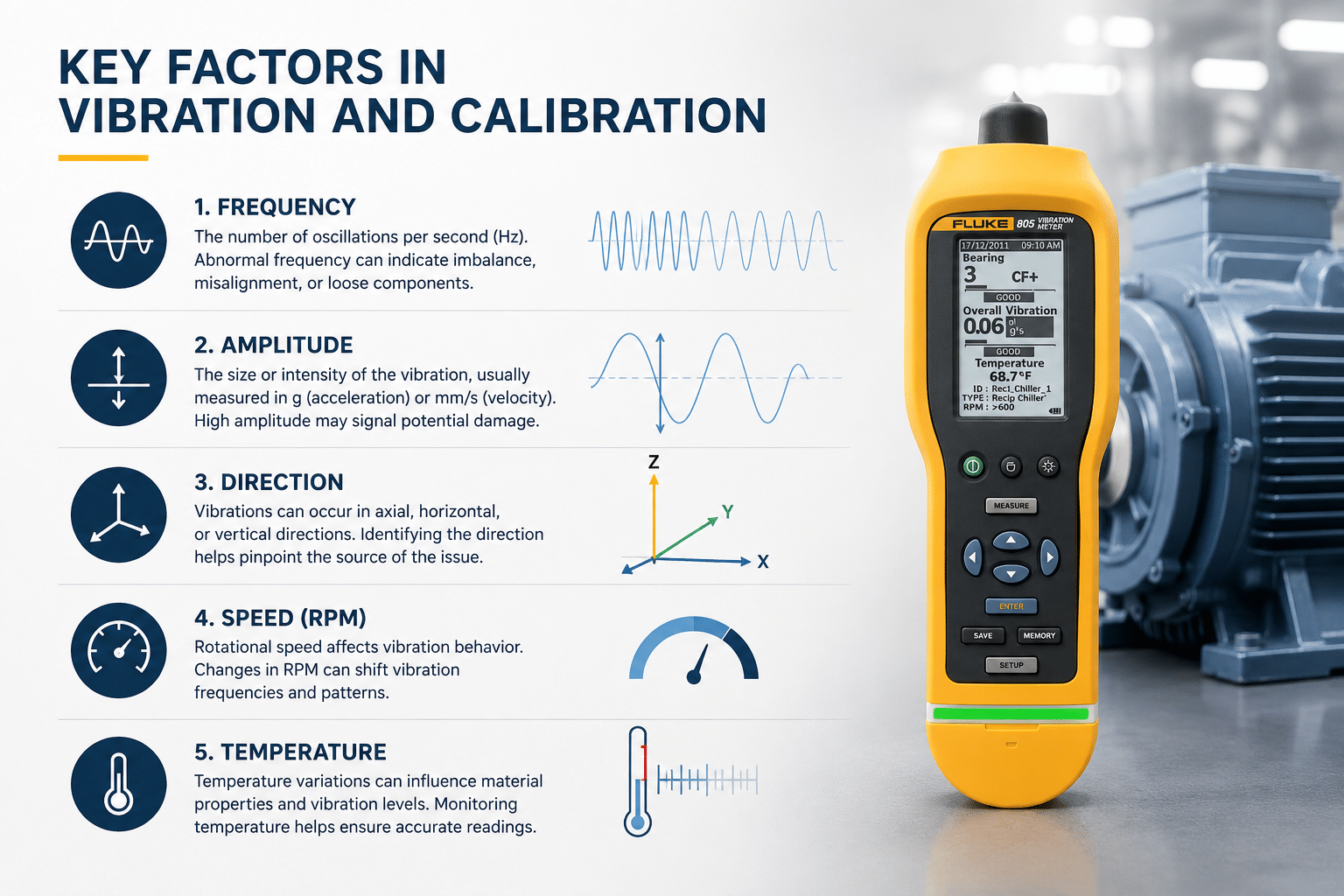
- Frequency: The number of oscillations per second, expressed in Hertz (Hz), indicates the regularity of the vibration. If the frequency of vibration exceeds or falls below the normal range for a given machine, it may indicate an imbalance, misalignment, or another mechanical issue that needs addressing.
- Amplitude: Amplitude refers to the magnitude of the vibration, or how far the machine component moves during each oscillation. High amplitude vibrations can signal significant problems such as looseness, bearing failure, or mechanical misalignment.
- Acceleration: Measured in units of g (gravity), acceleration describes the rate of change in velocity of the vibrating component. Accelerated vibrations can highlight potential faults that might not yet be detectable through frequency or amplitude alone. These rapid changes in movement could indicate serious issues like imbalance or structural failure.
How vibration calibration benefits your operations
The importance of vibration calibration goes beyond simply adhering to standards; it directly impacts your operational efficiency and overall cost savings. Here’s how it benefits your organization:- Early Fault Detection: Regular calibration enables you to detect irregularities early, which can prevent larger, more expensive repairs down the line. Monitoring vibration accurately can identify emerging issues such as misalignment, imbalance, or wear, allowing you to address them before they cause major damage.
- Improved Energy Efficiency: By minimizing excessive vibration, you reduce unnecessary energy consumption. Machines running smoothly with minimal vibration are more energy-efficient, which translates into lower operating costs.
- Safer Work Environments: Excessive vibration can result in mechanical failures that put workers at risk. Regular calibration ensures that your machinery operates safely and minimizes hazards, contributing to a safer workplace for your team.
- Enhanced Productivity: With well-calibrated equipment, you’ll experience fewer unexpected breakdowns, leading to more reliable production schedules. The result is improved output, higher quality products, and better overall business performance.
Conclusion
Vibration calibration is not just a technical necessity but a strategic investment in the long-term success of your operations. By ensuring that vibration measurements are accurate and reliable, you are not only improving the performance of your machinery but also safeguarding your bottom line. Regular calibration keeps your equipment running smoothly, extends its useful life, enhances safety, and reduces the risk of costly downtime. Don’t wait for issues to arise. Take control of your equipment’s performance today. Techmaster offers expert vibration calibration services that will help you maintain the efficiency and reliability of your operations. Reach out to us now to schedule your vibration calibration and ensure that your machinery is running at its best!
IEC 61672-3 Periodic Testing vs. Field Calibration for Sound Level Meters
A field check with an acoustic calibrator is not the same as IEC 61672-3 periodic...
Sep
Accelerometer Calibration by Back-to-Back Comparison: ISO 16063-21 Explained
How accredited labs calibrate accelerometers by back-to-back comparison per ISO 16063-21: sensitivity, frequency response, typical...
Aug

Professional Sound Calibrator Calibration & NIST Traceable Services
Home » Vibration calibration explained Metrology guide · ISO/IEC 17025 · ANAB-accredited Sound Calibrator Calibration…...
Feb
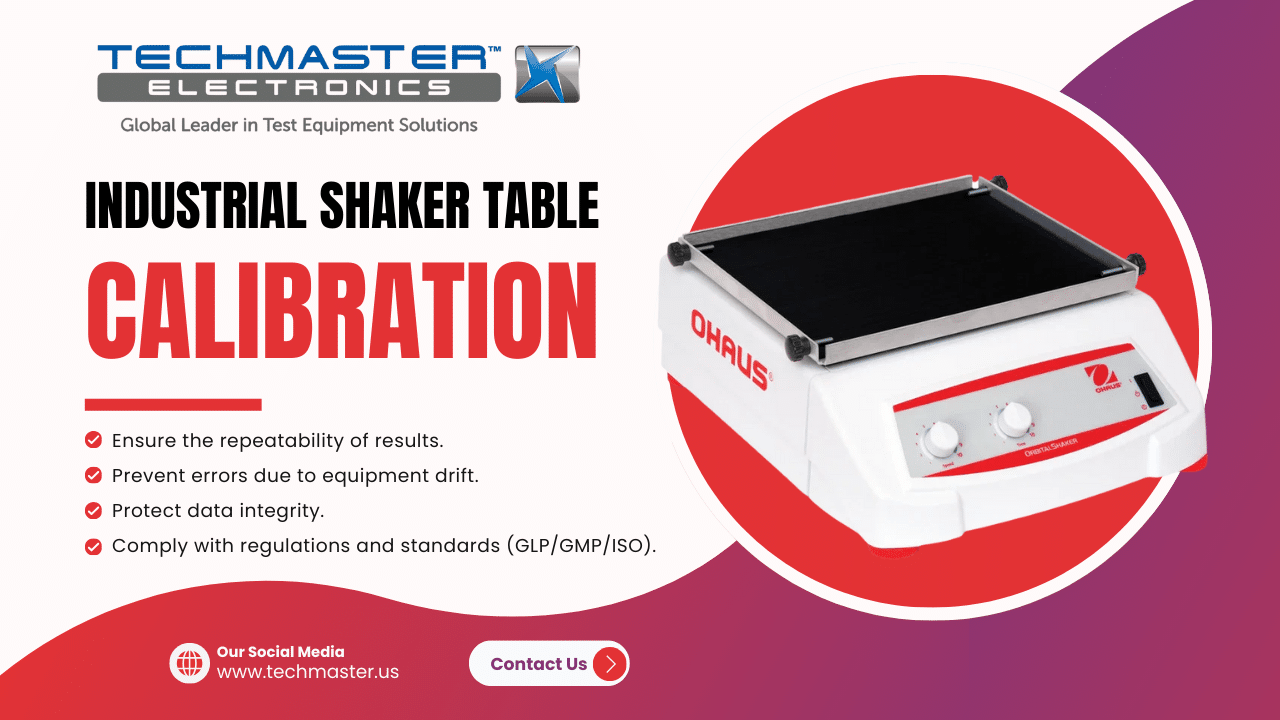
Shaker Table Calibration: Mandatory for Endurance Testing
Home » Vibration calibration explained Metrology guide · ISO/IEC 17025 · ANAB-accredited Shaker Table Calibration...
Dec

Sound Level Calibration: Environmental Noise Control
Home » Vibration calibration explained Metrology guide · ISO/IEC 17025 · ANAB-accredited Sound Level Meter...
Nov

Piezoelectric Accelerometers Calibration in Robotics
Home » Vibration calibration explained Metrology guide · ISO/IEC 17025 · ANAB-accredited Piezoelectric Accelerometer Calibration…...
Aug

MEMS Technology in Vibration Measurement
Home » Vibration calibration explained Guide · Techmaster Electronics MEMS Technology in Vibration Measurement This...
Jul

Sound Level Meter: What is it and how does it work?
Home » Vibration calibration explained Guide · Techmaster Electronics Sound Level Meter This guide from...
Mar
Frequently asked questions
What is Vibration Meter Calibration?
How often should a Vibration Meter be calibrated?
What standards apply to Vibration Meter Calibration?
What is included on the certificate?
Can you calibrate the Vibration Meter on-site?
Need Vibration Meter Calibration?
ANAB-accredited, NIST-traceable, fast turnaround, in-lab or on-site across the USA.
Contact us for a quoteReferences & industry standards
- ISO/IEC 17025 testing & calibration laboratory requirements
- NIST calibration services and measurement traceability
- A2LA / ANAB accreditation for calibration laboratories
External standards bodies. Techmaster Electronics is an ISO/IEC 17025-accredited, NIST-traceable calibration laboratory.
Learn more about our vibration calibration service.

Khanh Nguyen is the Marketing Manager at Techmaster Electronics, a B2B marketing leader covering the test, measurement, and ISO/IEC 17025 accredited calibration industry in the United States.