Renting vs Buying an Oscilloscope: What Makes Sense for Your Lab?
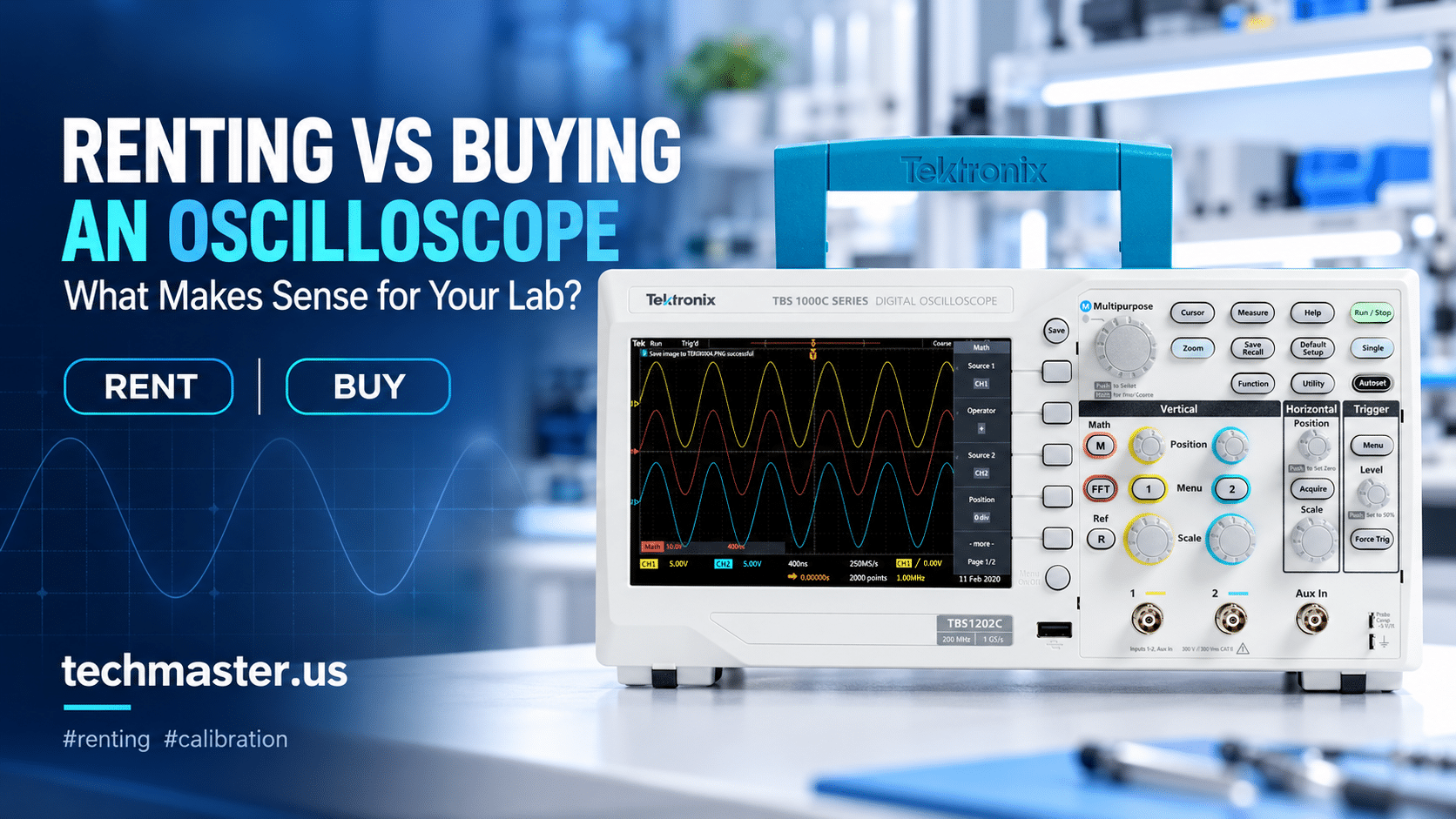
Equipping a modern testing facility requires money. For example, high-frequency measurement tools cost a large portion of a lab’s budget. Therefore, lab managers and test engineers face a tough choice every year. They must decide whether to [rent vs buy oscilloscope]([INSERT LANDING PAGE URL]) equipment. Top brands like Keysight, Tektronix, and Teledyne LeCroy charge thousands of dollars for their best tools. Buying gives you full, lasting ownership of the asset. However, renting offers financial freedom and quick access to new tech. Furthermore, renting removes the burden of maintenance. To make the best choice, you must understand your exact project needs. In addition, you must know the hidden costs of ownership. Ultimately, this knowledge helps you choose the right path for your business.
1. What Is a Bench Oscilloscope?
A bench oscilloscope acts as the eyes of an electronics lab. Specifically, engineers use it to view, measure, and study electrical signals over time. Small, handheld models work fine for basic field checks. On the other hand, a true bench oscilloscope belongs in a serious lab. These heavy-duty units offer higher bandwidth and faster sample rates. Additionally, they pack deeper memory and smart trigger options.
Design teams rely on these scopes every single day. First, they read signal voltage and check fast frequencies. Next, engineers use them to find power noise and decode complex data buses. Furthermore, these tools help fix broken embedded systems. Users can also verify power designs and ensure clean signals in digital circuits. You might decide to buy a bench oscilloscope for your team. Alternatively, you might decide to lease one instead. Either way, you need a highly accurate, working unit to ensure product quality.
2. Why the “Rent vs Buy Oscilloscope” Decision Matters
The Financial Impact of Equipment Choices
Your equipment choices directly affect measurement accuracy, trace data, and daily success. Moreover, the way you pay for this gear changes your financial health. Thus, the choice to rent or buy matters for several major reasons:
Capital vs. Operating Expenses
Buying a scope acts as a capital cost (CapEx). As a result, it requires a large upfront budget approval and complex depreciation tracking. Renting, however, changes this to a simple operating cost (OpEx). Consequently, this move frees up cash for other lab needs or staff hires.
Fast Tech Changes
Test tools improve very quickly. For instance, a 1 GHz scope might work perfectly today, but next year, your project might demand 4 GHz bandwidth. Owned gear might become outdated before it breaks. Renting lets you upgrade instantly when your needs change.
Risk and Maintenance
Owners must handle maintenance, repairs, and annual calibration themselves. A reliable oscilloscope rental service changes this rule entirely. The gear arrives fully calibrated and ready to test. In short, you transfer the repair risks and downtime risks to the provider.
Short-Term Needs
Your factory might need extra testing stations for a short six-month run. As a result, buying permanent tools leads to dusty, unused assets later. Renting lets you pay only while the equipment generates money.
Visualizing the Impact: Buy vs. Rent
A comparative overview of financial and operational burdens.
3. Techmaster’s Electronic Test Equipment Rental Services
Many labs need fast access to high-quality tools without spending their entire budget. Fortunately, Techmaster Electronics helps solve this problem. We offer flexible test equipment rental plans. Our large inventory includes premium bench oscilloscopes and other precision tools. Furthermore, we maintain every single unit to the highest metrology standards.
When you rent from Techmaster, we test and verify every unit before shipping. In addition, we include valid, accredited calibration papers in the box. Therefore, you can unpack the tool and start testing right away. You can trust your results completely. We offer short rentals for quick projects. Likewise, we offer long leases for extended runs. Overall, our rental service gives you freedom while keeping your lab perfectly compliant.
4. Common Applications
Many strict industries rely on bench scopes every day. In fact, the demands stay high whether you rent the tool or own it. Typical applications include:
Factory Quality Control
Workers test electronic parts and green circuit boards. They make sure items meet strict design specs before boxing them up.
Aerospace and Defense
Engineers test radar parts, airplane flight controls, and secure radios. As you might expect, signal failures in this industry can cause major disasters.
Automotive Electronics
Technicians debug complex car data buses like CAN and LIN. Additionally, they test electric vehicle (EV) batteries and fast power systems.
Medical Devices
Testers validate the safety of sensitive health monitors. Furthermore, they ensure lab machines deliver exact chemical doses.
Research and Development
Scientists study brand new microchip materials. Specifically, they analyze RF signals and build next-generation consumer gadgets.
5. Calibration Standards and Traceability
Accurate testing requires exact, proper calibration. Therefore, you must calibrate your electronic test equipment regardless of how you acquired it. Furthermore, you must follow strict global standards, primarily ISO/IEC 17025.
This standard shows a lab is fully competent. It proves the lab technicians can measure things correctly and safely. In addition, National Metrology Institutes, like NIST in the United States, must trace all calibrations.
During a check, metrologists figure out measurement uncertainty. They look at vertical deflection, the timebase, and trigger speeds. Next, the lab provides a clear calibration certificate. This paper shows the exact data before and after any fixes. Ultimately, companies need these strict records to pass audits. FDA rules, FAA rules, and ISO 9001 demand this exact paper trail.
6. Common Issues Found During Calibration
Oscilloscopes feel tough and heavy, but their internal parts drift over time. As a result, regular checks often catch hidden problems. These flaws can ruin quality control if you ignore them. Common issues include:
-
Vertical Amplitude Drift: Amplifiers age inside the metal case. Consequently, the scope might show voltage levels that are slightly wrong.
-
Timebase Errors: The internal clock crystal gets older and slips. This aging causes tiny timing mistakes. High-speed digital signals need exact nanosecond timing.
-
Bandwidth Loss: Heat and age hurt high-frequency performance over the years. Because of this, fast signals might look weak, soft, or warped on the screen.
-
Trigger Problems: Worn dials or bad parts stop the scope from locking onto signals. Therefore, low-power signals jump around on the screen.
-
Channel Delays: Multi-channel units can develop timing gaps between their inputs. As a result, this delay stops you from comparing two signals fairly and correctly.
7. How Often Should This Equipment Be Calibrated?
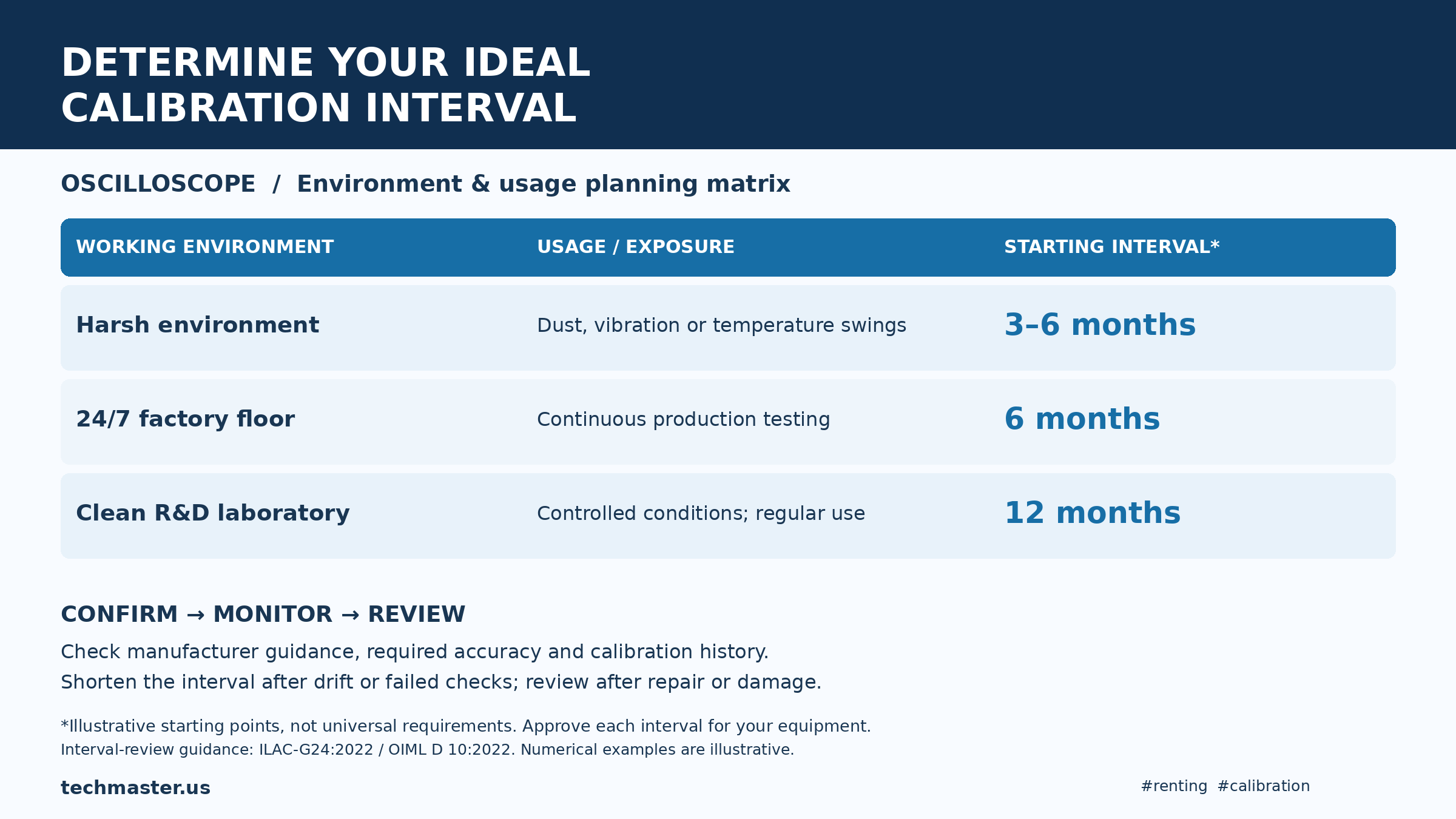
Setting a strict schedule keeps your measurements safe and accurate. Generally, the industry checks bench scopes every 12 months. However, this standard rule can and should change. You should base your schedule on several factors:
-
Maker Advice: Brands like Keysight and Tektronix usually suggest an annual check in their manuals.
-
Usage Rate: Some factories run scopes all day and all night. These units get hot and stressed. Consequently, they might need a strict check every six months.
-
Work Setting: A dusty, hot factory floor hurts gear much faster. On the other hand, a cool, clean lab keeps gear safe and stable much longer.
-
Quality Rules: Your internal company manual might ask for shorter cycles. Furthermore, strict rules like aerospace AS9100 can override normal factory advice.
8. What to Look for in a Calibration Provider
Picking the right partner matters just as much as picking the tool. You might own your scope. Alternatively, you might rent it from a third party. Either way, you must check the lab’s skills carefully. Look for these vital traits:
-
ISO/IEC 17025 Accreditation: This forms the basic requirement. Therefore, make sure their lab scope covers your exact tool and frequencies.
-
Technical Skill: Ask if they can handle high-bandwidth tools. For instance, a 4 GHz scope needs special, fast pulse generators to test it correctly.
-
Fast Turnaround: Waiting for equipment costs you money. Because of this, find a lab that promises fast service and sticks to it.
-
Good Paperwork: The lab must provide clear, easy-to-read certificates. In addition, these papers must list measurement uncertainty and all trace data.
-
On-Site Options: Sending heavy tools out slows down busy factories. Fortunately, a metrology team that visits your site saves you massive amounts of time.
9. Why Choose Techmaster Electronics?
Techmaster Electronics leads the metrology and testing industry. Specifically, we offer both premium equipment rentals and expert Calibration service. We serve the aerospace, medical, automotive, and defense fields. Thus, we know exactly why measurement accuracy matters to your business.
Our ISO/IEC 17025 accredited labs use the best standards available today. Furthermore, we support the most advanced test tools you can find on the market. When you pick Techmaster, you get highly trained experts working for you. In short, we lower your risks, keep you compliant, and fix problems fast. You might need a short-term rental for a rushed job. Conversely, you might need a team to manage your whole lab’s calibration schedule. Either way, we deliver tracked, trusted, and true results.
10. Conclusion
The choice to rent vs buy an oscilloscope depends entirely on your budget. It also depends on your project length and future tech needs. Buying fits long-term, steady, unchanging jobs perfectly. On the other hand, renting gives you fast changes, saves your cash, and skips all maintenance tasks. No matter how you get your tools, you must keep them calibrated. Therefore, always use an accredited lab. Ultimately, this remains the only way to trust your data and protect the quality of your end products.
11. FAQ Section
Frequently asked questions
What is oscilloscope calibration?
Oscilloscope Calibration is the documented comparison of a oscilloscope against NIST-traceable reference standards under ISO/IEC 17025. It quantifies the oscilloscope’s error and measurement uncertainty and confirms it performs within tolerance, with as-found and as-left data on the certificate.
How often should a oscilloscope be calibrated?
Most quality systems calibrate a oscilloscope every 12 months, or sooner after repair, overload, or before critical measurements. Set your interval from the manufacturer spec and your ISO 9001 / 13485 / AS9100 program and drift history.
Is Techmaster’s oscilloscope calibration ISO 17025 accredited?
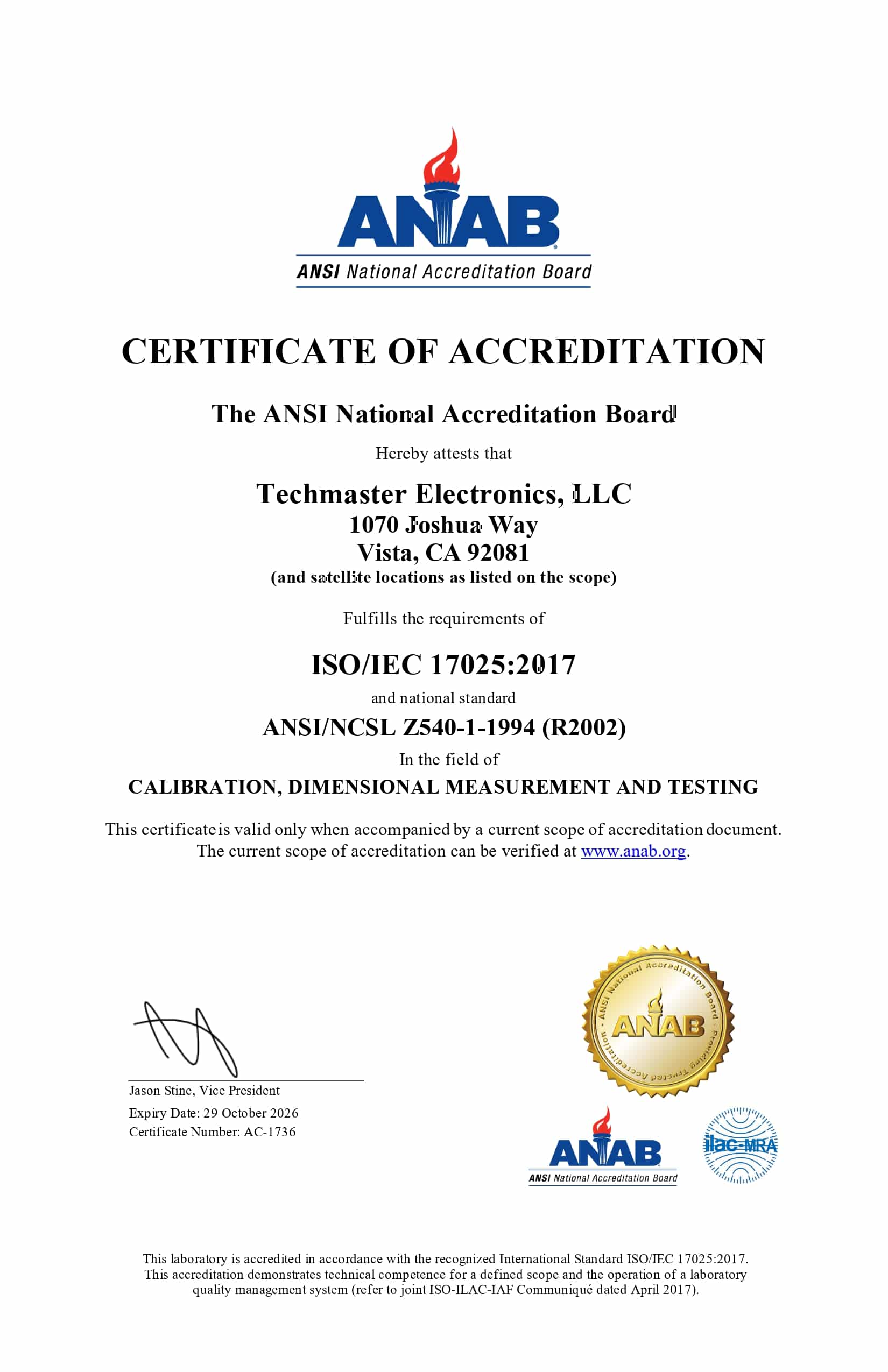
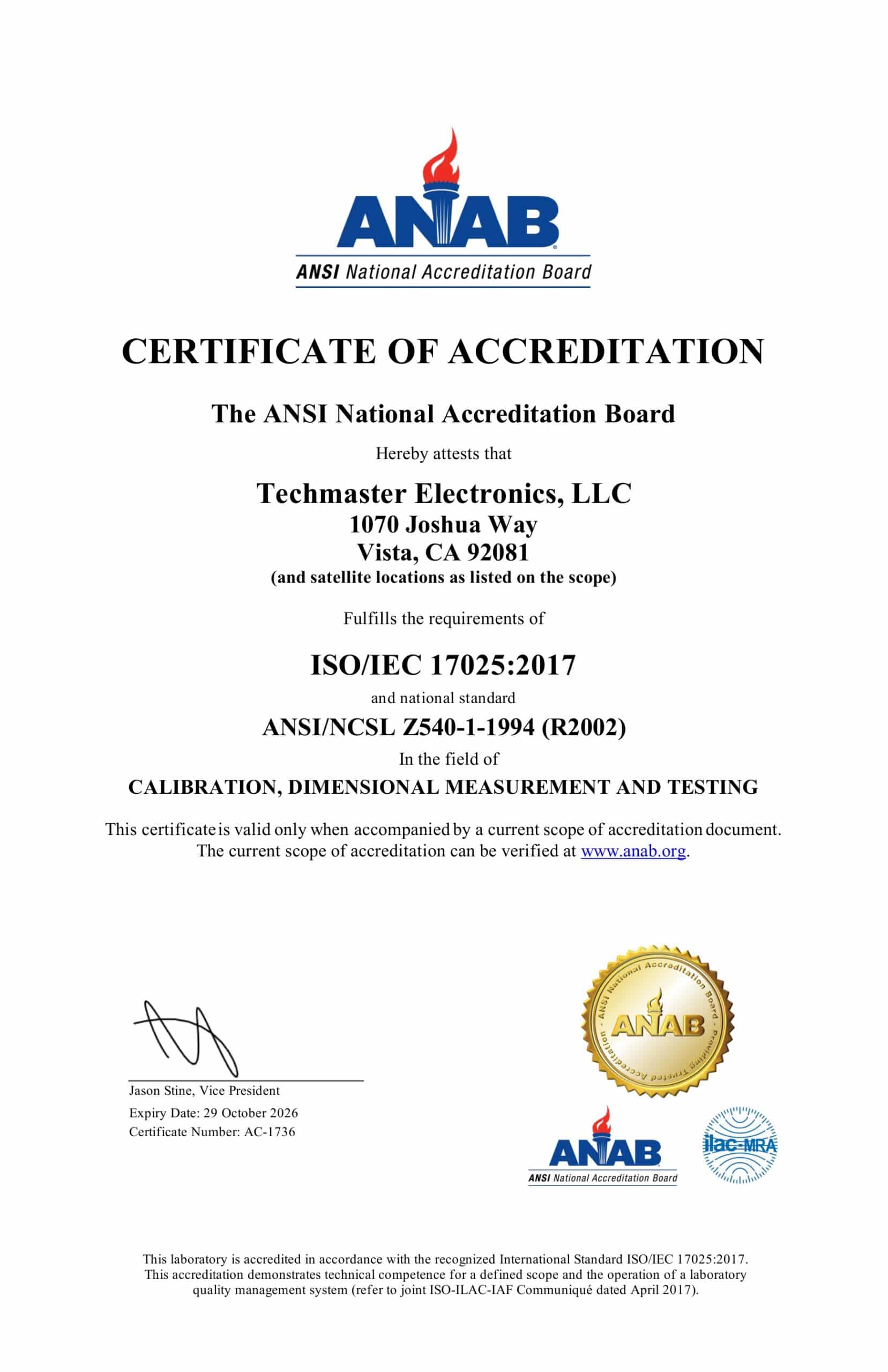
Yes. Techmaster Electronics is ISO/IEC 17025:2017 accredited by ANAB (Certificate AC-1736). Every oscilloscope calibration is NIST-traceable and issued with a full measurement-uncertainty budget.
What is the turnaround for oscilloscope calibration?
Standard turnaround is 5 business days, with 1–2 business-day expedite available. On-site calibration removes shipping time entirely for oscilloscopes that can’t leave the floor.
Do you calibrate oscilloscopes on-site or in-lab?
Both. Techmaster runs five US labs (Vista CA, Santa Clara CA, Orlando FL, San Antonio TX, Holly Springs NC) and offers nationwide on-site oscilloscope calibration to minimize downtime.

Calibration engineer at Techmaster Electronics, ISO/IEC 17025 accredited laboratory with 35+ years of metrology expertise.