
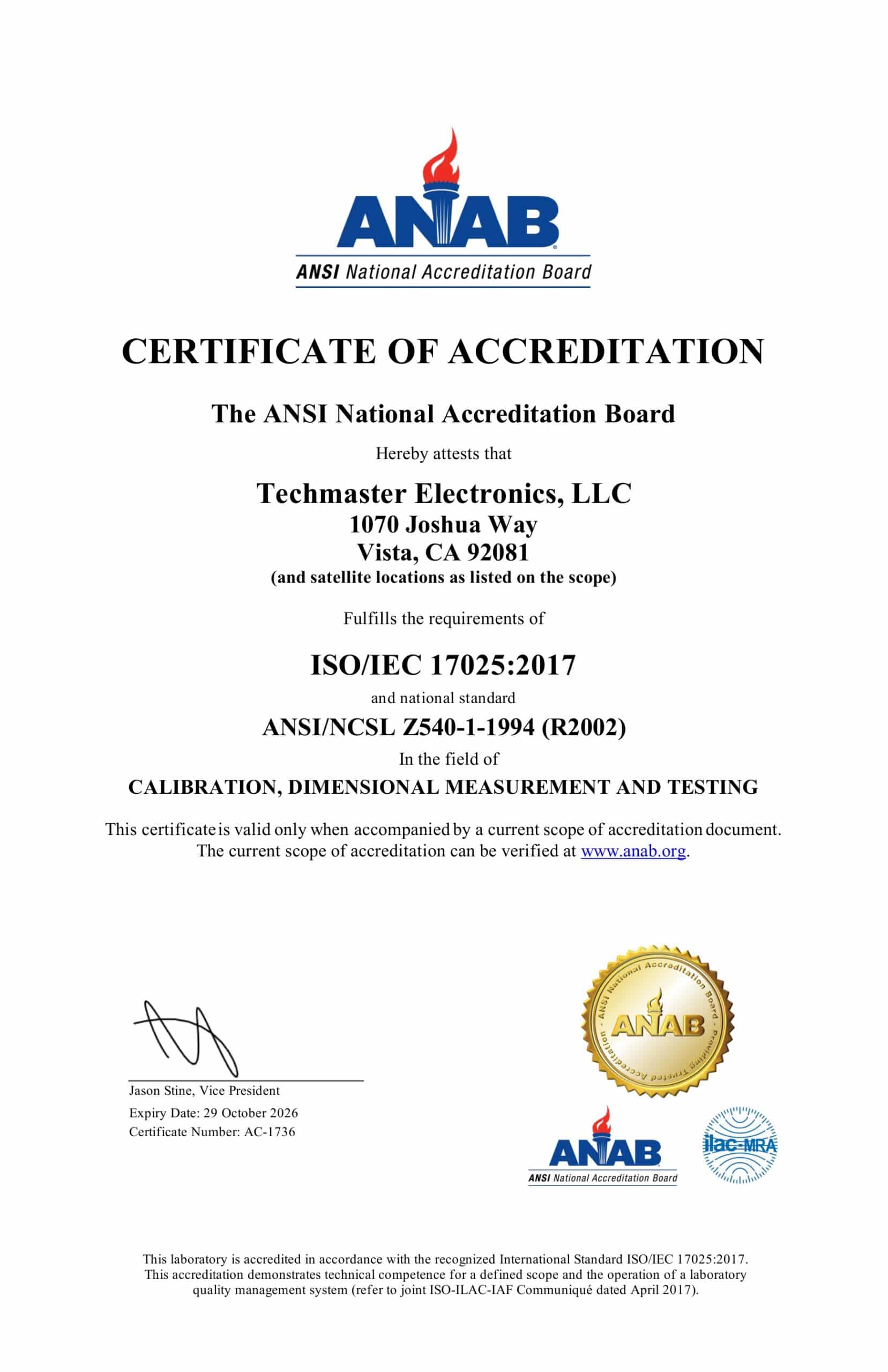
Measuring tape calibration is a simple comparison against a certified reference, but the tolerances and the certificate are what auditors ask for.
Measuring Tape Calibration
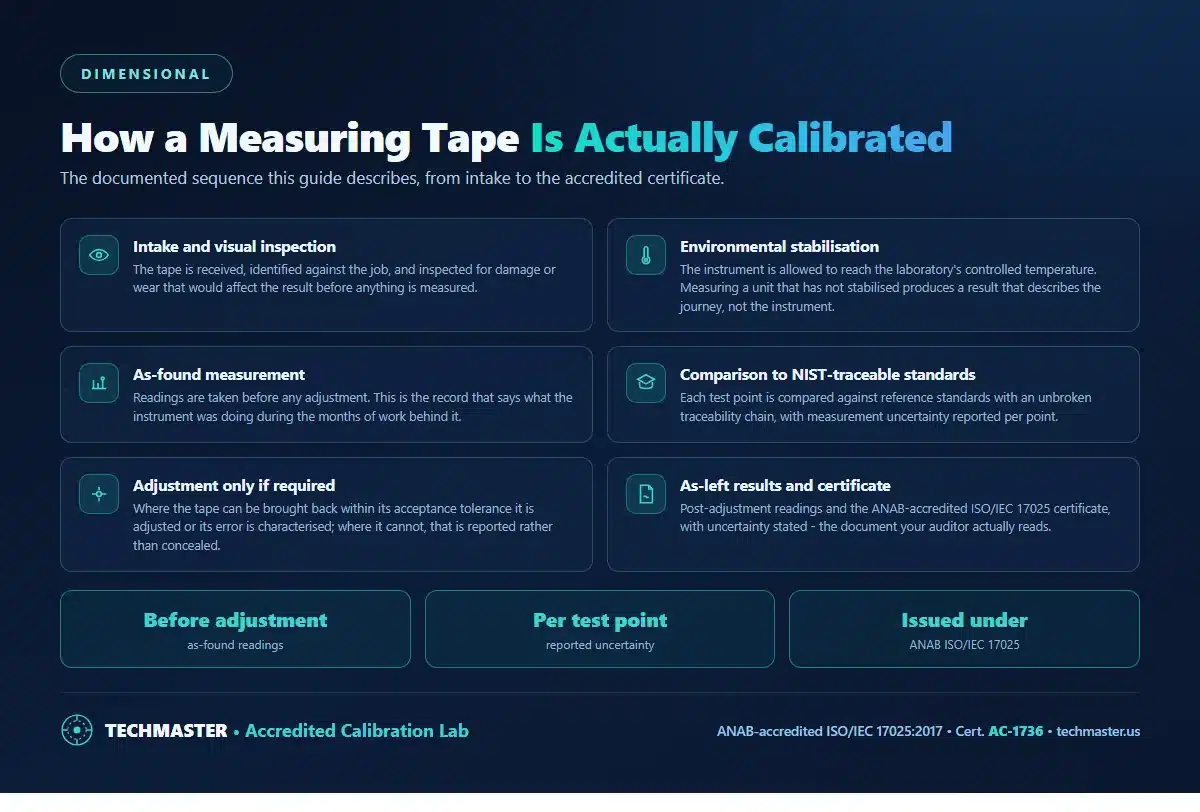
Accuracy across the range
How Measuring Tape calibration works
- Intake & visual inspection
- Environmental stabilization
- As-found measurement
- Comparison to NIST-traceable standards
- Adjustment if required
- As-left results & certificate
Your calibration, covered
In-lab vs on-site calibration
In-lab calibration
- Accredited bench with full reference standards
- Best achievable measurement uncertainties
- Pickup & return logistics handled
- Ideal for precision and reference work
On-site calibration
- We calibrate the Measuring Tape at your facility
- No shipping risk or transit downtime
- As-found data captured before any move
- Ideal for fixed, large or sensitive assets
In-depth guide
1. Why Measuring Tape Calibration Matters
Measuring tapes are essential tools in various industries, including construction, engineering, and manufacturing. However, over time, even the best-quality measuring tapes can lose their accuracy due to wear and tear, environmental factors, or mishandling. This is why measuring tape calibration is critical. Regular calibration ensures that your measurements remain precise, preventing costly errors and maintaining high standards in your work.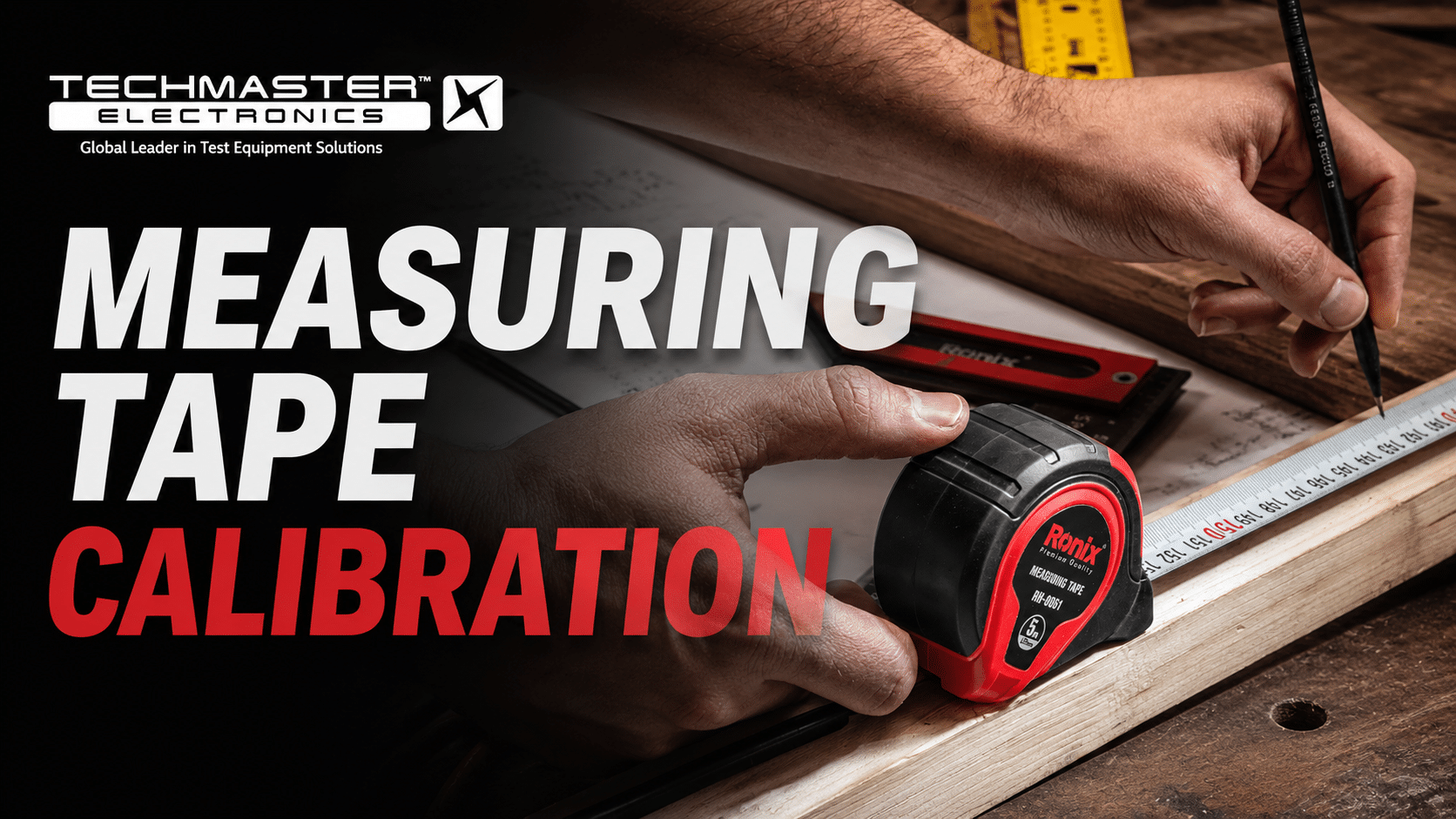
2. What is Measuring Tape Calibration?
Measuring tape calibration refers to the process of comparing the measurements on a tape to a known standard, typically a certified reference or master tape. The purpose is to verify that the tape provides accurate readings and to identify any necessary corrections.
Tape measures are one of several length instruments handled by our dimensional calibration lab, alongside steel rules, calipers and micrometers.
3. Key Reasons to Calibrate Your Measuring Tape
- Accuracy in Measurement: Even a slight deviation in measurements can lead to significant issues in large-scale projects. Calibration helps eliminate such errors.
- Compliance with Standards: Many industries require adherence to strict measurement standards. Regular calibration ensures your tape meets these requirements.
- Quality Assurance: Consistent accuracy in measurements reflects a commitment to high-quality work, enhancing your reputation.
- Safety: Incorrect measurements in construction or engineering can compromise safety. Calibration minimizes these risks.
4. How Often Should You Calibrate a Measuring Tape?
The frequency of calibration depends on several factors, such as:- Usage intensity: Tapes used daily or in harsh environments should be calibrated more often.
- Industry requirements: Some industries mandate periodic calibration, such as every six months or annually.
- Signs of wear: If your tape shows signs of damage or wear, it’s time for calibration.
5. Tools and Equipment Needed for Calibration
To perform accurate calibration, you will need the following:- Certified reference tape: A master tape with verified accuracy.
- Flat surface: Ensure you have a clean, flat surface for precise comparison.
- Magnifying glass: For better visibility of fine increments.
- Calibration chart: To record discrepancies and corrections.
- Temperature control: Since metal tapes can expand or contract with temperature changes, calibration should be done in a controlled environment.
6. Step-by-Step Guide to Calibrating a Measuring Tape
- Inspect the Tape Begin by visually inspecting your measuring tape for any visible damage, such as kinks, rust, or worn-out markings. Damaged tapes should be replaced rather than calibrated.
- Clean the Tape Dust, dirt, and debris can affect the accuracy of measurements. Use a soft cloth to clean the tape before calibration.
- Align with the Reference Tape Place the measuring tape and the certified reference tape on a flat surface. Ensure both tapes are fully stretched and aligned at the zero mark.
- Compare Measurements Using a magnifying glass, carefully compare the measurements at several key intervals, such as 1 meter, 5 meters, and 10 meters.
- Record Discrepancies Note any discrepancies between the two tapes. Even minor deviations should be recorded, as they can affect accuracy in larger measurements.
- Apply Corrections If discrepancies are found, apply corrections by marking or noting the error for future reference. In some cases, you may need to replace the tape if the error exceeds acceptable limits.
- Certification Once calibrated, label the tape with the date of calibration and the next due date. If required, obtain a calibration certificate from a certified laboratory.
7. Common Errors in Measuring Tape Calibration
- Environmental factors: Temperature fluctuations can cause metal tapes to expand or contract, leading to inaccurate calibration.
- Improper alignment: Misalignment of the reference and measuring tapes can result in false readings.
- Skipping intervals: Failing to check measurements at multiple intervals can overlook critical errors.
8. Benefits of Professional Calibration Services
While it is possible to perform calibration in-house, professional calibration services offer several advantages:- Expertise: Professionals have the knowledge and experience to detect even the slightest errors.
- Certified equipment: Professional services use high-precision tools and reference tapes.
- Documentation: A certified calibration service provides a detailed report and certificate, which may be required for compliance in certain industries.
9. Maintaining Measuring Tape Accuracy
Apart from regular calibration, you can maintain the accuracy of your measuring tape by following these tips:- Store properly: Avoid exposing the tape to extreme temperatures or moisture.
- Handle with care: Prevent drops, bends, or twists that could damage the tape.
- Check periodically: Even if calibration is not due, periodically check for visible signs of wear or damage.
10. Conclusion
Measuring tape calibration is an essential practice for ensuring precision in any measurement-dependent task. By understanding the importance of calibration, knowing when and how to perform it, and considering professional services when necessary, you can maintain high accuracy in your work. Regular calibration not only enhances quality and compliance but also prevents costly mistakes, ensuring your projects are successful every time.
Outside Micrometer Calibration: Flatness, Parallelism and Linearity Checks
How an ISO/IEC 17025 lab calibrates an outside micrometer: gage block linearity points, optical flat...
Oct

Glass Scale Calibration for DROs, Comparators and Measuring Machines
Home » Measuring Tape CalibrationGlass scales (linear encoders) sit inside digital readouts on mills and...
Oct

Microscope Calibration: Stage Micrometers, Reticles and Imaging Software
Home » Measuring Tape Calibration If a microscope is only used to look at things,...
Oct
How Often Calibrate Universal Testing Machine?
Home » Measuring Tape Calibration Universal Testing Machine FAQ: Calibration Intervals, Accuracy & Compliance In...
Sep

How to Use a Universal Testing Machine?
Home » Measuring Tape Calibration How to Use a Universal Testing Machine: Setup, Operation &...
Sep
Universal Testing Machine Calibration: ISO/IEC 17025 Guide
Home » Measuring Tape Calibration Universal Testing Machine Calibration: ISO/IEC 17025 Step-by-Step Guide In structural...
Sep
How often calibrate Ultrasonic Thickness Gauge?
Home » Measuring Tape Calibration Ultrasonic Thickness Gauge FAQ: Calibration Intervals, Accuracy & Compliance In...
Sep
How to Use an Ultrasonic Thickness Gauge?
Home » Measuring Tape Calibration How to Use an Ultrasonic Thickness Gauge: Setup, Operation &...
Sep
Frequently asked questions
What is Measuring Tape Calibration?
How often should a Measuring Tape be calibrated?
What standards apply to Measuring Tape Calibration?
What is included on the certificate?
Can you calibrate the Measuring Tape on-site?
Need Measuring Tape calibration?
ANAB-accredited, NIST-traceable, fast turnaround — in-lab or on-site across the USA.
Contact us for a quoteReferences & industry standards
- ISO/IEC 17025 testing & calibration laboratory requirements
- NIST calibration services and measurement traceability
- A2LA / ANAB accreditation for calibration laboratories
External standards bodies. Techmaster Electronics is an ISO/IEC 17025-accredited, NIST-traceable calibration laboratory.

Khanh Nguyen is the Marketing Manager at Techmaster Electronics, a B2B marketing leader covering the test, measurement, and ISO/IEC 17025 accredited calibration industry in the United States.