
Rent vs Buy DC Electronic Load: What Makes Sense for Your Lab?
Equipping a modern testing laboratory requires careful planning. Lab managers must balance technical requirements with strict budget limits. High-quality load simulation is critical for power testing. Many teams face a common operational dilemma. They must decide whether to rent vs buy dc electronic load systems for their projects.
Measurement accuracy remains non-negotiable. The reliability of your data depends on precise instruments. This applies to aerospace testing and electric vehicle battery validation. Both renting and purchasing offer unique advantages. The final decision impacts your capital expenditure. It also affects calibration, maintenance, and ongoing compliance.
1. What Is a DC Electronic Load?
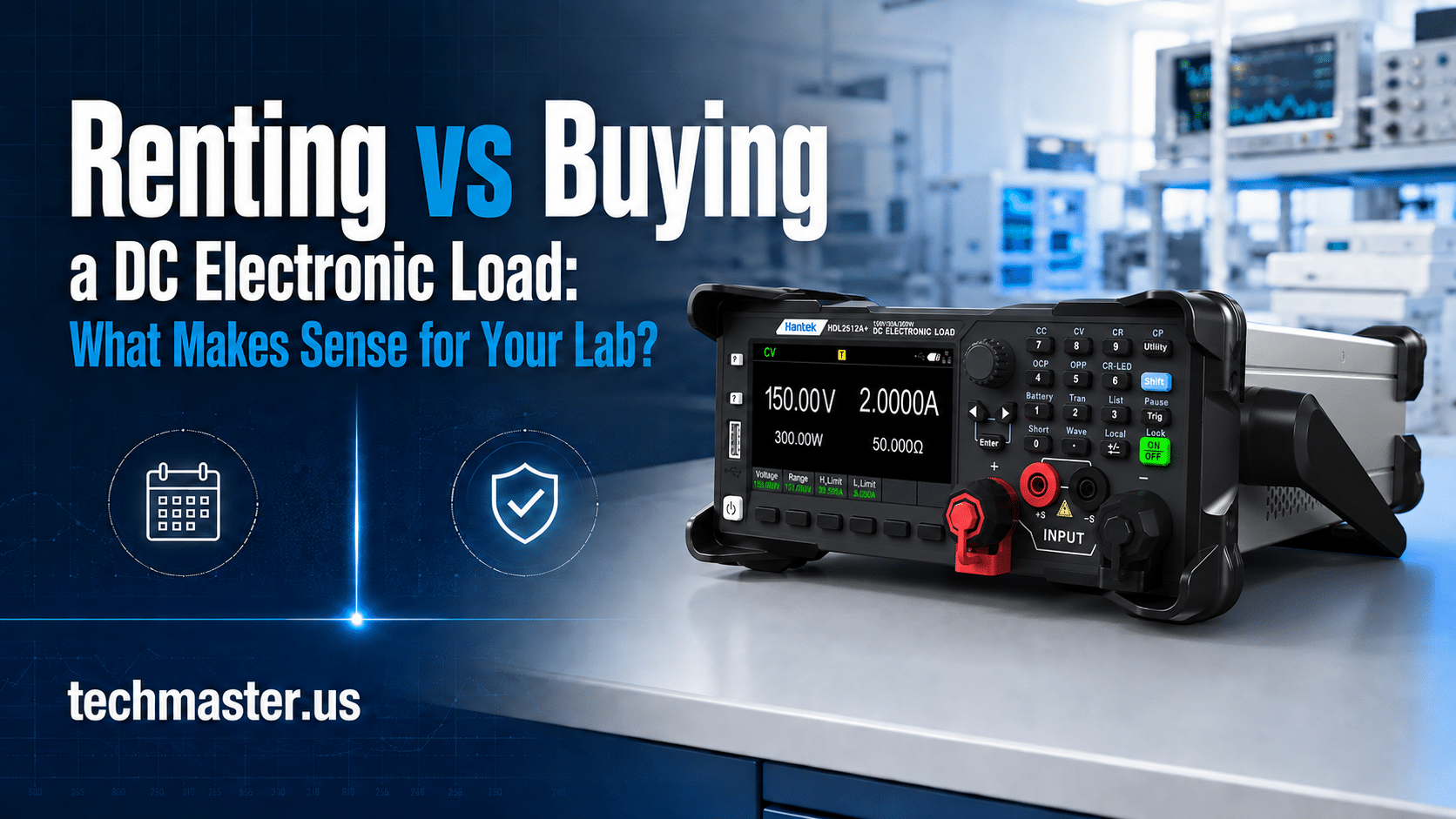
A DC electronic load is a highly precise test instrument. It absorbs, or sinks, electrical power from a direct current source. Passive resistive loads dissipate power at a fixed rate. In contrast, an electronic load dynamically adjusts its resistance. This dynamic adjustment simulates various real-world operating conditions.
Core Operating Modes
Engineers rely on these instruments to test power source behavior. The equipment operates in several fundamental modes. These include Constant Current (CC) and Constant Voltage (CV). They also feature Constant Resistance (CR) and Constant Power (CP) modes. The load actively controls voltage and current. This accurately measures efficiency and transient response.
2. Why the “Rent vs Buy DC Electronic Load” Decision Matters
Making the right equipment choice impacts your laboratory’s financial health. It also dictates your operational efficiency and measurement reliability. Ownership models change how your business handles risk.
Benefits of Choosing to Buy
Purchasing works best for long-term production lines. It also suits permanent R&D test benches. Daily use over many years justifies the capital expenditure.
If you buy a DC electronic load, you gain asset ownership. However, this comes with lifecycle management responsibilities. You must account for annual maintenance and repair costs. You also hold the logistical burden of compliance.
Benefits of Rental
Renting shifts your costs from capital to operational expenses. This helps when you have a short-term project. It is ideal for temporary spikes in production volume.
A test and measurement equipment rental strategy eliminates ownership burdens. The equipment arrives fully calibrated and ready to use. This protects your timeline and prevents downtime.
3. Common Applications
DC electronic loads are highly versatile test instruments. They serve quality-driven industries requiring rigorous validation. Reliable electronic load testing prevents costly field failures.
Industry Use Cases
-
Battery and Energy Storage: Engineers conduct deep discharge tests. They evaluate lithium-ion batteries and fuel cells.
-
Power Supply Characterization: Technicians verify load regulation. They measure transient response in DC/DC converters.
-
Automotive and Aerospace: Labs validate vehicle alternators. They test avionics power distributions under peak stress.
-
Alternative Energy: Facilities simulate real-world grid loads. They test solar panels and wind turbine charge controllers.
-
Burn-In Manufacturing: Production lines run continuous stable loads. This identifies early-life failures in consumer electronics.
4. Calibration Standards and Traceability
Your test equipment data must remain reliable. This reliability depends entirely on strict metrology standards. A DC electronic load sinks power and measures voltage. These readback circuits must stay highly accurate.
The Importance of ISO/IEC 17025
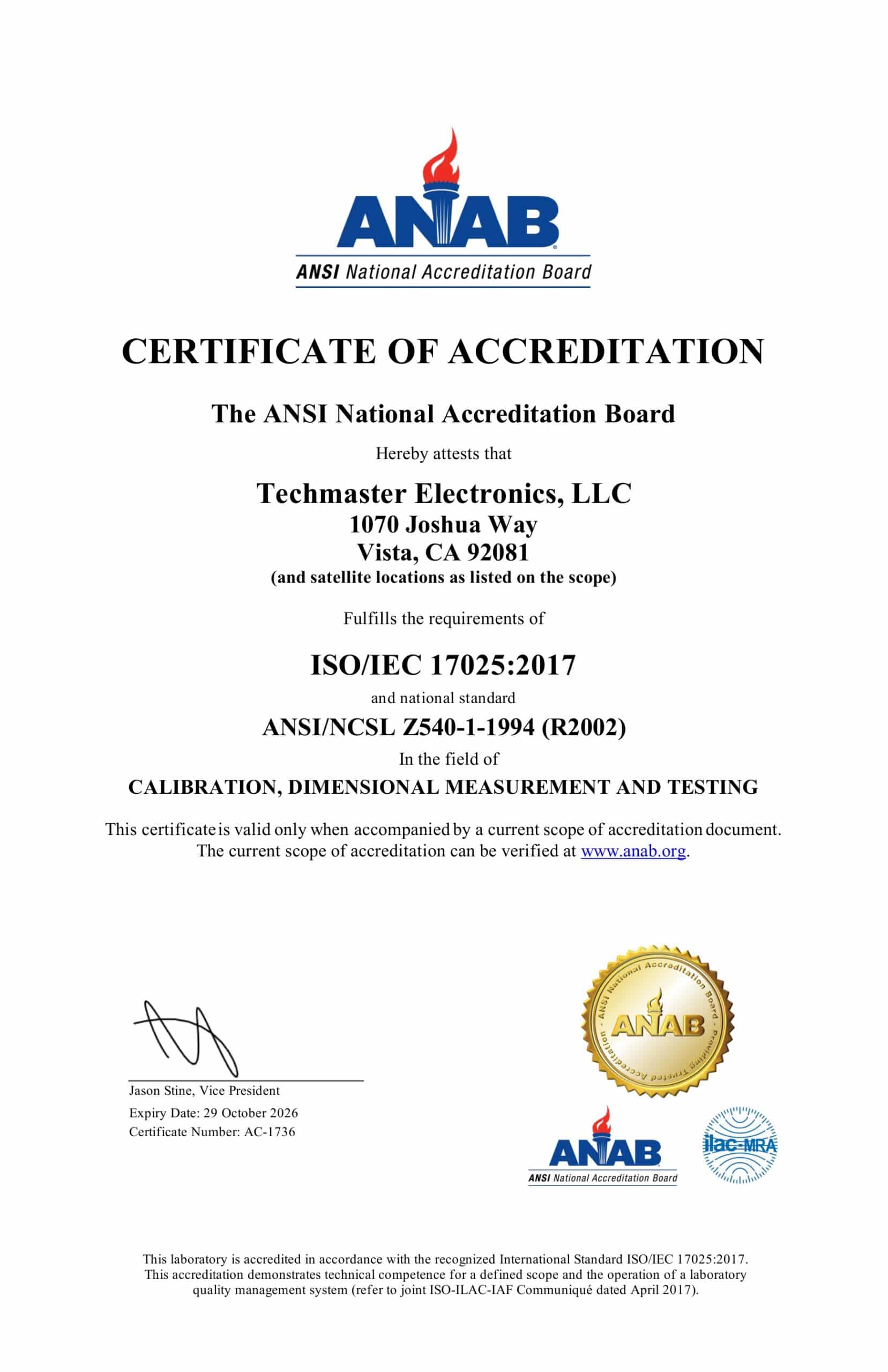
Calibration must follow ISO/IEC 17025 standards. This ensures global metrological acceptance. A qualified lab uses NIST-traceable standards. Precision digital multimeters and high-current shunts verify accuracy. The calibration certificate details measurement uncertainty. It includes “as-found” and “as-left” data. Traceability keeps your measurements legally defensible. It supports FAA, FDA, and internal quality audits.
5. Common Issues Found During Calibration
DC electronic loads absorb massive electrical power. They dissipate this energy as heat. This creates severe thermal and electrical stress over time. Routine calibration frequently uncovers specific performance issues.
Frequent Diagnostic Findings
-
Thermal Drift: High temperatures cause internal components to drift. This creates out-of-tolerance readback measurements.
-
Sensor Degradation: Current sensing resistors degrade. Thousands of high-current test hours impact accuracy.
-
Electrical Instability: Aging internal capacitors cause poor repeatability. Firmware glitches can slow transient response times.
-
Mechanical Wear: High-velocity cooling fans pull in dust. Debris coats internal heat sinks. This reduces cooling efficiency and accelerates component failure.
6. How Often Should This Equipment Be Calibrated?
Determining Your Calibration Interval
Most industrial applications follow a standard schedule. A 12-month calibration interval is highly recommended. However, the exact frequency varies based on several factors.
Manufacturer Specs
OEMs recommend annual servicing to guarantee data sheet specifications.
Usage Frequency
High thermal stress or 24/7 run-time may require a 6-month cycle.
Industry Rules
Medical and military procedures may dictate tighter intervals.
Environment
Harsh floors accelerate drift. Clean metrology labs extend stability.
7. What to Look for in a Calibration Provider
Selecting the right metrology partner is crucial. You need an accredited provider to ensure data integrity. An unreliable lab puts your product quality at risk.
Look for proper ISO/IEC 17025 accreditation. The scope must cover your specific voltage and wattage ranges. The lab needs high-power fixtures and precision shunts. They must offer an acceptable Test Uncertainty Ratio (TUR). Turnaround time is another critical factor. Fast service minimizes your production downtime. Always request comprehensive documentation. Ensure the provider offers a top-tier Calibration service.
8. Flexible Equipment Renting Services from Techmaster
Purchasing an instrument may not fit your budget. Techmaster Electronics offers a flexible equipment rental program. This provides an excellent alternative for short-term lab requirements.
Our program gives you access to premium equipment. You can rent the top 10 brands of dc electronic load models available. This includes names like Keysight, Chroma, and B&K Precision. Every rented unit arrives fully tested and verified. Each includes a valid, traceable calibration certificate. You can integrate it immediately into your test rack. We offer weekly, monthly, and long-term rental terms.
9. Why Choose Techmaster Electronics?
Techmaster Electronics serves the US manufacturing and aerospace sectors. We are a trusted partner for electronics engineering facilities. Our ISO/IEC 17025 accredited laboratories provide unmatched expertise. We understand the physical toll high-power testing takes on equipment.
Our technicians bring decades of industrial metrology experience. We perform rapid on-site calibration for large equipment fleets. We also supply premium rental units for specialized R&D. Techmaster ensures your test equipment operates at peak precision. We deliver exact documentation and rapid turnaround times. We provide the technical support your quality assurance program needs.
10. Conclusion
Deciding whether to rent or buy a load depends on project scope. You must evaluate budget limits and maintenance capabilities. Buying provides a strong ROI for permanent, daily test setups. Renting provides total flexibility and pre-calibrated assurance. Both paths require strict metrological traceability. Proper calibration ensures accurate, reliable, and compliant product testing. Partner with a proven laboratory to protect your measurement integrity.
11. FAQ Section
References & industry standards
- ISO/IEC 17025 testing & calibration laboratory requirements
- NIST calibration services and measurement traceability
- A2LA / ANAB accreditation for calibration laboratories
External standards bodies. Techmaster Electronics is an ISO/IEC 17025-accredited, NIST-traceable calibration laboratory.
Frequently asked questions
What is dc electronic load calibration?
DC Electronic Load Calibration is the documented comparison of a DC electronic load against NIST-traceable reference standards under ISO/IEC 17025. It quantifies the DC electronic load’s error and measurement uncertainty and confirms it performs within tolerance, with as-found and as-left data on the certificate.
How often should a DC electronic load be calibrated?
Most quality systems calibrate a DC electronic load every 12 months, or sooner after repair, overload, or before critical measurements. Set your interval from the manufacturer spec and your ISO 9001 / 13485 / AS9100 program and drift history.
Is Techmaster’s DC electronic load calibration ISO 17025 accredited?
Yes. Techmaster Electronics is ISO/IEC 17025:2017 accredited by ANAB (Certificate AC-1736). Every DC electronic load calibration is NIST-traceable and issued with a full measurement-uncertainty budget.
What is the turnaround for DC electronic load calibration?
Standard turnaround is 5 business days, with 1–2 business-day expedite available. On-site calibration removes shipping time entirely for DC electronic loads that can’t leave the floor.
Do you calibrate DC electronic loads on-site or in-lab?
Both. Techmaster runs five US labs (Vista CA, Santa Clara CA, Orlando FL, San Antonio TX, Holly Springs NC) and offers nationwide on-site DC electronic load calibration to minimize downtime.

Khanh Nguyen is the Marketing Manager at Techmaster Electronics, a B2B marketing leader covering the test, measurement, and ISO/IEC 17025 accredited calibration industry across the US and Vietnam markets.