
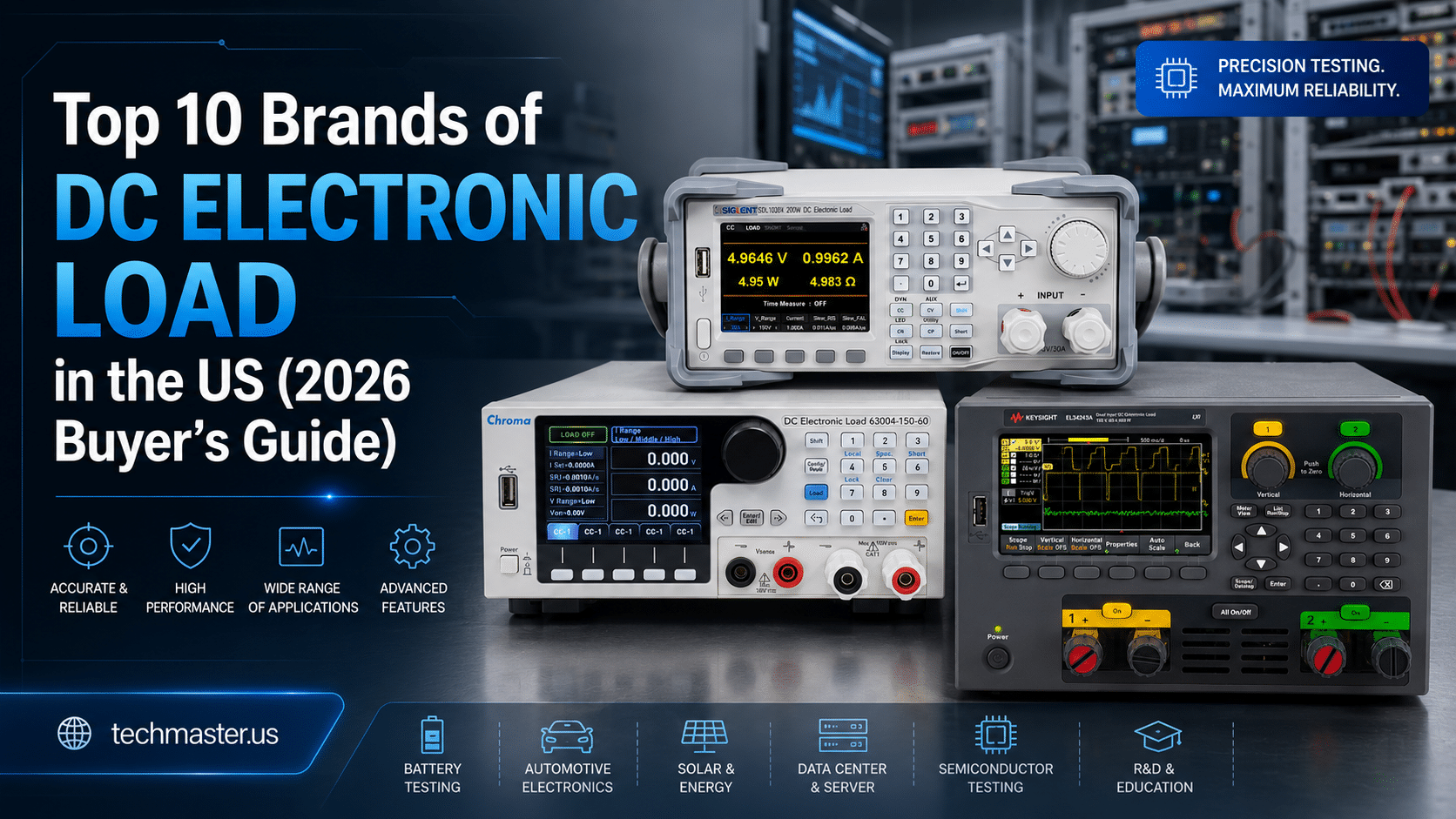
Top 10 Brands of DC Electronic Load in the US (2026 Buyer’s Guide)
Accurate power testing is very important for modern electronics manufacturing. For example, when building electric vehicles or aerospace parts, engineers must test power supplies and batteries carefully. Therefore, testing labs rely on high-quality tools to apply exact loads and record true data. As a result, investing in the best dc electronic load brands ensures your lab works well. In addition, it reduces measurement errors and keeps your products safe.
In this full 2026 buyer’s guide, we will look at the top makers in the market today. Furthermore, we will explain their main uses and highlight why routine calibration is vital for keeping your tools accurate.
1. What Is a DC Electronic Load?
A DC electronic load is a special test tool. Specifically, it tests different power sources like batteries, solar panels, and fuel cells by acting as a power drain. Unlike standard resistors that have a set value, a programmable DC electronic load can change its settings quickly. Because of this, it can copy real-world power use.
Generally, these tools use four main modes:
-
Constant Current (CC): First, this mode draws a steady current even if the voltage changes.
-
Constant Voltage (CV): Second, this mode changes the current draw to hold a steady voltage.
-
Constant Resistance (CR): Third, this mode acts like a fixed resistor.
-
Constant Power (CP): Finally, this mode adjusts the current in real time to draw a steady amount of power.
Consequently, by matching exact real-world conditions, these tools help engineers check safety and power output.
2. Why the Best DC Electronic Load Brands Matter
Choosing top-level equipment directly changes your test accuracy and safety. For instance, poor-quality tools can add noise or cause wrong readings. As a result, this might lead to false passes during product testing.
On the other hand, the best DC electronic load manufacturers offer great features. These include fast response times, energy recycling, and easy data saving. Moreover, top brands build their units with better parts. Therefore, they last longer and have fewer sensor problems. Above all, reliable brands make it easier for labs to meet strict rules and lower the risk of errors.
3. Common Applications
Today, DC electronic loads are used in many vital industries. Specifically, they help ensure that power systems do not fail.
-
Automotive and Electric Vehicles (EV): First, they test large batteries, chargers, and power systems in cars.
-
Aerospace and Defense: Second, they are needed to test satellite power systems and military gear.
-
Renewable Energy: Also, engineers use them to check solar panels and battery storage units.
-
Consumer Electronics: Furthermore, they test phone chargers and computer power racks to ensure they work under heavy use.
-
Medical Device Manufacturing: Most importantly, they make sure power supplies for life-saving medical machines do not drop voltage safely.
4. Top 10 Best DC Electronic Load Brands in the US (2026 List)
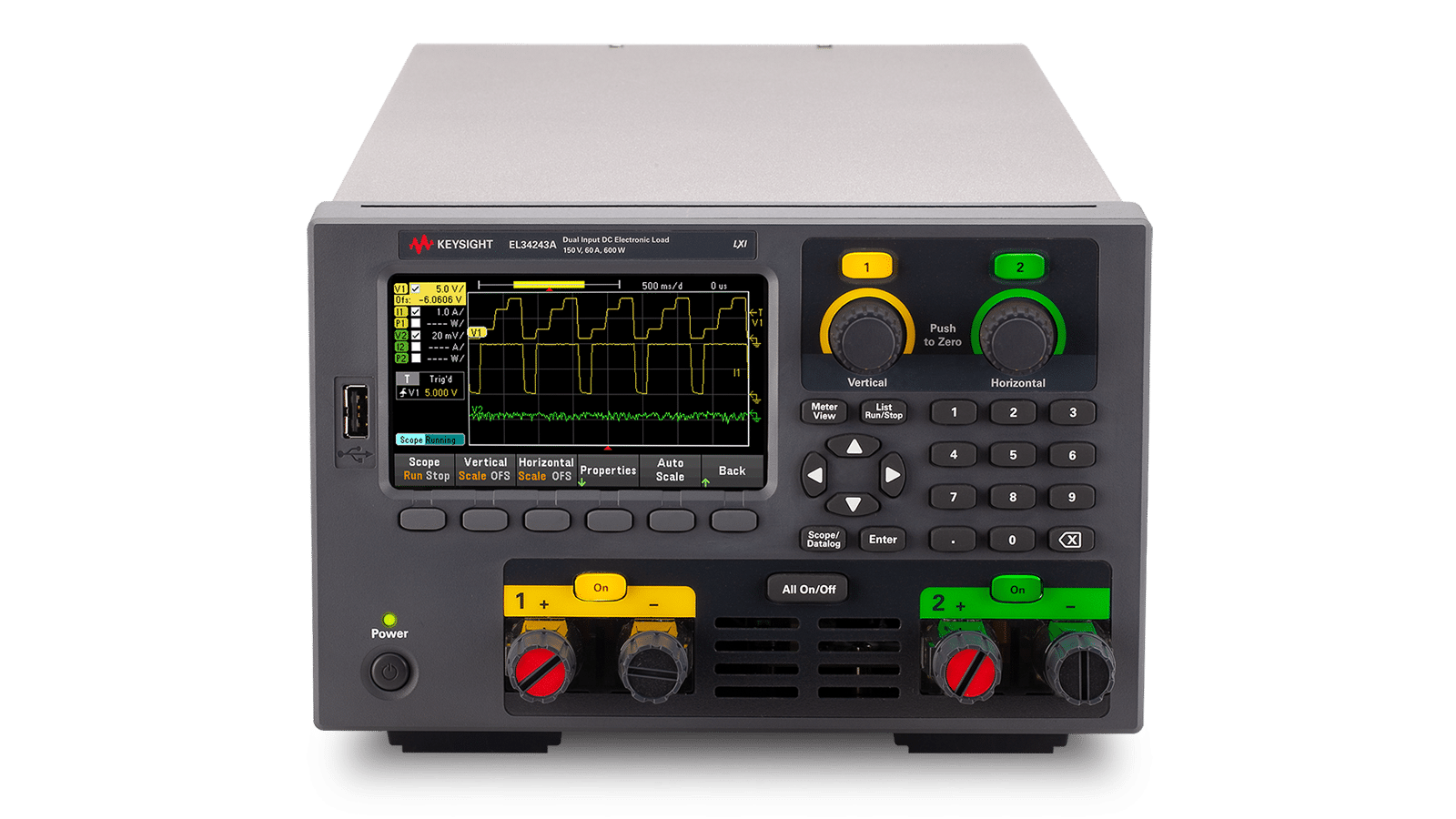
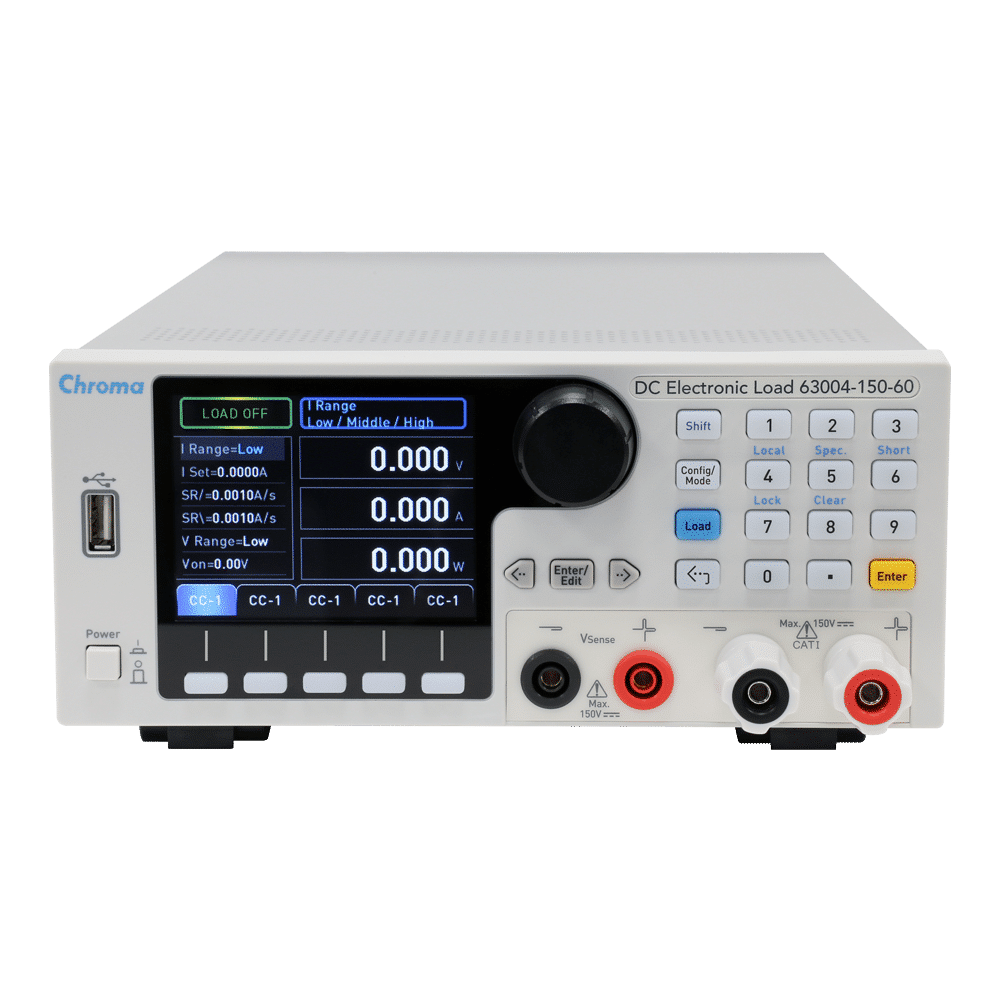
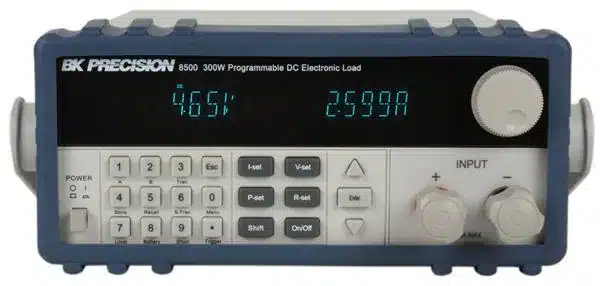
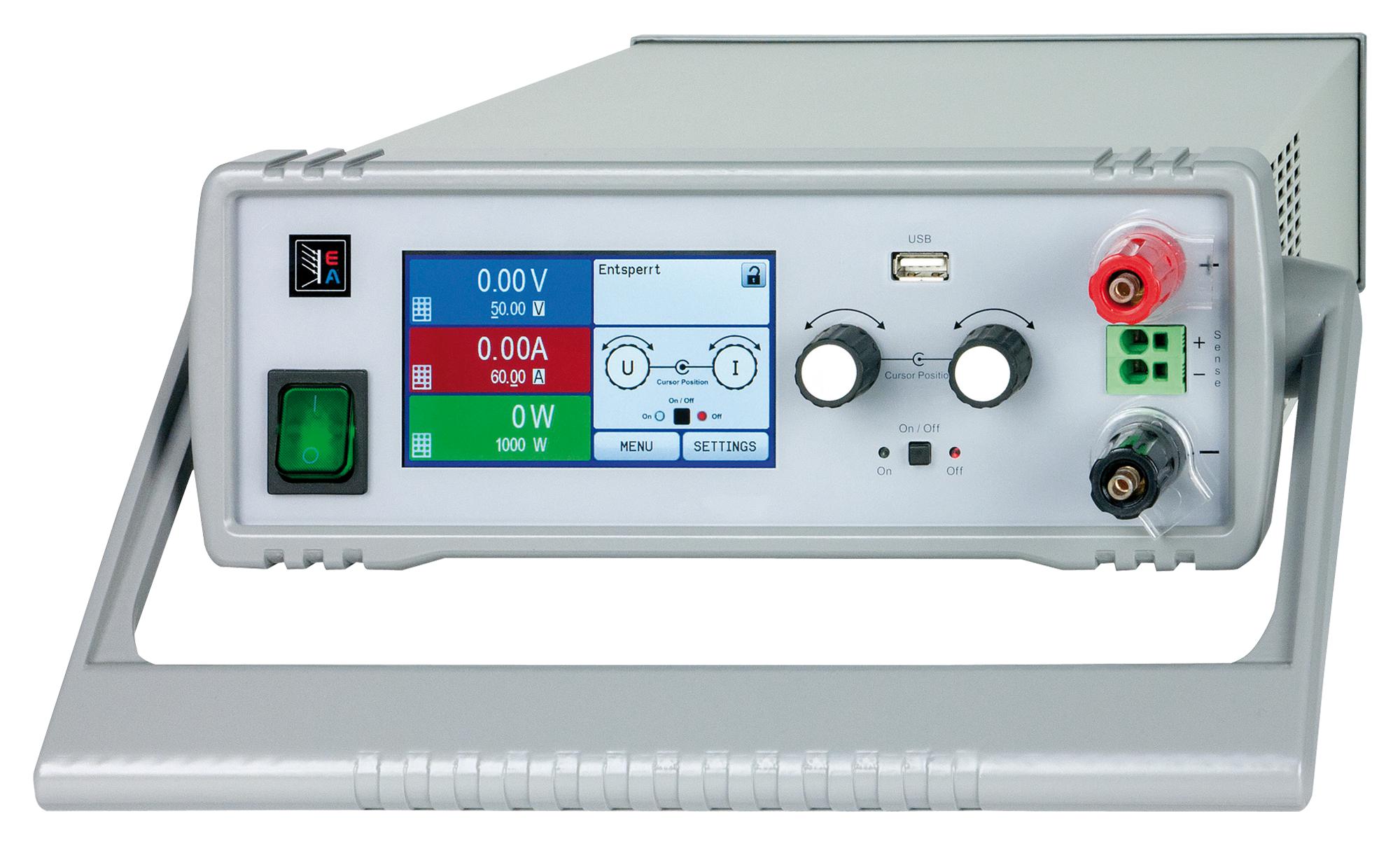
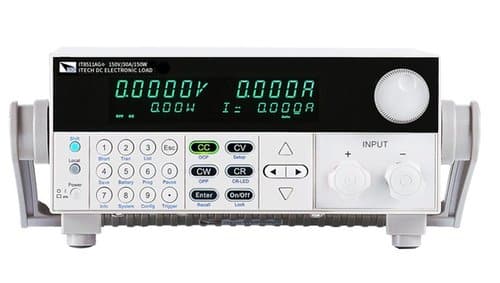
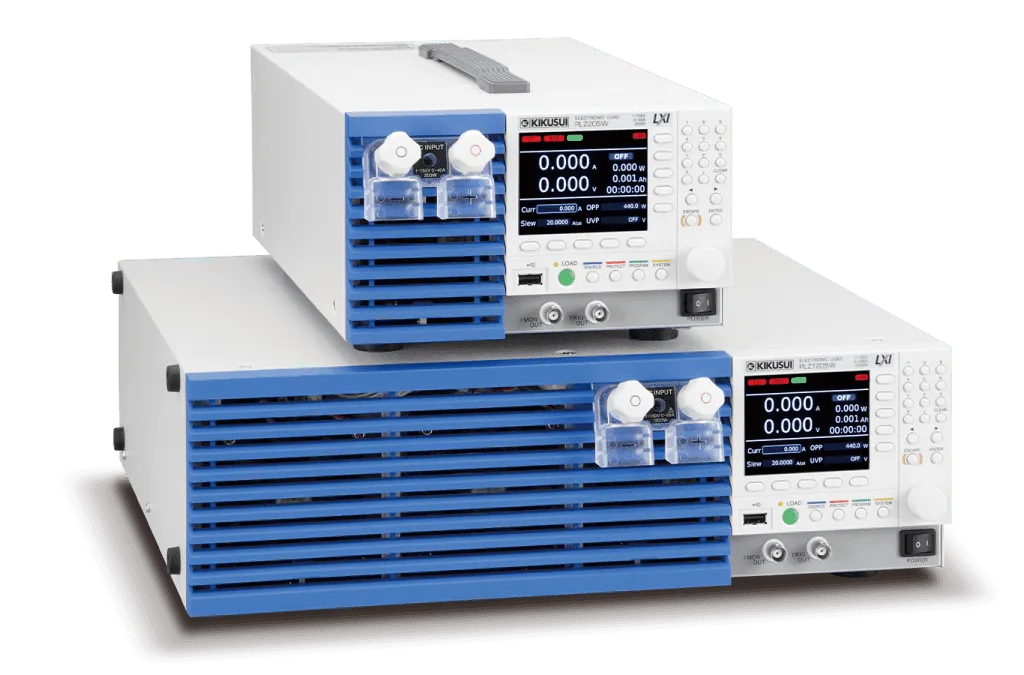
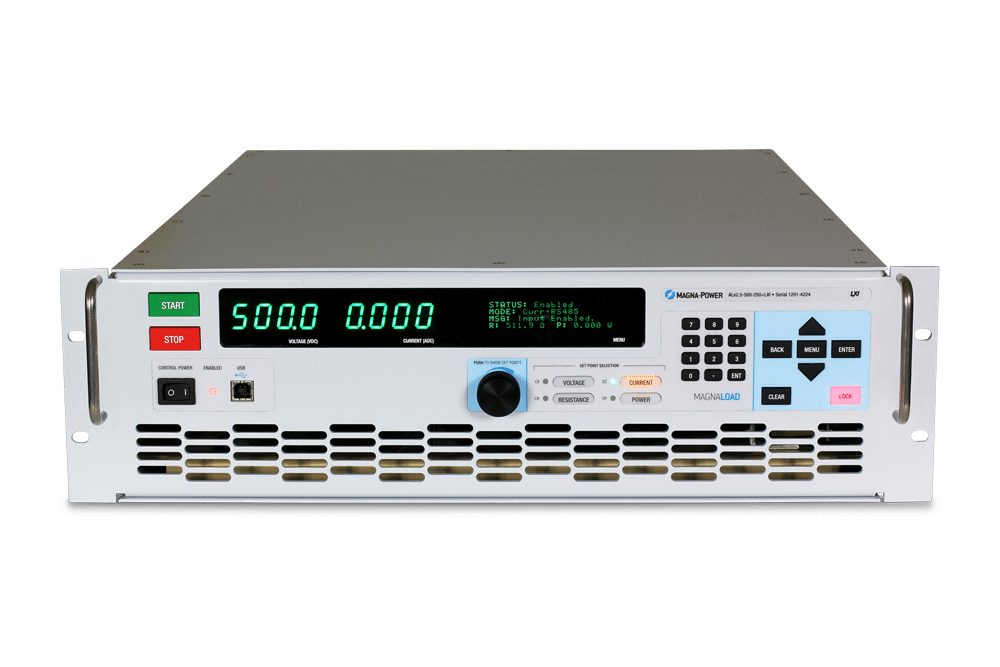
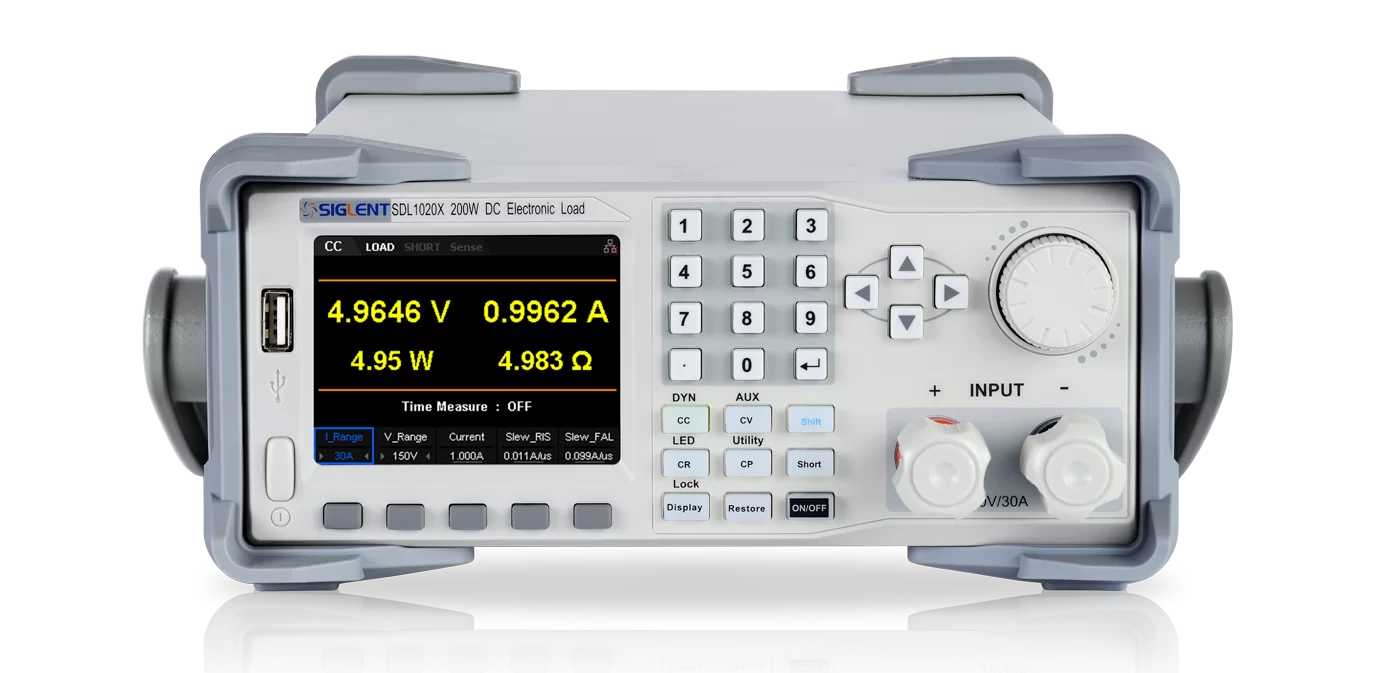
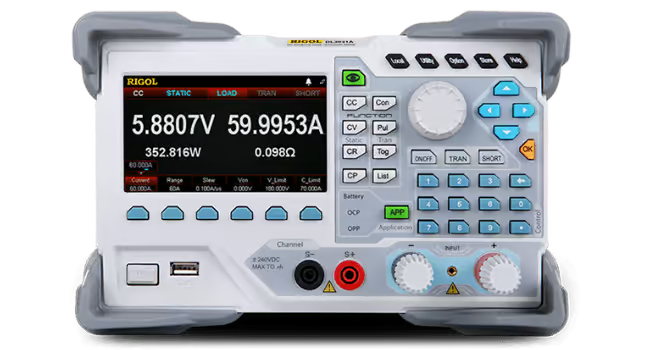
If you are upgrading your test benches or outfitting a new facility, here are the top 10 brands dominating the US market based on reliability, innovation, and technical capabilities.
5. Calibration Standards and Traceability
No matter which brand you choose, the accuracy of a DC load will inevitably drift over time due to heat, component aging, and continuous electrical stress. To ensure your measurements remain accurate, you must adhere to strict calibration standards.
Partnering with an ISO/IEC 17025 calibration service provider guarantees that your instrument is calibrated using NIST-traceable standards. This level of accreditation ensures that the calibration laboratory follows documented procedures, properly calculates measurement uncertainty, and provides a formal calibration certificate that meets the scrutiny of strict industry audits.
6. Common Issues Found During Calibration
During routine dc electronic load calibration, metrologists frequently uncover several common performance issues:
-
Current Drift: The actual current drawn by the load slowly deviates from the programmed setpoint due to the thermal aging of power MOSFETs.
-
Out-of-Tolerance (OOT) Voltage Readings: Internal voltmeters may lose accuracy, causing the load to draw incorrect current in Constant Power or Constant Resistance modes.
-
Degraded Transient Response: Over time, the slew rate (how fast the load transitions between current levels) can degrade, masking dynamic power flaws in the device under test.
-
Cooling System Inefficiencies: Dust and mechanical wear in the cooling fans can cause internal components to overheat, increasing electrical instability and measurement noise.
7. How Often Should This Equipment Be Calibrated?
For most industrial and R&D applications, the standard calibration interval for a DC electronic load is 12 months.
However, this interval can change based on several variables. If the instrument is used continuously in harsh, high-temperature manufacturing environments, or if it is testing critical aerospace components where the risk of failure is unacceptable, a 6-month cycle may be required. Conversely, lightly used benchtop loads might be extended to 24-month cycles, provided this is supported by the manufacturer’s recommendations and your internal quality management system (QMS).
8. What to Look for in a Calibration Provider
Selecting the right partner for your test and measurement equipment calibration is just as important as selecting the instrument itself. Look for the following criteria:
-
ISO/IEC 17025 Accreditation: This is non-negotiable. The lab must hold active accreditation covering the specific electrical parameters (Voltage, Current, Power, Resistance) required by your load.
-
Low Measurement Uncertainty: The lab’s equipment must have a significantly higher accuracy ratio than the instrument being calibrated.
-
On-Site Service Capabilities: High-power electronic loads are heavy and difficult to ship. A provider that offers on-site calibration at your facility minimizes downtime and eliminates transit risks.
-
Turnaround Time: Look for labs that offer consistent 3-to-5-day turnaround times for mail-in calibrations.
-
Comprehensive Documentation: Ensure the provider supplies detailed “As Found” and “As Left” data, allowing you to track the historical drift of your assets.
9. Why Choose Techmaster Electronics?
When your production and quality assurance rely on precise power simulation, you need a metrology partner you can trust. Techmaster Electronics is an industry leader in comprehensive electrical and electronic test equipment calibration.
Operating out of state-of-the-art, ISO/IEC 17025 accredited laboratories, we provide precise, NIST-traceable calibration for all top DC electronic load brands, including Keysight, Chroma, B&K Precision, and more. We understand the stringent demands of the aerospace, medical device, and EV industries. Whether you need fast lab turnaround times or highly coordinated on-site Calibration service at your facility, our experienced metrologists deliver accurate, documented, and reliable results that keep your operations compliant and efficient.
10. Conclusion
Programmable DC electronic loads are vital instruments that protect product quality, ensure safety, and drive technological innovation across multiple industries. By investing in the best brands on the market, you lay the foundation for accurate testing. However, even the highest-quality instrument is only as good as its last calibration. Maintaining a strict calibration schedule with an accredited metrology lab minimizes risk, prevents costly manufacturing errors, and extends the lifespan of your testing equipment.
Contact Techmaster Electronics today to discuss your calibration requirements and keep your measurement equipment accurate, reliable, and compliant.
11. FAQ Section
Frequently Asked Questions
Essential information on operating, maintaining, and calibrating DC electronic loads for power testing environments.
Ready to schedule your calibration?
Secure your power testing precision and maintain compliance.
References & industry standards
- ISO/IEC 17025 testing & calibration laboratory requirements
- NIST calibration services and measurement traceability
- A2LA / ANAB accreditation for calibration laboratories
External standards bodies. Techmaster Electronics is an ISO/IEC 17025-accredited, NIST-traceable calibration laboratory.
Frequently asked questions
What is dc electronic load calibration?
DC Electronic Load Calibration is the documented comparison of a DC electronic load against NIST-traceable reference standards under ISO/IEC 17025. It quantifies the DC electronic load’s error and measurement uncertainty and confirms it performs within tolerance, with as-found and as-left data on the certificate.
How often should a DC electronic load be calibrated?
Most quality systems calibrate a DC electronic load every 12 months, or sooner after repair, overload, or before critical measurements. Set your interval from the manufacturer spec and your ISO 9001 / 13485 / AS9100 program and drift history.
Is Techmaster’s DC electronic load calibration ISO 17025 accredited?
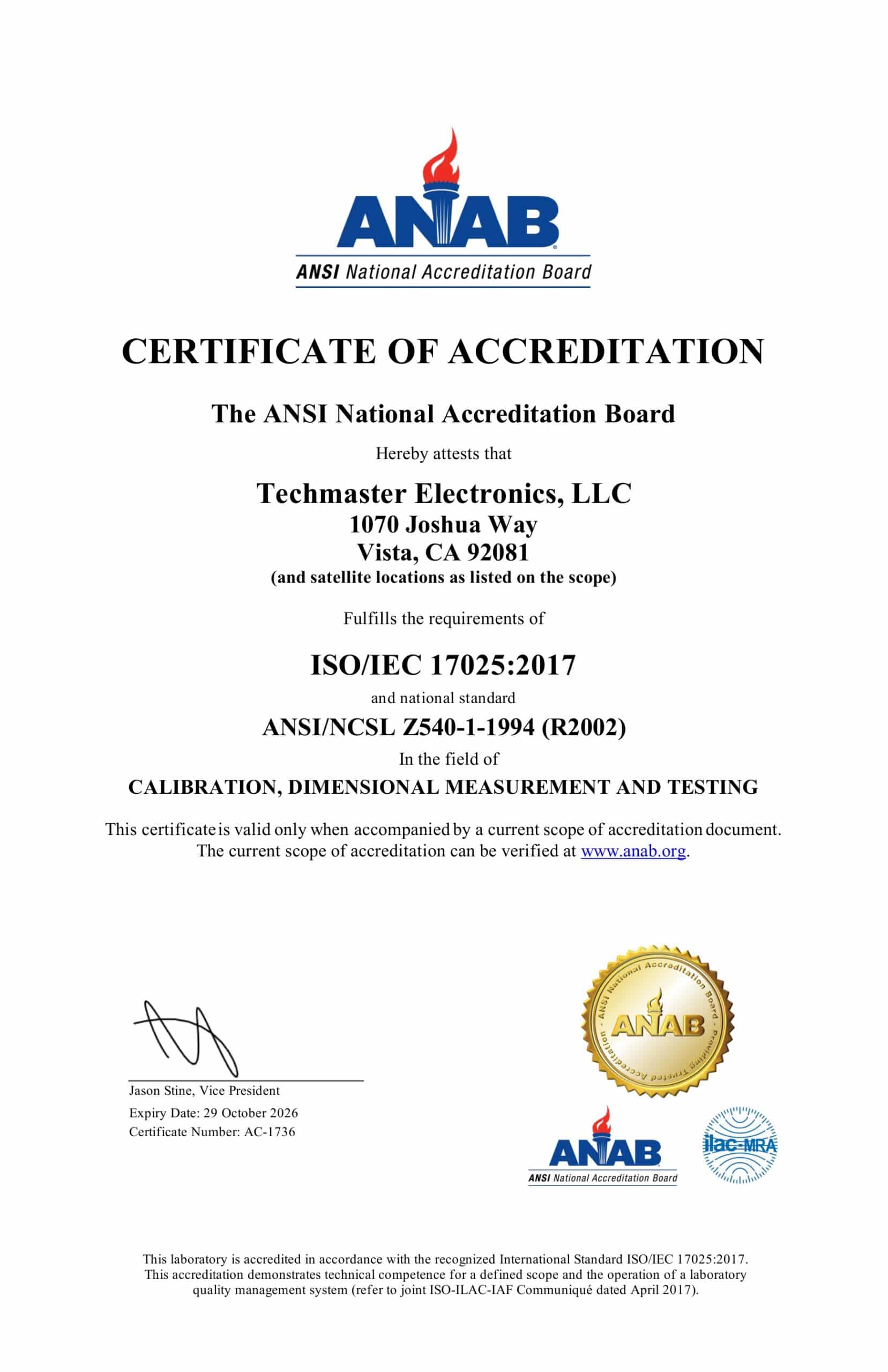
Yes. Techmaster Electronics is ISO/IEC 17025:2017 accredited by ANAB (Certificate AC-1736). Every DC electronic load calibration is NIST-traceable and issued with a full measurement-uncertainty budget.
What is the turnaround for DC electronic load calibration?
Standard turnaround is 5 business days, with 1–2 business-day expedite available. On-site calibration removes shipping time entirely for DC electronic loads that can’t leave the floor.
Do you calibrate DC electronic loads on-site or in-lab?
Both. Techmaster runs five US labs (Vista CA, Santa Clara CA, Orlando FL, San Antonio TX, Holly Springs NC) and offers nationwide on-site DC electronic load calibration to minimize downtime.

Khanh Nguyen is the Marketing Manager at Techmaster Electronics, a B2B marketing leader covering the test, measurement, and ISO/IEC 17025 accredited calibration industry across the US and Vietnam markets.