
The Top 10 Best Digital Caliper Brands in the US (2026 Buyer’s Guide)
1. What Is a Digital Caliper?
2. Why Choosing the Best Digital Caliper Brands Matters
-
Clear Accuracy: Top makers build tools with strong, heavy stainless steel. Thus, the metal jaws stay perfectly flat and straight over many years.
-
Tough Defense: Premium models often feature high IP67 water ratings. This special rating means they block the dust, cutting oil, and dirty water that ruin cheap tools.
-
Easy Tracking: Leading brands build tools that easily pass strict quality lab tests. As a result, you meet industry rules without any stress.
-
Steady Power: High-quality electronics stop sudden screen jumps and fast battery drain. Therefore, engineers can work all day without annoying stops.
3. Top 10 Brands of Digital Caliper in the US (2026 Buyer’s Guide)
Top 10 Tool Brands to Upgrade Your Shop
If you plan to upgrade your shop tools this year, you should review these ten companies. These brands offer the highest quality and best results in the US market right now.
Whichever model you choose will need regular checks; see our guide to caliper calibration.
Mitutoyo
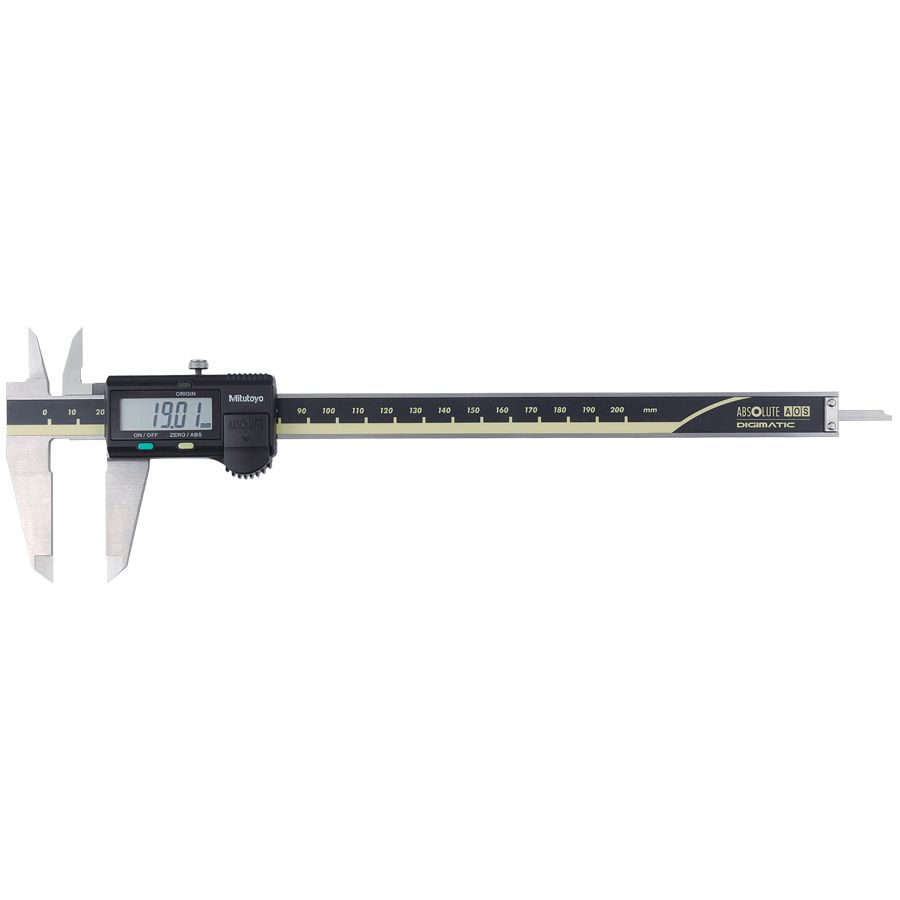
Many experts view Mitutoyo as the world standard for careful measuring. Specifically, they make incredibly strong digital calipers. Their special Absolute (ABS) technology means the tool always remembers its exact zero point. Additionally, their smart inner sensors block dirt and heavy shop oil. Mitutoyo fits perfectly in busy, dirty work areas.
L.S. Starrett
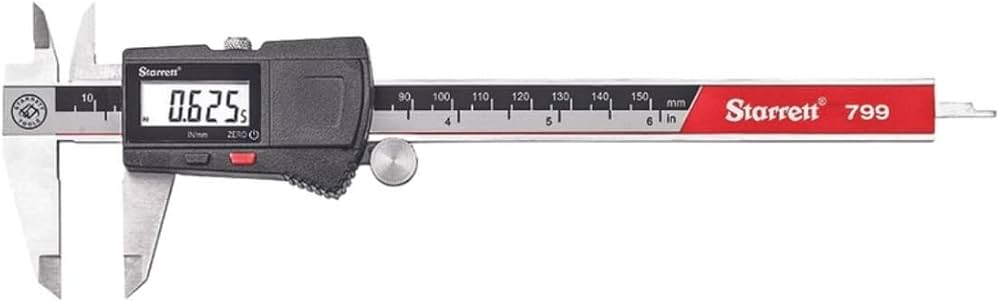
Starrett holds a very deep, proud history in American machine shops. They build rugged, long-lasting tools for heavy daily use. Also, their calipers slide very smoothly along the main beam. Defense workers and veteran machinists trust them daily for their hardest jobs.
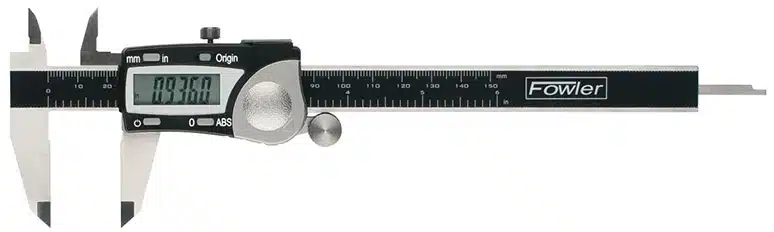
Fowler High Precision
Fowler offers premium tool quality at a very fair price point. Often, they put fine Swiss-made electronics inside their devices. In addition, they include long warranties to protect your money. Therefore, they fit perfectly in clean testing labs and high-end machine shops.
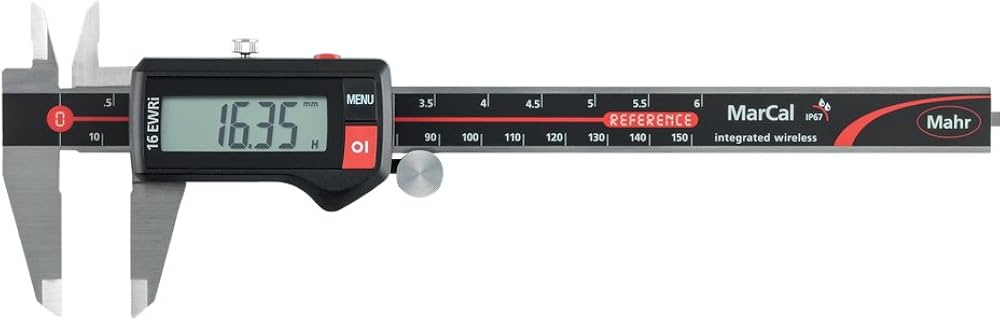
Mahr (Mahr Federal)
Mahr brings excellent German design right to your workbench. Specifically, they build wireless data tools inside the MarCal caliper series. Consequently, quality teams can send size numbers straight to a computer. This smart feature removes the need for messy desk cables.
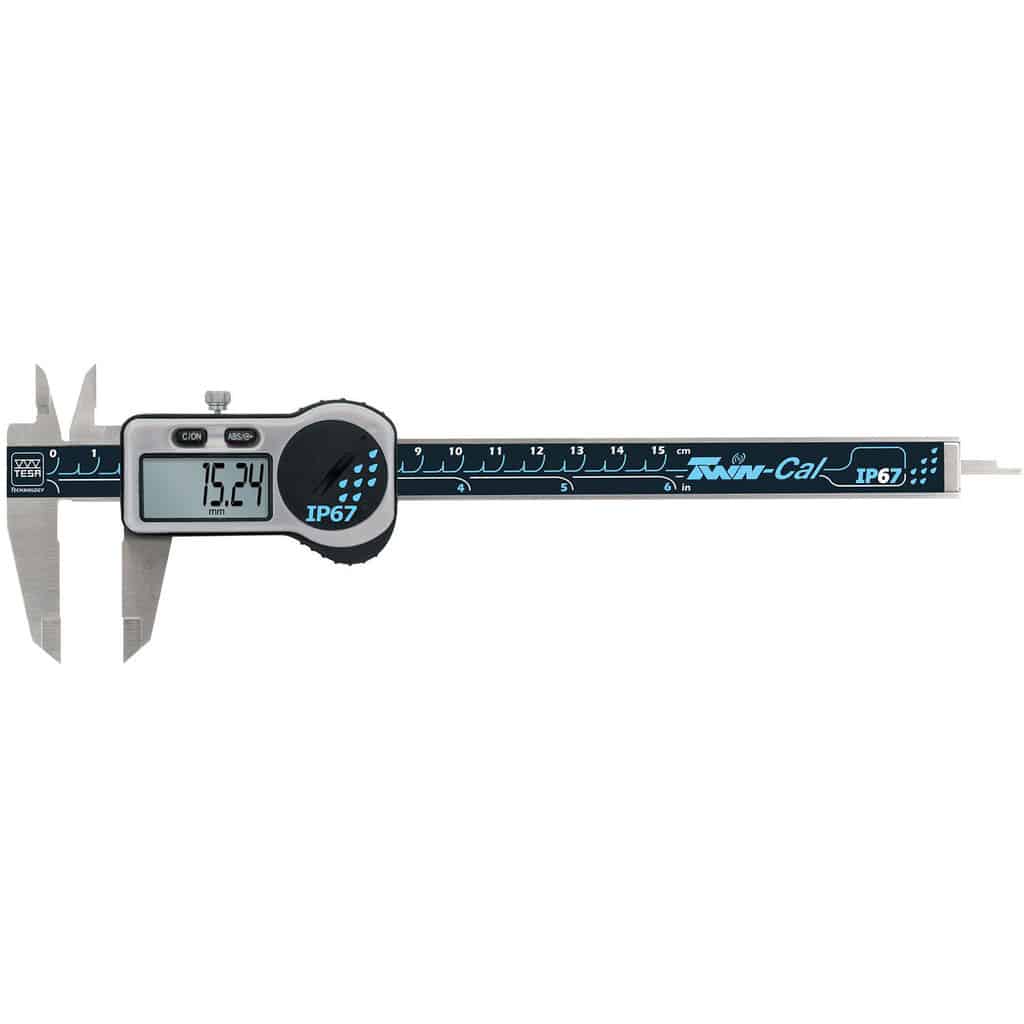
Brown & Sharpe (TESA)
Hexagon now owns the famous Brown & Sharpe brand. They use well-known Swiss TESA technology to run their electronics. Their Twin-Cal series offers great accuracy and tough IP67 defense against water. In addition, many older inspectors love their heavy, classic feel.
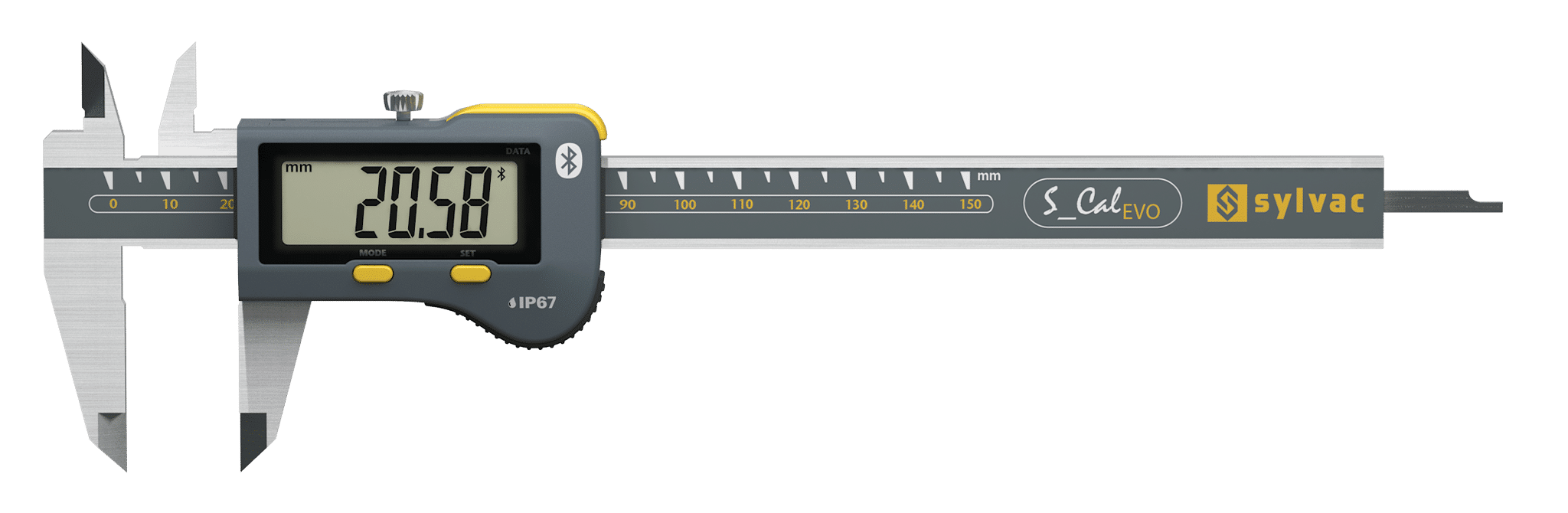
Sylvac
Sylvac actually invented the modern digital measuring system many years ago. Today, this Swiss brand offers ultra-premium tools for careful buyers. For example, they include great Bluetooth features and extra-large screens. Thus, they deliver the best electronic stability in the world.
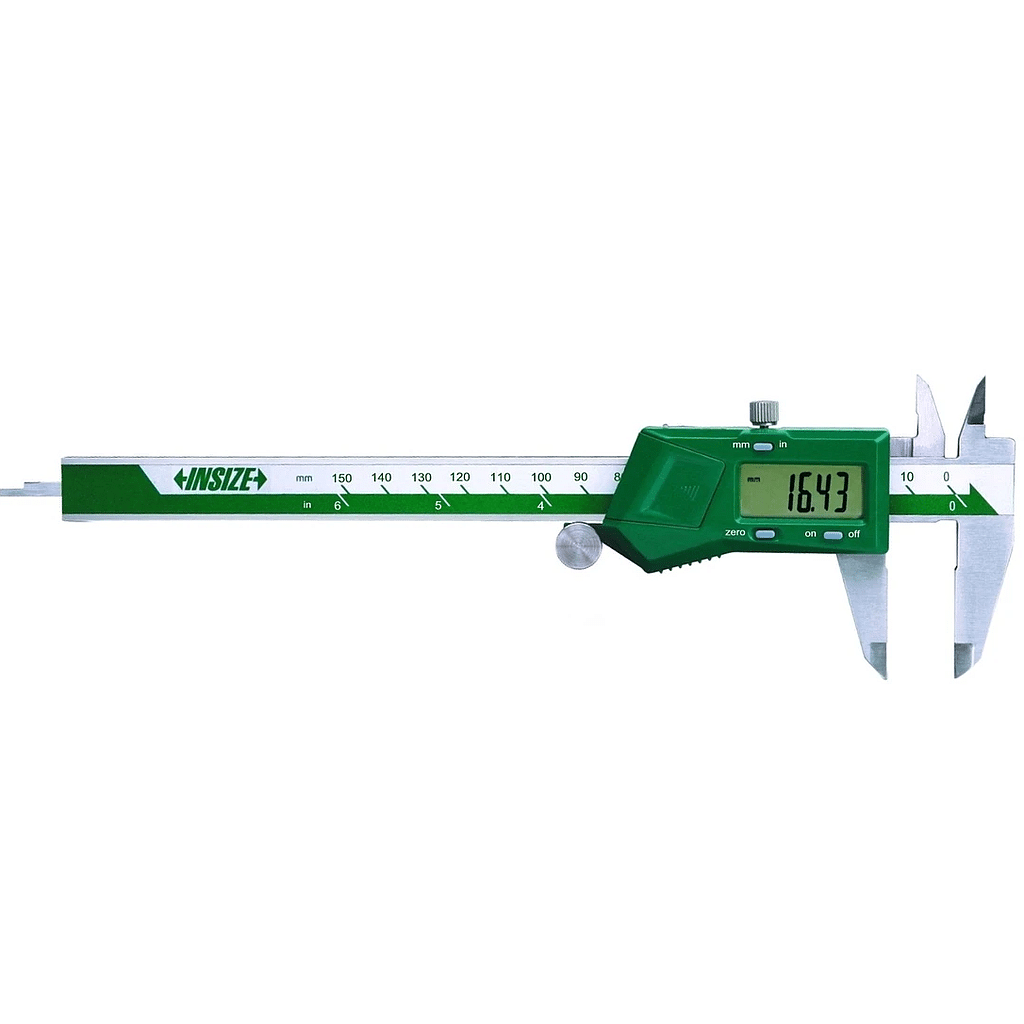
INSIZE
Sometimes, a manager needs to supply a whole shop floor on a tight budget. INSIZE fills this exact need perfectly. They offer many solid, strong industrial tools at much lower prices. Therefore, general parts makers rely on them daily without breaking the bank.
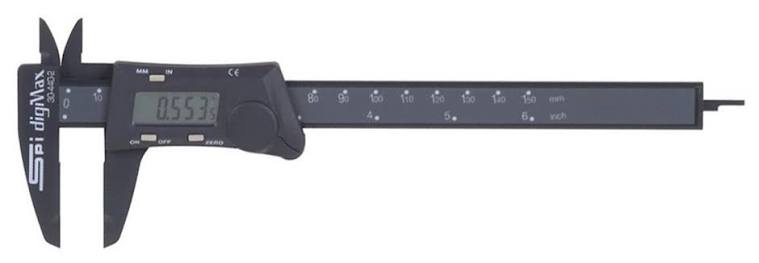
SPI
You will spot SPI tools in many US machine shops today. MSC Industrial sells them widely across the country. They give you solid, middle-tier options for basic checking tasks. As a result, trade schools and backup work stations use them very often.
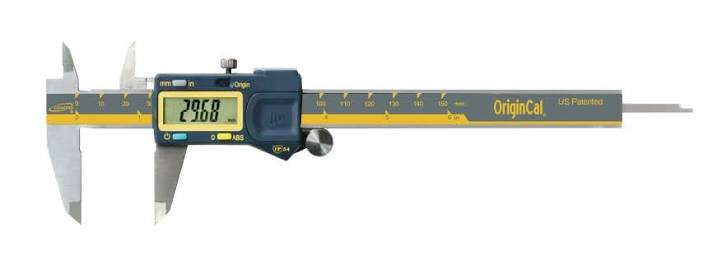
iGaging
iGaging grows more popular every single day. They pack pro features, like heavy water ratings, into very cheap tools. Because of this bold choice, custom car builders and new engineers love to buy them. They offer a great starting point for small shops.
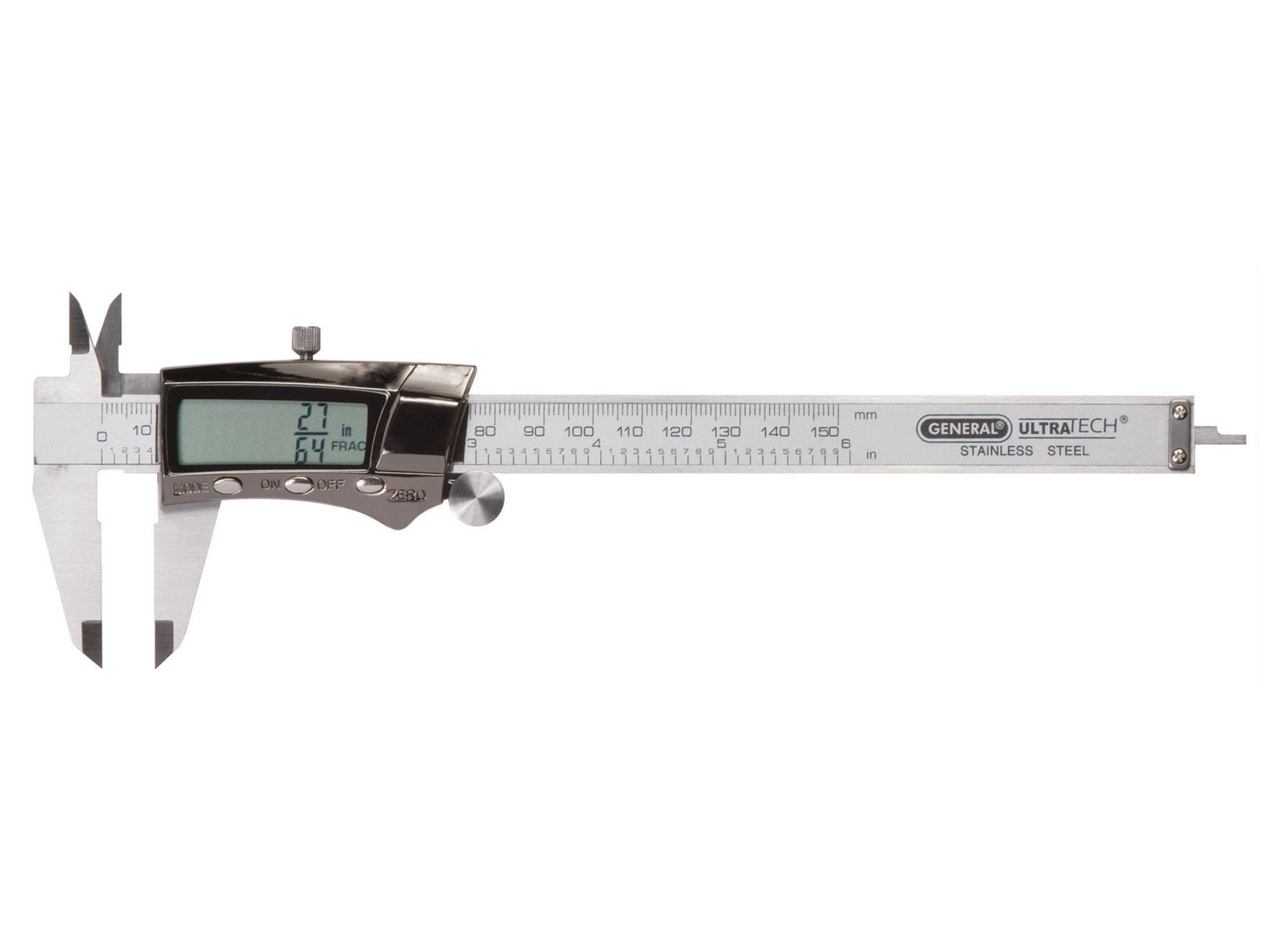
General Tools
General Tools does not try to target strict airplane makers. Instead, they make very cheap tools for home duties and basic field fixes. Therefore, they give you enough accuracy for simple, daily checks where perfect exactness does not matter.
4. Common Applications for Industrial Digital Calipers
-
Machine Shops: Operators measure part thickness and hole sizes right at the CNC cutting machine. Thus, they catch errors before finishing the part.
-
Aerospace: Builders check key airplane wing parts daily. In this case, a tiny error easily causes a huge, unsafe failure in the sky.
-
Medical Devices: Inspectors check the exact sizes of steel bone joints and plastic heart tools. As a result, they keep sick patients safe from harm.
-
Car Plants: Mechanics check flat brake discs and round engine parts. Therefore, your car runs safely and smoothly on the highway.
-
Field Repair: Repair workers carry these small tools in their bags. Consequently, they measure worn belts and order the exact correct replacement parts on the spot.
5. Calibration Standards and Traceability
6. Common Issues Found During Digital Caliper Calibration
-
Worn Metal: Sliding the tool open and closed thousands of times wears down the metal tips. Therefore, the jaws stop meeting in a perfectly flat line.
-
Broken Sensors: Over time, dirty water and sharp metal chips sneak past the rubber seals. This hidden dirt makes the screen show jumping, crazy numbers.
-
Lost Accuracy: Dropping the tool on the floor causes tiny hidden damages. As a result, the tool reads incorrectly when you measure larger items.
-
Power Flaws: Bad batteries or rusty battery doors make the screen blink on and off. Consequently, the tool loses its zero point in the middle of a job.
7. How Often Should This Equipment Be Calibrated?
Determining the Correct Calibration Schedule
You might wonder about the correct schedule to check your tools. Generally, the factory industry tells you to check digital calipers exactly once a year.
Shorten to 3 or 6 months if:
- Your shop uses the tool all day, across three different shifts.
- You work in a very dirty, hot, or dusty room.
- You make parts that need near-perfect, exact sizes.
- Someone drops the tool directly on a hard concrete floor.
Impact on Calibration Frequency
Above all, always read the maker’s manual. In addition, check your own internal shop rulebook to set the safest possible schedule.
8. What to Look for in a Calibration Provider
9. Need Equipment While Yours Is in the Lab? (Our Renting Service)
10. Why Choose Techmaster Electronics?
11. Conclusion
12. FAQ Section
Frequently Asked Questions
Frequently asked questions
What is caliper calibration?
Caliper Calibration is the documented comparison of a caliper against NIST-traceable reference standards under ISO/IEC 17025. It quantifies the caliper’s error and measurement uncertainty and confirms it performs within tolerance, with as-found and as-left data on the certificate.
How often should a caliper be calibrated?
Most quality systems calibrate a caliper every 12 months, or sooner after repair, overload, or before critical measurements. Set your interval from the manufacturer spec and your ISO 9001 / 13485 / AS9100 program and drift history.
Is Techmaster’s caliper calibration ISO 17025 accredited?
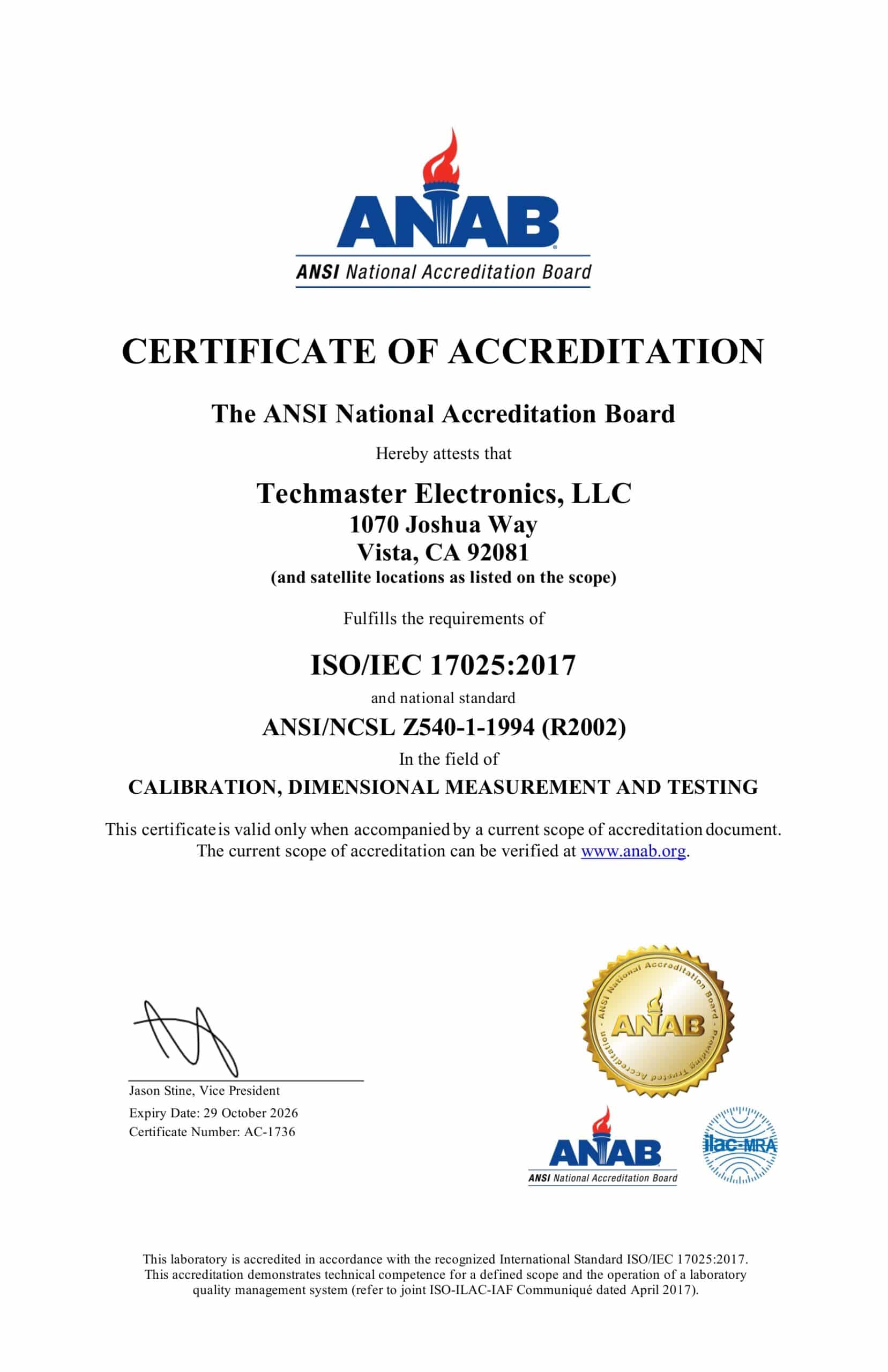
Yes. Techmaster Electronics is ISO/IEC 17025:2017 accredited by ANAB (Certificate AC-1736). Every caliper calibration is NIST-traceable and issued with a full measurement-uncertainty budget.
What is the turnaround for caliper calibration?
Standard turnaround is 5 business days, with 1–2 business-day expedite available. On-site calibration removes shipping time entirely for calipers that can’t leave the floor.
Do you calibrate calipers on-site or in-lab?
Both. Techmaster runs five US labs (Vista CA, Santa Clara CA, Orlando FL, San Antonio TX, Holly Springs NC) and offers nationwide on-site caliper calibration to minimize downtime.
References & industry standards
- ISO/IEC 17025 testing & calibration laboratory requirements
- NIST calibration services and measurement traceability
- NIST Dimensional Metrology Group
- A2LA / ANAB accreditation for calibration laboratories
External standards bodies. Techmaster Electronics is an ISO/IEC 17025-accredited, NIST-traceable calibration laboratory.

Khanh Nguyen is the Marketing Manager at Techmaster Electronics, a B2B marketing leader covering the test, measurement, and ISO/IEC 17025 accredited calibration industry in the United States.