
Choosing the Best Handheld Digital Multimeter for Electronics Manufacturing Applications
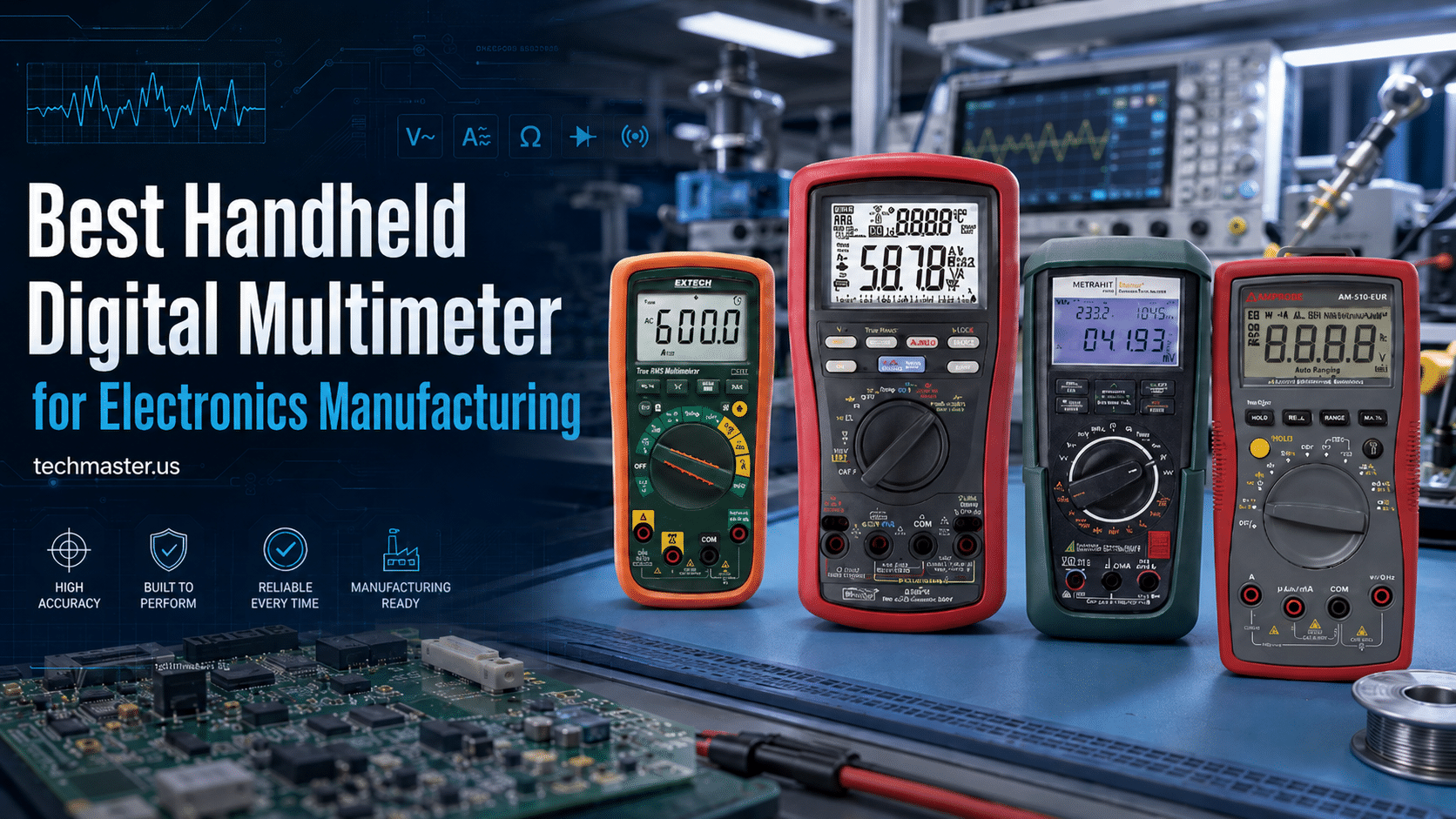
In the fast-paced world of modern electronics production, the margin for error is virtually zero. Consequently, measurement precision is an absolute necessity. Whether you are troubleshooting a complex circuit board or conducting routine quality assurance, finding the best handheld digital multimeter for electronics manufacturing is a critical first step for your facility.
In addition, merely purchasing a high-end tool is not enough to ensure long-term success. Over time, all electronic test equipment experiences natural drift. Therefore, regular maintenance and certified calibration are essential to guarantee ongoing reliability. In this complete guide, we will explore exactly how to select the right portable device, along with the critical importance of keeping it properly calibrated to industry standards.
1. What Is a Handheld Digital Multimeter?
To begin with, a handheld digital multimeter (DMM) is an essential, portable diagnostic instrument used extensively by electronics technicians, lab managers, and manufacturing engineers. Primarily, these versatile devices measure standard electrical values such as voltage, current, and resistance. Additionally, industrial-grade models designed specifically for electronics manufacturing often include advanced features for testing capacitance, frequency, diode drops, and temperature.
Unlike bulky benchtop multimeters, which are typically confined to stationary laboratory environments, handheld versions offer unparalleled mobility. As a result, technicians can smoothly move across the manufacturing floor to inspect automated test equipment (ATE) racks or verify components directly on a surface mount technology (SMT) assembly line. In the end, handheld DMMs provide a necessary balance between high-level testing accuracy and rugged, everyday portability.
2. Why Choosing the Best Handheld Digital Multimeter for Electronics Manufacturing Matters
3. Top 10 Brands of Handheld Digital Multimeters for Electronics
4. Common Applications in Electronics Manufacturing
Handheld multimeters serve a wide variety of critical functions across the entire production lifecycle. For instance, manufacturing facilities rely on them daily for the following applications:
-
Component Incoming Inspection: Firstly, technicians use DMMs to verify the resistance, capacitance, or diode characteristics of incoming component batches before they ever enter the pick-and-place machines.
-
In-Circuit Testing and Troubleshooting: In addition, diagnostic engineers rely on these meters to troubleshoot failed printed circuit boards (PCBs) at rework stations. Specifically, they check for short circuits, open traces, or incorrect component values.
-
Automated Test Equipment (ATE) Verification: Meanwhile, maintenance teams use highly accurate handheld multimeters to verify that the power supplies feeding automated testing racks are outputting the precise required voltages.
-
Facility and ESD Maintenance: Finally, safety personnel frequently check grounding points and electrostatic discharge (ESD) mat resistances to ensure a completely safe environment for sensitive microelectronics.
5. Calibration Standards and Traceability
Buying a premium DMM is only the baseline requirement. To truly guarantee that the instrument’s readings are correct, it must undergo routine handheld digital multimeter calibration.
Crucially, for electronics manufacturing, this calibration must strictly align with recognized industry standards. Therefore, an ISO/IEC 17025 accredited calibration is strongly recommended. This specific accreditation ensures that the calibration laboratory is technically competent and that their internal processes are rigorously audited.
Also, you must secure a NIST traceable multimeter calibration. Traceability means the measurements have an unbroken chain of comparisons to national metrology institutes, such as the National Institute of Standards and Technology (NIST). Additionally, a proper calibration certificate will always include detailed measurement uncertainty data. Consequently, this documents the exact margin of error for every tested parameter, which auditors require to verify the validity of your production tests.
6. Common Issues Found During Calibration
Even top-tier, rugged multimeters experience inevitable wear and tear. During routine service, metrologists frequently discover subtle issues that could otherwise compromise your manufacturing quality. Common problems include:
-
Electronic Drift: Over time, the internal reference voltage and precision resistors in a multimeter naturally drift due to component aging. Consequently, this slow shift causes the meter to display readings outside of its published tolerance limits.
-
Out-of-Tolerance Results: If a multimeter is subjected to severe over-voltage conditions or static discharge on the floor, specific measurement ranges may shift out of tolerance. Meanwhile, other functions may appear to operate normally, hiding the defect from the user.
-
Sensor Degradation and Thermal Stress: In addition, rapid temperature fluctuations on the manufacturing floor can stress internal electronic components. As a result, this leads to unstable readings or induced thermal electromotive force (EMF) errors.
-
Mechanical Wear: The physical input jacks on a multimeter endure thousands of lead insertions annually. Eventually, worn jacks introduce unwanted contact resistance. Therefore, this drastically skews low-level resistance measurements on sensitive circuit boards.
-
Incorrect Usage Damage: Finally, blown internal fuses, often resulting from measuring voltage while the test leads are mistakenly plugged into the current jacks, are a frequent discovery during standard calibration.
7. How Often Should This Equipment Be Calibrated?
Generally speaking, the industry standard calibration interval for handheld digital multimeters is exactly 12 months. However, the ideal frequency should always be dictated by your specific quality management system, environmental conditions, and how frequently the instrument is utilized.
For example, instruments used in high-risk environments, such as medical device electronics or defense assemblies, often require a tighter 6-month interval. Consequently, this mitigates the risk of an out-of-tolerance condition halting production. Conversely, meters used strictly for non-critical facility HVAC maintenance might safely follow the standard 12-month cycle. In the end, you should consult the manufacturer’s initial recommendations and routinely review your instrument’s historical drift data to set accurate, data-driven calibration intervals.
8. What to Look for in a Calibration Provider
To maintain absolute compliance, electronics manufacturers must partner with a highly qualified laboratory. Therefore, you should carefully evaluate the following capabilities when outsourcing your industrial electrical calibration services:
-
Accreditation Status: Above all, ensure their scope of accreditation directly covers the specific electrical parameters (DC voltage, AC voltage, current, resistance, capacitance) required by your manufacturing equipment.
-
Technical Capability: In addition, the lab must possess advanced calibrators with sufficient measurement accuracy, typically a 4:1 test uncertainty ratio (TUR), to confidently calibrate high-end 4½ and 5½ digit handheld meters.
-
Turnaround Time: Additionally, look for providers that consistently offer standard turnaround times of 5 to 7 business days, alongside options for expedited service to minimize expensive production downtime.
-
Audit-Ready Documentation: Specifically, the laboratory should automatically provide detailed “As-Found” and “As-Left” measurement data, clearly stating the calculated measurement uncertainty for every single test point.
9. Why Choose Techmaster Electronics?
Since 1989, Techmaster Electronics has served as a trusted partner for precision manufacturers, aerospace companies, and technology developers. We understand that in electronics manufacturing, a single measurement error can cause cascading failures.
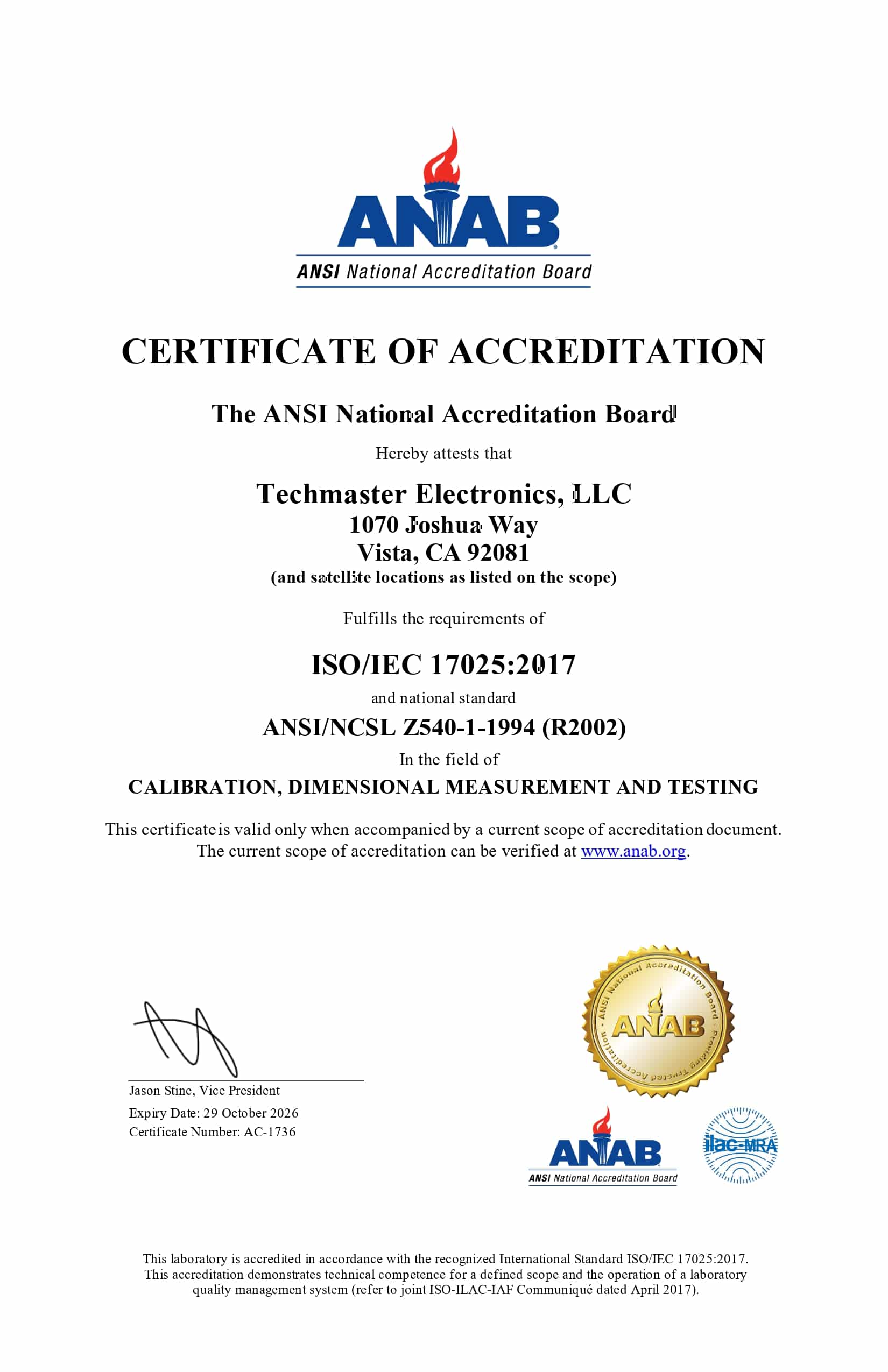
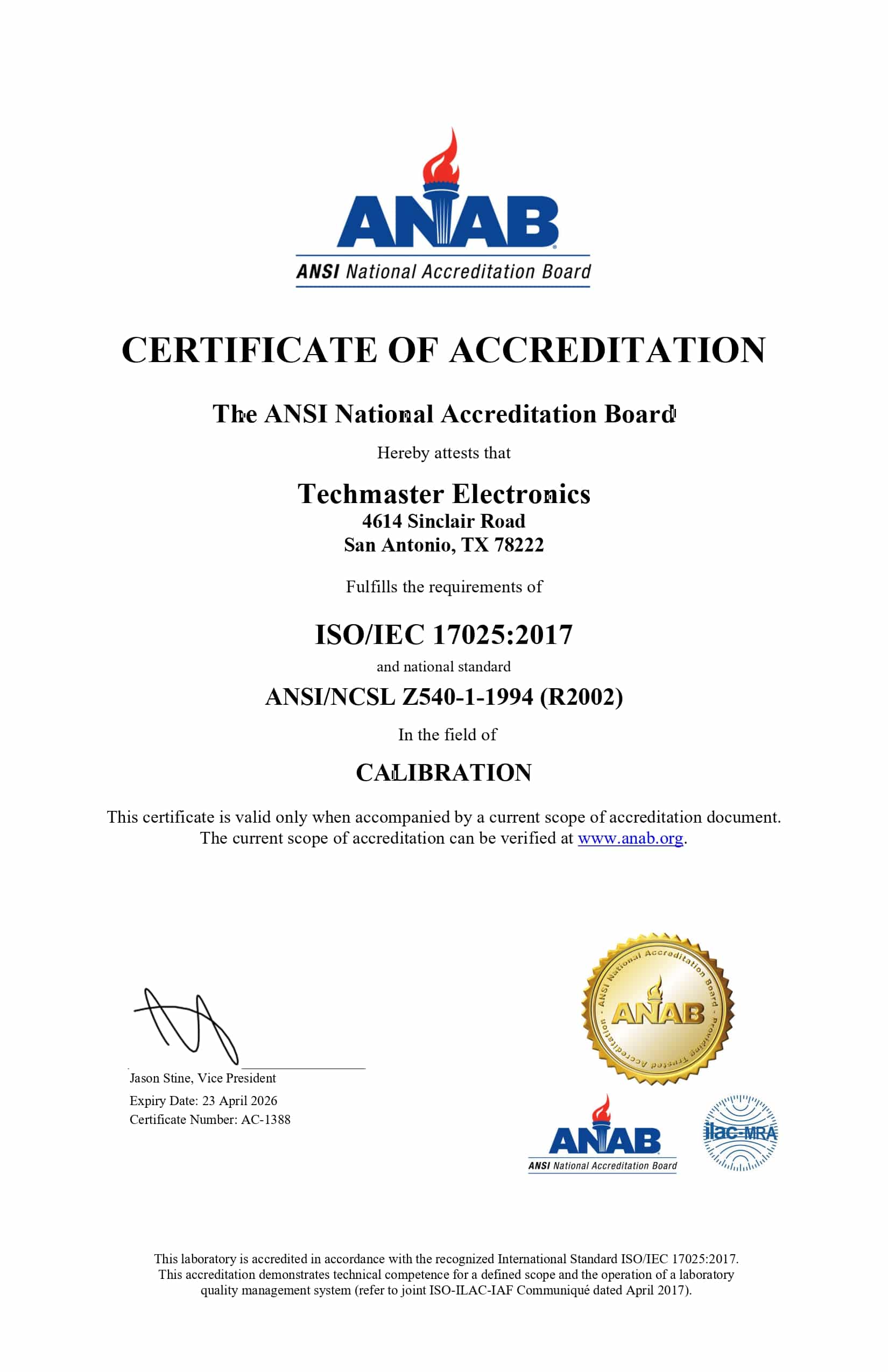
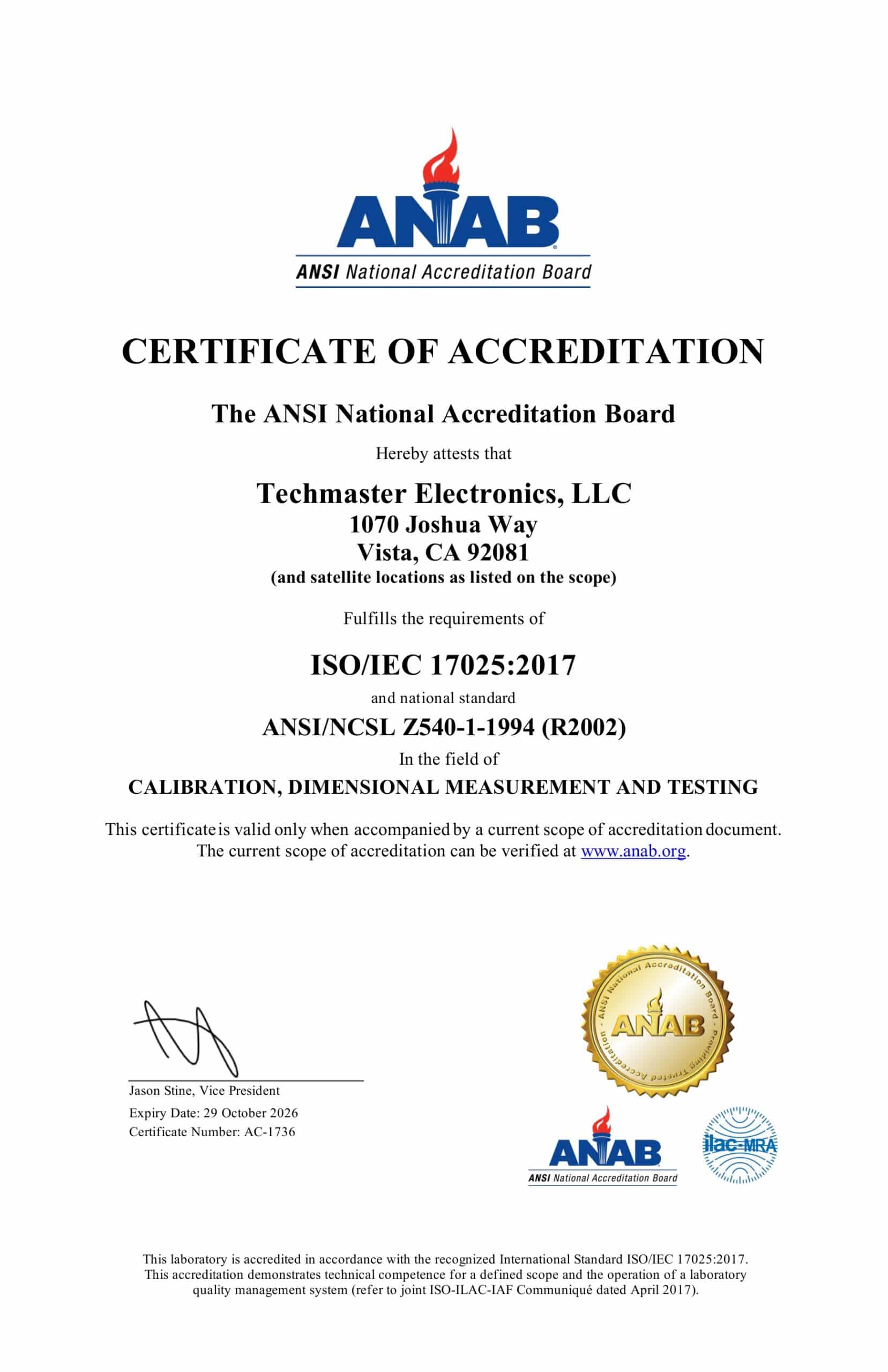
Our laboratories are ANAB-accredited to ISO/IEC 17025, ensuring that every calibration we perform is NIST-traceable and backed by full measurement uncertainty budgets. With five accredited laboratories across the United States, we offer standard 5-business-day turnarounds, free local pickup and delivery in select regions, and nationwide logistics support.
Whether you need a single Calibration service for a reference multimeter or comprehensive management of your entire test equipment fleet, our experienced metrologists deliver the documented accuracy your quality system demands.
10. Conclusion
Selecting the appropriate measurement tools is a foundational requirement for any modern electronics production line. However, the accuracy of those tools is only as reliable as their last calibration. By investing in premium multimeters and adhering to strict, ISO/IEC 17025 accredited calibration schedules, manufacturing facilities can reduce risk, eliminate false failures, and confidently stand behind the quality of their products.
11. FAQ Section
Frequently Asked Questions
Expert answers on selecting, maintaining, and calibrating digital multimeters specifically for the rigorous demands of electronics manufacturing.
Ready to schedule your calibration?
Keep your production yield secure and audit-ready.
References & industry standards
- ISO/IEC 17025 testing & calibration laboratory requirements
- NIST calibration services and measurement traceability
- NIST Time and Frequency Division
- A2LA / ANAB accreditation for calibration laboratories
External standards bodies. Techmaster Electronics is an ISO/IEC 17025-accredited, NIST-traceable calibration laboratory.
Frequently asked questions
What is handheld digital multimeter calibration?
Handheld Digital Multimeter Calibration is the documented comparison of a handheld digital multimeter against NIST-traceable reference standards under ISO/IEC 17025. It quantifies the handheld digital multimeter’s error and measurement uncertainty and confirms it performs within tolerance, with as-found and as-left data on the certificate.
How often should a handheld digital multimeter be calibrated?
Most quality systems calibrate a handheld digital multimeter every 12 months, or sooner after repair, overload, or before critical measurements. Set your interval from the manufacturer spec and your ISO 9001 / 13485 / AS9100 program and drift history.
Is Techmaster’s handheld digital multimeter calibration ISO 17025 accredited?
Yes. Techmaster Electronics is ISO/IEC 17025:2017 accredited by ANAB (Certificate AC-1736). Every handheld digital multimeter calibration is NIST-traceable and issued with a full measurement-uncertainty budget.
What is the turnaround for handheld digital multimeter calibration?
Standard turnaround is 5 business days, with 1–2 business-day expedite available. On-site calibration removes shipping time entirely for handheld digital multimeters that can’t leave the floor.
Do you calibrate handheld digital multimeters on-site or in-lab?
Both. Techmaster runs five US labs (Vista CA, Santa Clara CA, Orlando FL, San Antonio TX, Holly Springs NC) and offers nationwide on-site handheld digital multimeter calibration to minimize downtime.

Khanh Nguyen is the Marketing Manager at Techmaster Electronics, a B2B marketing leader covering the test, measurement, and ISO/IEC 17025 accredited calibration industry across the US and Vietnam markets.