
DC Electronic Load Buying Guide: How to Choose a DC Electronic Load
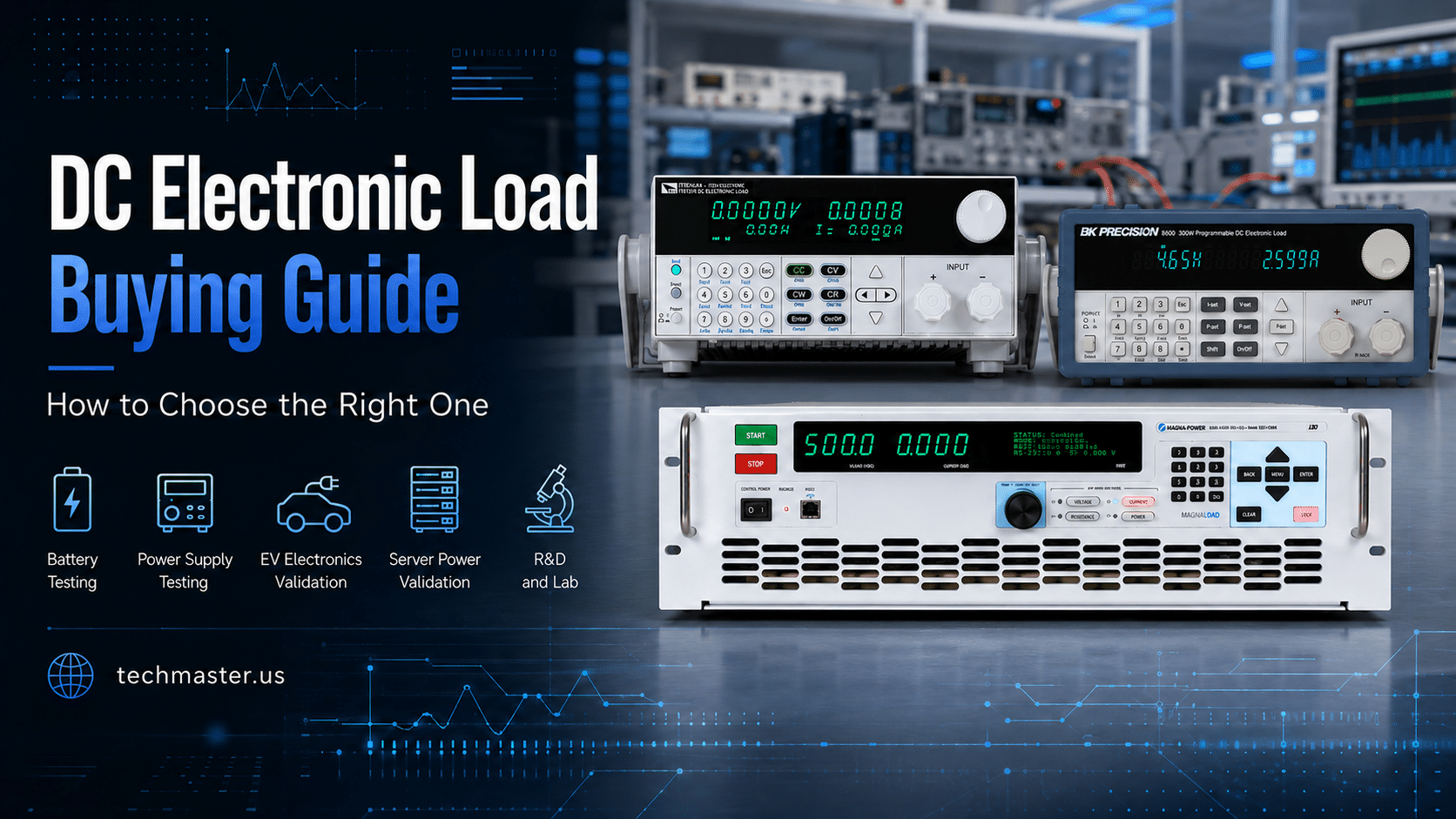
Testing power sources efficiently and safely requires equipment that can accurately simulate real-world electrical demands. For engineers, quality managers, and lab technicians, knowing how to choose a DC electronic load is critical to ensuring product reliability, safety, and compliance. An incorrect choice can lead to equipment damage, inaccurate test data, and significant project delays.
In this comprehensive buying guide, we will explore the core functions of a DC electronic load, discuss the key specifications you need to consider, and explain why ongoing calibration is essential for maintaining accuracy in your test and measurement applications.
1. What Is a DC Electronic Load?
First and foremost, a DC electronic load is a specialized test instrument designed to safely absorb (or “sink”) electrical power from a direct current (DC) power source. Unlike a traditional fixed resistor, a programmable DC load utilizes active electronic circuitry. Specifically, it dynamically controls the exact amount of voltage, current, power, or resistance it actively draws from the device under test (DUT).
In addition, most modern units operate in several distinct modes to effectively simulate different real-world conditions. For instance, Constant Current (CC) mode draws a steady, specified current regardless of any incoming voltage changes. Similarly, Constant Voltage (CV) mode actively adjusts the current draw to maintain a specific voltage across the DUT. Meanwhile, Constant Resistance (CR) mode simulates a fixed resistive load by smoothly adjusting the current proportionally to the voltage. Lastly, Constant Power (CP) mode continuously shifts the current to maintain a steady power draw as the voltage fluctuates.
2. Why Knowing How to Choose a DC Electronic Load Matters
Undoubtedly, understanding how to choose a dc electronic load involves much more than simply matching basic numbers on a specification sheet. Instead, it requires a deep focus on measurement accuracy, operational reliability, and comprehensive risk reduction. As a result of selecting the appropriate instrument, you ensure that your laboratory environment accurately mirrors actual real-world demands.
Conversely, a mismatched or underpowered load can easily cause a power source to fail prematurely during standard testing. Even worse, it might inadvertently pass a defective unit that will eventually fail in the field. Also, proper equipment selection completely ensures strict traceability to international metrology standards. Thus, it drastically reduces overall measurement uncertainty and thoroughly guarantees internal regulatory compliance. In the end, investing in the correct equipment upfront significantly decreases long-term costs associated with product recalls, equipment replacement, and laboratory safety hazards.
3. Key Specifications and Top Brands to Consider
4. Common Applications
The versatility of these instruments makes them indispensable across various industries. Common electronic load applications include:
-
DC Power Supply Testing: Verifying the output voltage stability, load regulation, and transient recovery time of AC/DC and DC/DC converters.
-
Battery Testing: Safely discharging batteries to determine their actual capacity, lifecycle, and internal resistance. This is especially critical in the automotive (EV) and consumer electronics sectors.
-
Fuel Cell and Solar Panel Evaluation: Characterizing the voltage-current (V-I) curve to find the maximum power point tracking (MPPT) under varying environmental conditions.
-
Aerospace and Defense: Validating the ruggedness and reliability of avionics power systems under extreme simulated loads.
5. Calibration Standards and Traceability
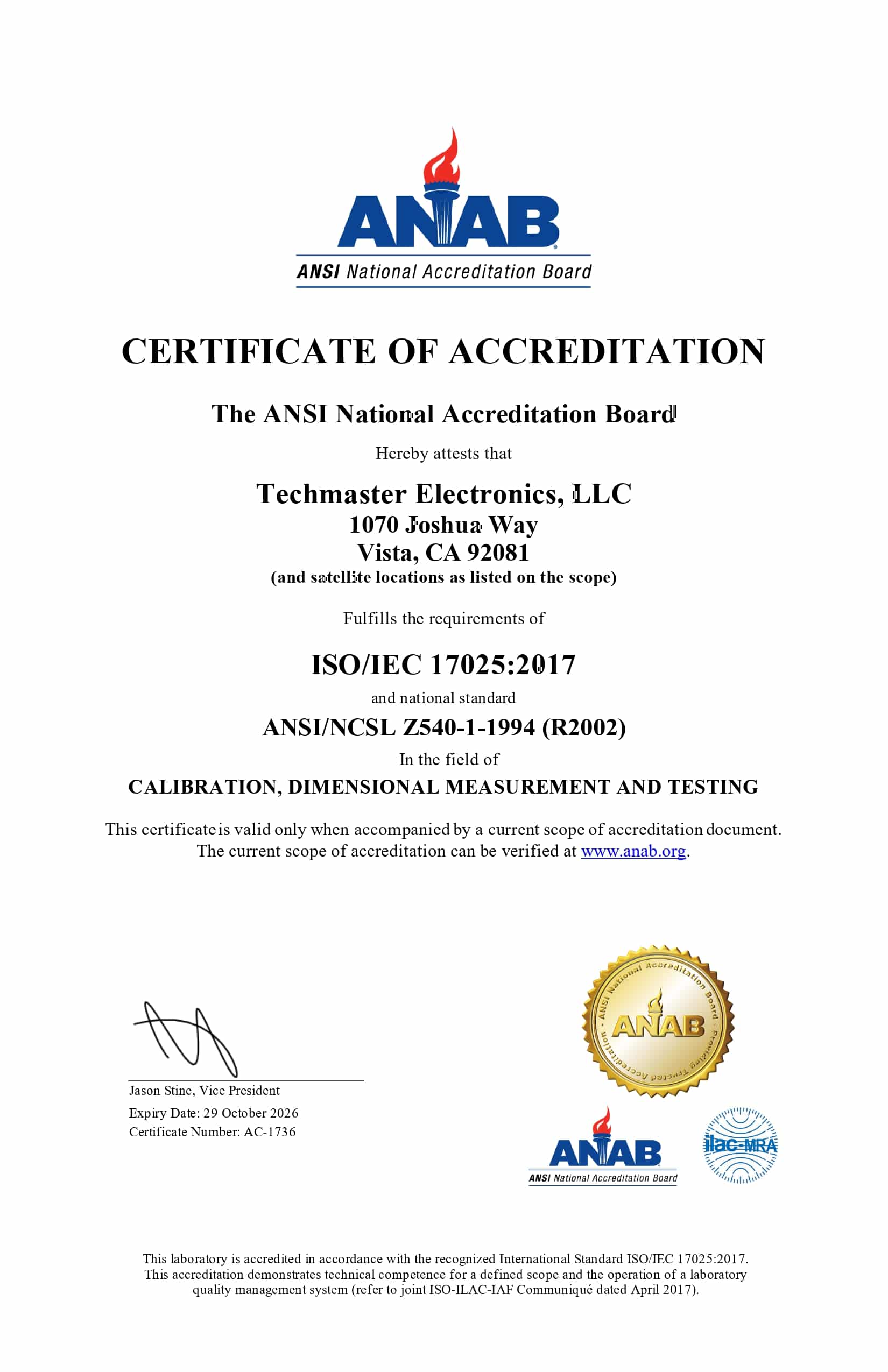
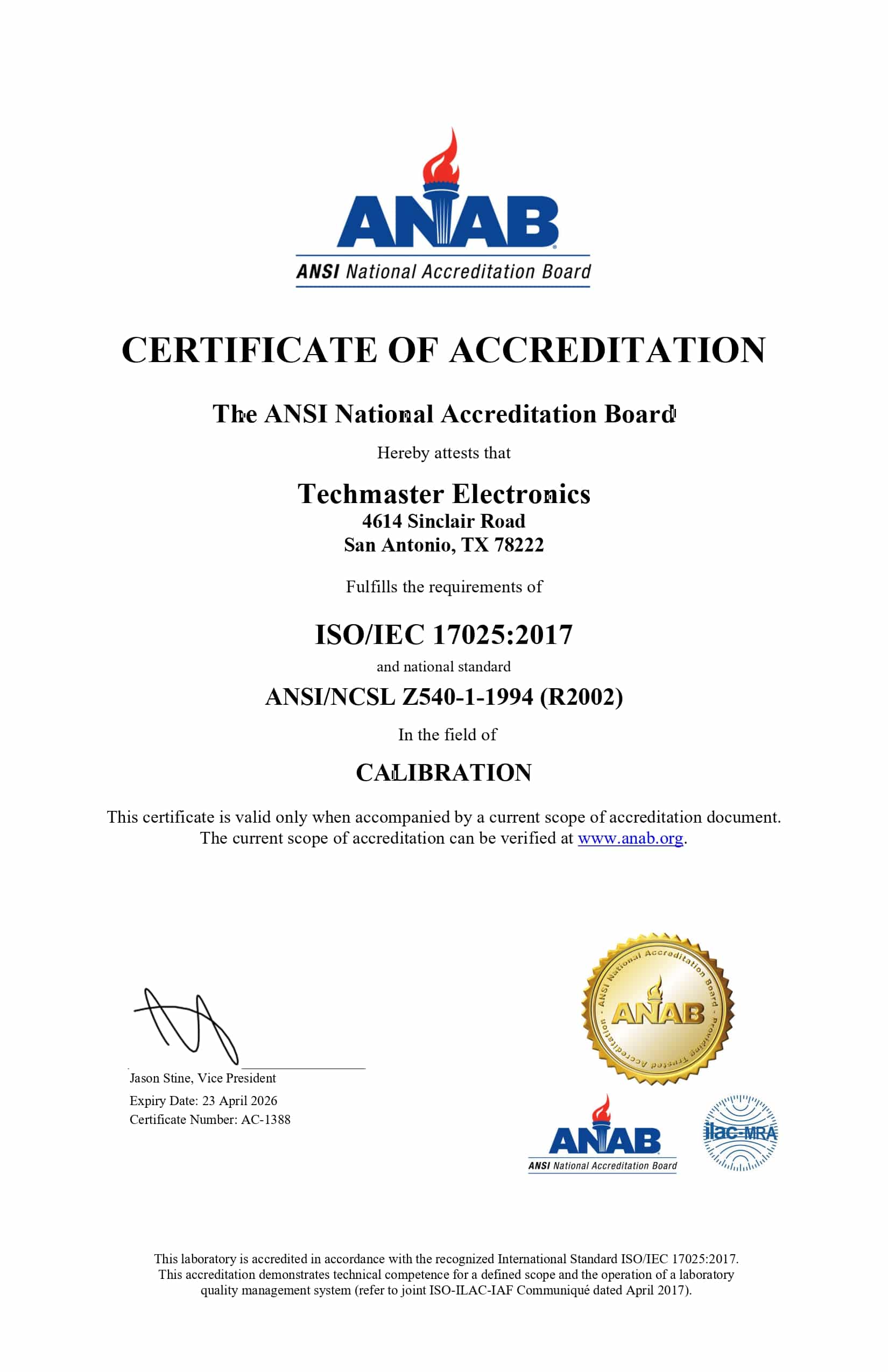
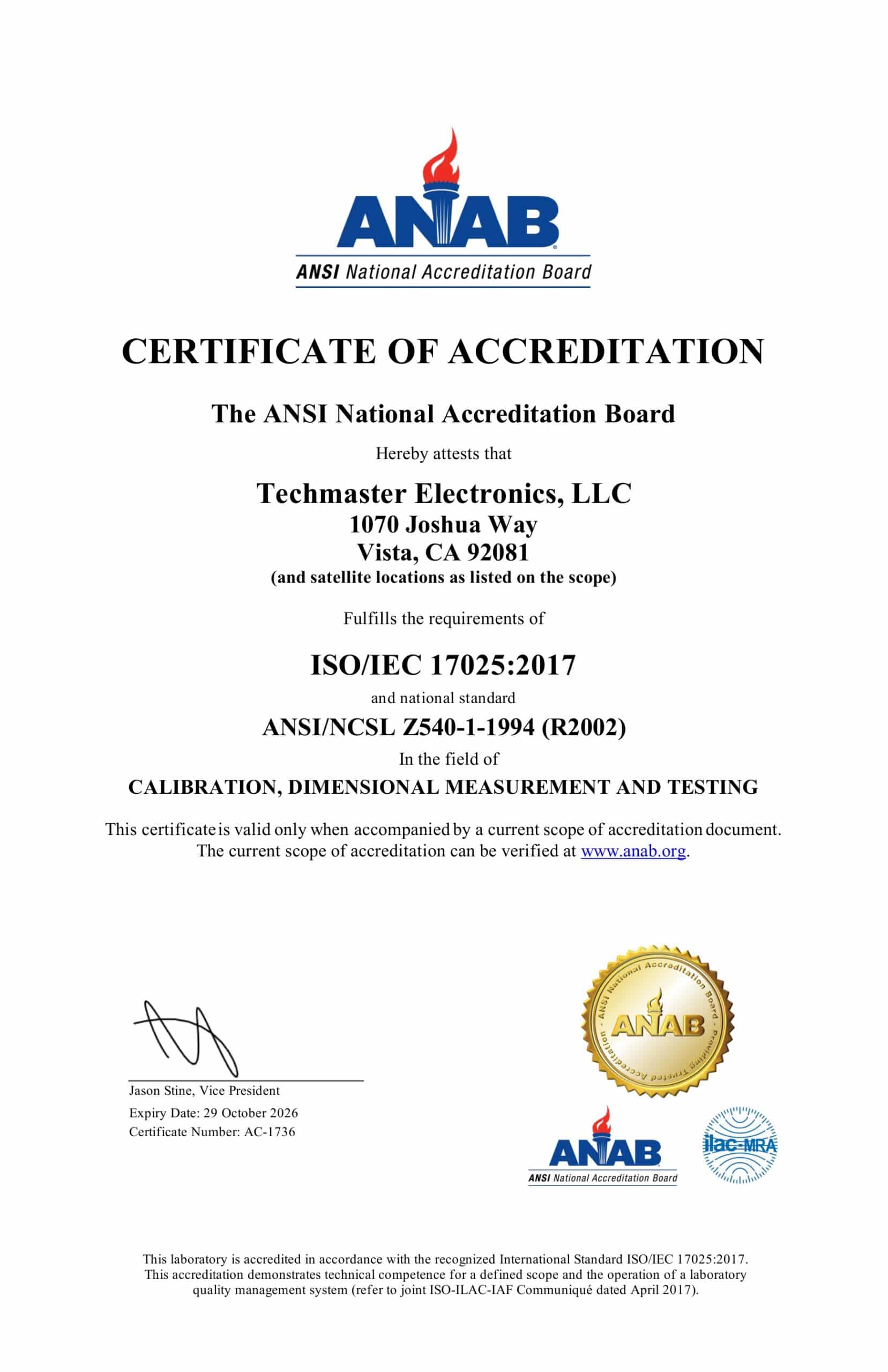
Once you purchase a DC electronic load, maintaining its accuracy through routine calibration is mandatory. For organizations working in regulated industries, an ISO/IEC 17025 accredited calibration is non-negotiable.
This standard ensures that the laboratory performing the calibration is technically competent and capable of producing precise, repeatable results. Calibration should always be NIST-traceable (National Institute of Standards and Technology) or traceable to an equivalent national metrology institute. Proper documentation, including detailed calibration certificates with stated measurement uncertainties, is required to pass compliance audits and maintain internal quality control standards.
When you schedule your regular Calibration service, you guarantee that the voltage and current readbacks on your electronic load remain reliable year after year.
6. Common Issues Found During Calibration
Over time, electrical components within a DC electronic load experience thermal stress and mechanical wear, leading to inaccuracies. During routine electronic load calibration, metrologists commonly identify several issues:
-
Measurement Drift: The internal analog-to-digital converters (ADCs) may drift over time, causing the load to display inaccurate voltage or current readbacks.
-
Out-of-Tolerance Results: The unit may fail to draw the exact current specified in Constant Current (CC) mode, especially at the extreme high or low ends of its operational range.
-
Thermal Degradation: High-power loads dissipate massive amounts of heat. Over time, cooling fans can degrade, and thermal sensors may become inaccurate, leading to unstable performance or unexpected thermal shutdowns.
-
Slew Rate Inaccuracies: The load’s ability to rapidly transition between current levels (transient response) can degrade, masking potential flaws in the power supply being tested.
7. How Often Should This Equipment Be Calibrated?
Frequently, laboratory managers ask exactly how often they should professionally service this vital equipment. Generally, most leading manufacturers highly recommend a standard 12-month calibration interval. However, you should strictly adjust this baseline interval based on several unique operational factors.
For example, units utilized heavily in 24/7 automated manufacturing lines often require preventative semi-annual servicing. Additionally, harsh environmental conditions play a massive role in accelerating instrument drift. Specifically, equipment operating in fluctuating temperatures, high humidity, or dusty environments will fall out of tolerance significantly faster. Also, highly regulated industries, such as commercial aerospace and pharmaceuticals, often dictate much shorter internal calibration cycles. Therefore, you must carefully evaluate your specific internal quality procedures to firmly determine the most optimal service frequency.
8. What to Look for in a Calibration Provider
Selecting the right provider for your calibration needs is just as important as choosing the equipment itself. When evaluating a calibration laboratory, look for the following criteria:
-
ISO/IEC 17025 Accreditation: Ensure the lab holds active accreditation covering the specific electrical parameters, voltage ranges, and current capacities required for your equipment.
-
Technical Capability: DC electronic loads, particularly high-power models, require specialized calibration standards (like precision shunts and high-current multimeters). Verify the lab has the scope to handle your specific models.
-
Measurement Uncertainty: The provider should clearly state their measurement uncertainties, ensuring they are low enough to validate your instrument’s specifications.
-
Turnaround Time: Look for providers that offer fast, reliable turnaround times or on-site calibration options to minimize your facility’s downtime.
-
Comprehensive Documentation: You should receive a detailed calibration certificate that includes “As Found” and “As Left” data, standard traceability, and clearly defined environmental conditions during the test.
9. Why Choose Techmaster Electronics?
Without a doubt, Techmaster Electronics prominently stands out as a premier industry leader in advanced electrical metrology. Specifically, our ISO/IEC 17025 accredited laboratories proudly provide the absolute highest level of comprehensive testing support. In addition, we expertly serve quality-driven industries, including aerospace manufacturing, medical device production, and global telecommunications.
Indeed, we thoroughly understand that a highly accurate instrument acts as the foundational backbone of your critical testing procedures. Consequently, our highly trained technicians utilize state-of-the-art reference standards to carefully verify your sensitive equipment. Whether you require strict in-lab service for your benchtop units or convenient on-site calibration for massive rack-mounted automated systems, we effectively deliver. In the end, Techmaster Electronics consistently provides highly reliable, fully traceable, and exceptionally well-documented results with industry-leading turnaround times.
10. Conclusion
Overall, understanding exactly how to choose a DC electronic load builds an exceptionally reliable testing environment. In addition, carefully evaluating specifications and operating modes ensures that your power testing remains both incredibly accurate and highly efficient. Most importantly, proactively protecting your expensive investment with routine, ISO/IEC 17025 accredited calibration fundamentally guarantees long-term operational success. As a result, your vital testing equipment will continuously deliver highly trustworthy data. Therefore, your manufactured products will confidently remain perfectly compliant, and your daily operations will predictably run incredibly smoothly.
11. FAQ Section
Frequently Asked Questions
Expert answers on selecting, operating, and calibrating DC electronic loads to ensure precision in your power testing environment.
Equipment Overview
Calibration & Compliance
Service Providers
Ready to schedule your calibration?
Secure your power testing precision and maintain compliance.
References & industry standards
- ISO/IEC 17025 testing & calibration laboratory requirements
- NIST calibration services and measurement traceability
- A2LA / ANAB accreditation for calibration laboratories
External standards bodies. Techmaster Electronics is an ISO/IEC 17025-accredited, NIST-traceable calibration laboratory.
Frequently asked questions
What is dc electronic load calibration?
DC Electronic Load Calibration is the documented comparison of a DC electronic load against NIST-traceable reference standards under ISO/IEC 17025. It quantifies the DC electronic load’s error and measurement uncertainty and confirms it performs within tolerance, with as-found and as-left data on the certificate.
How often should a DC electronic load be calibrated?
Most quality systems calibrate a DC electronic load every 12 months, or sooner after repair, overload, or before critical measurements. Set your interval from the manufacturer spec and your ISO 9001 / 13485 / AS9100 program and drift history.
Is Techmaster’s DC electronic load calibration ISO 17025 accredited?
Yes. Techmaster Electronics is ISO/IEC 17025:2017 accredited by ANAB (Certificate AC-1736). Every DC electronic load calibration is NIST-traceable and issued with a full measurement-uncertainty budget.
What is the turnaround for DC electronic load calibration?
Standard turnaround is 5 business days, with 1–2 business-day expedite available. On-site calibration removes shipping time entirely for DC electronic loads that can’t leave the floor.
Do you calibrate DC electronic loads on-site or in-lab?
Both. Techmaster runs five US labs (Vista CA, Santa Clara CA, Orlando FL, San Antonio TX, Holly Springs NC) and offers nationwide on-site DC electronic load calibration to minimize downtime.

Khanh Nguyen is the Marketing Manager at Techmaster Electronics, a B2B marketing leader covering the test, measurement, and ISO/IEC 17025 accredited calibration industry across the US and Vietnam markets.