
Keysight vs Rohde & Schwarz DC Power Supply: Which Brand Is Better?
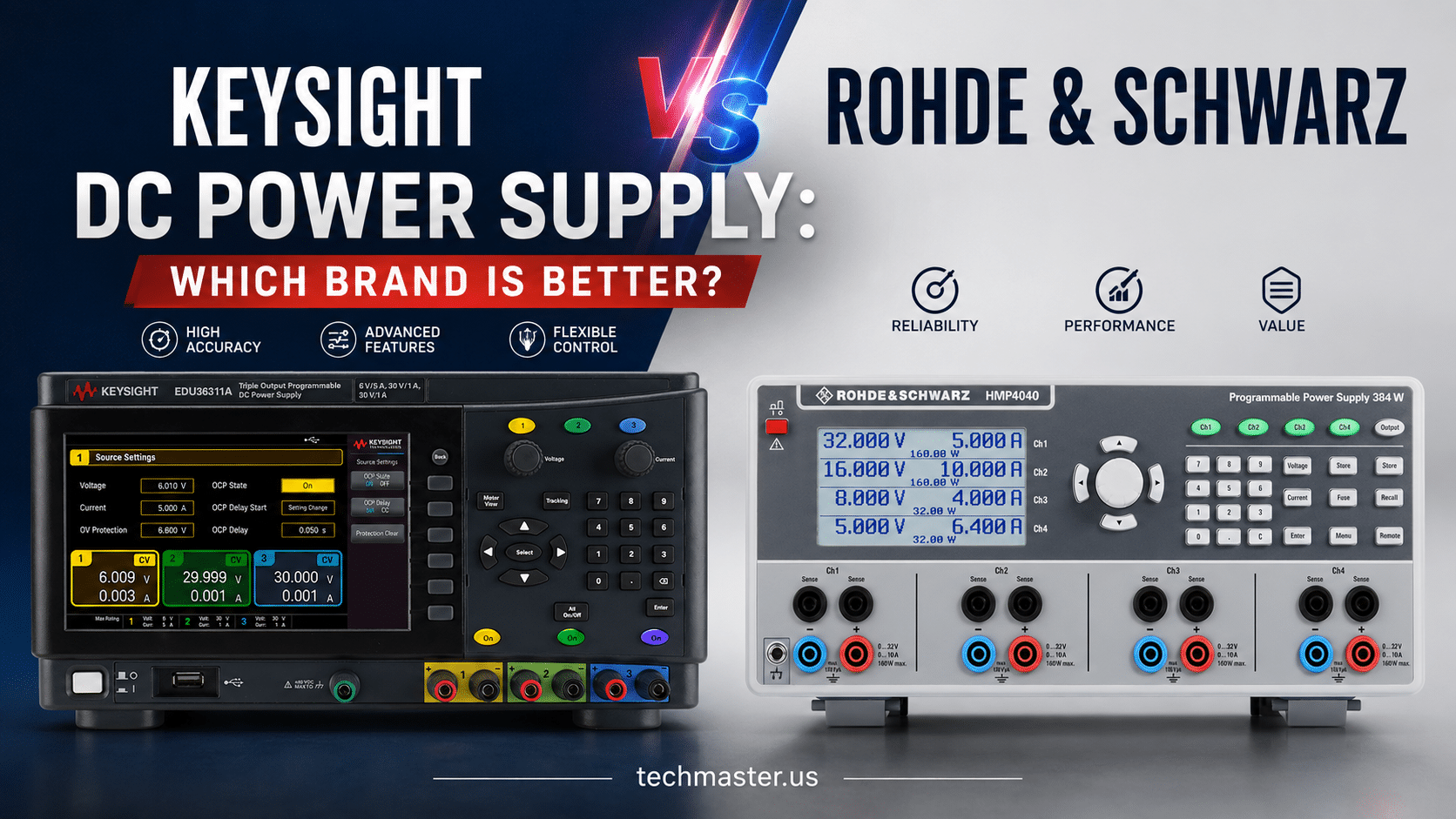
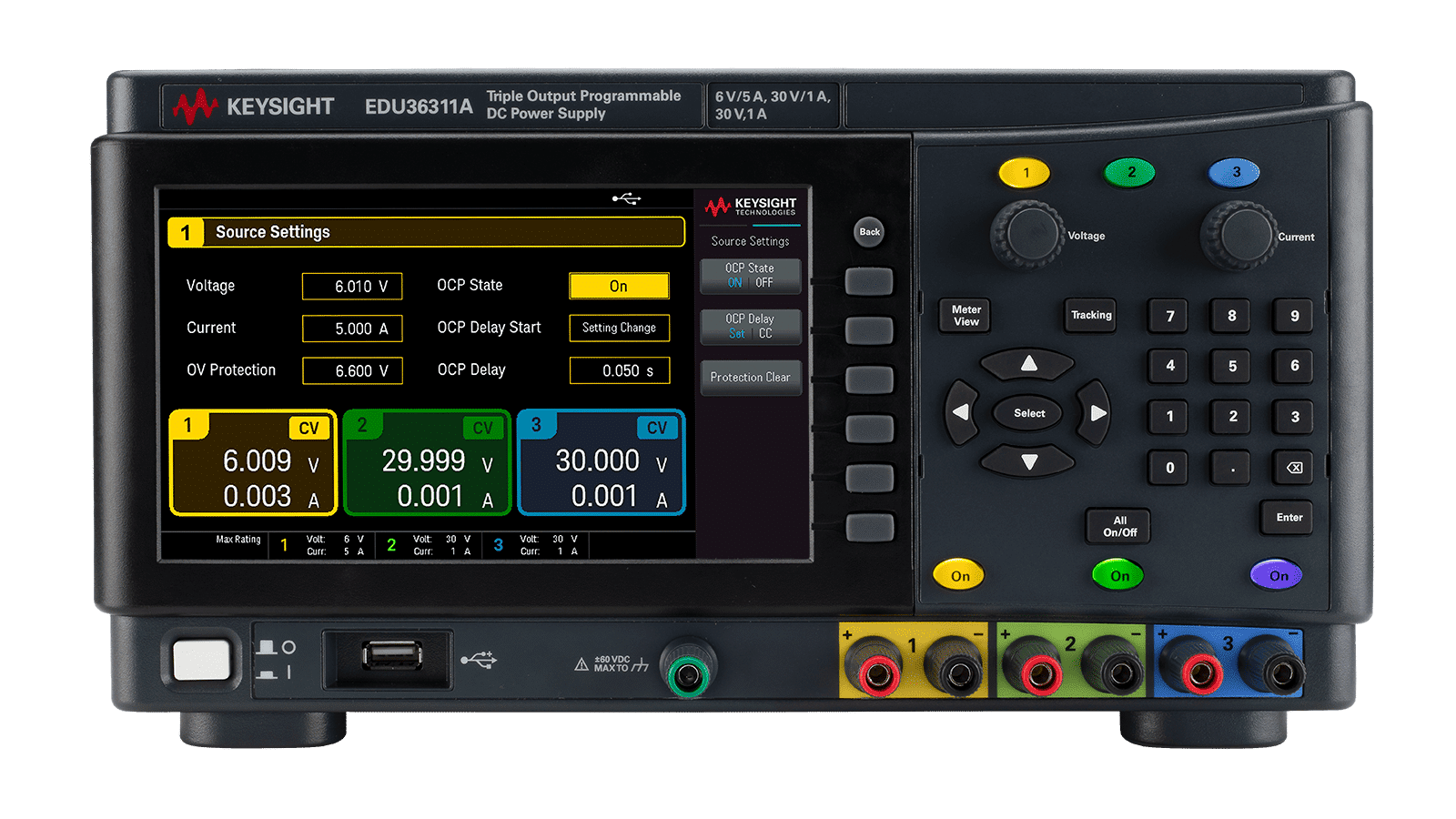
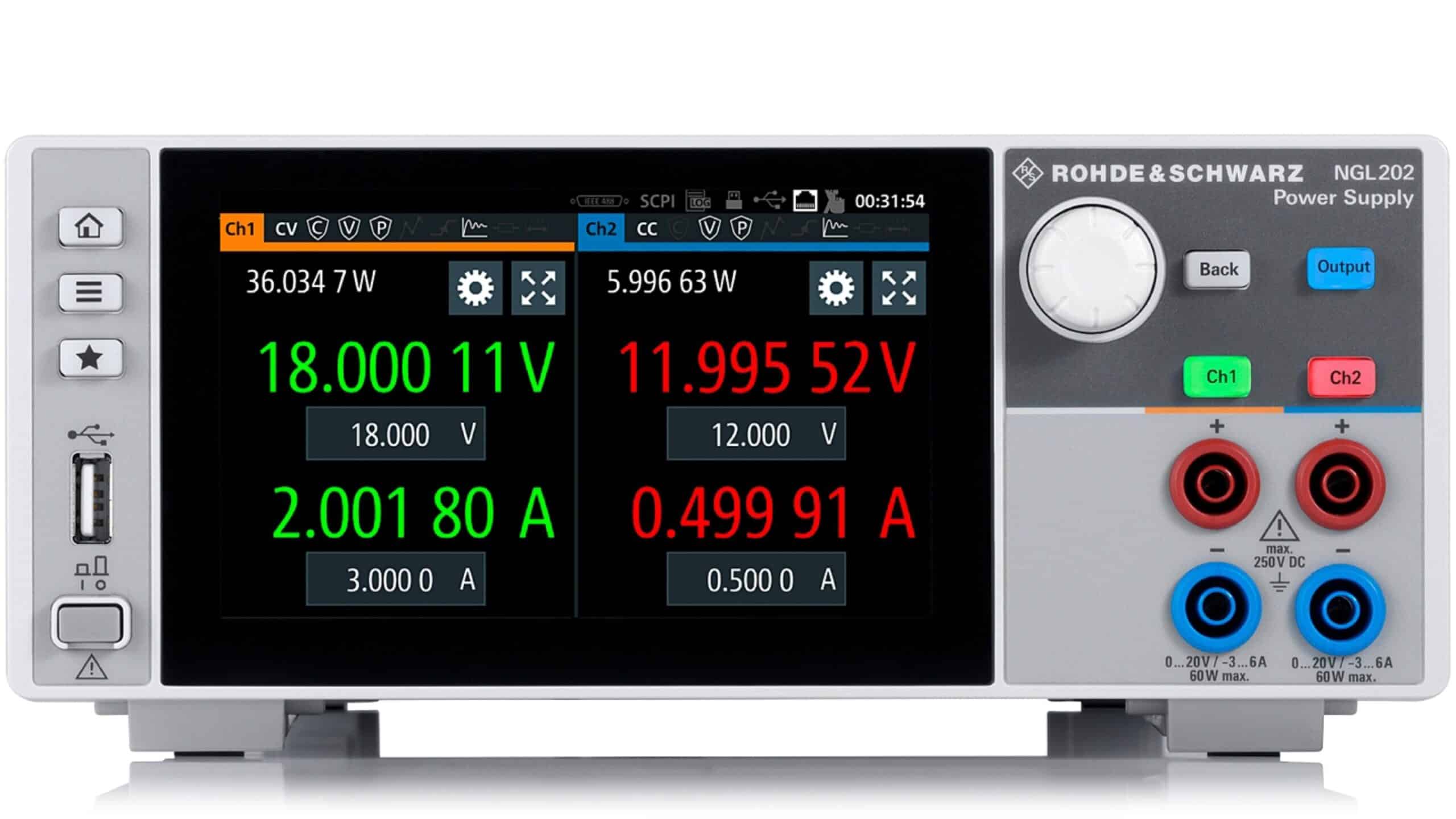
Lab managers and engineers face a tough choice when equipping a modern test facility. You need reliable power to test delicate components. Therefore, selecting the right bench instrument is a major decision. Many professionals find themselves conducting a keysight vs rohde & schwarz dc power supply comparison. Both brands offer world-class test and measurement equipment. However, they approach instrument design in slightly different ways.
Accuracy directly impacts your final product quality. A slight voltage error can ruin a prototype. Furthermore, an unstable current can cause false test failures on a production line. Consequently, you must choose a brand that meets your specific testing needs. You also must maintain that instrument through a professional Calibration service. Let us explore how these two giants compare, where they excel, and how to keep them perfectly accurate over time.
1. What Is a Bench DC Power Supply?
A bench DC power supply delivers controlled direct current (DC) to a device under test (DUT). Engineers use these units every day on test benches, in research labs, and on manufacturing floors. Basic models simply provide a steady voltage and current. However, modern instruments do much more.
Today’s test environments require advanced features. Consequently, premium brands offer programmable units. These advanced models can sequence power, log data, and simulate complex battery drains. They also protect your expensive prototypes from over-voltage or over-current events. Essentially, a high-end bench power supply acts as the reliable heartbeat of your entire test setup.
2. Why a Keysight vs Rohde & Schwarz DC Power Supply Comparison Matters
3. Common Applications
Both brands build robust units for demanding industries. Reliable power matters everywhere. Specifically, you will find these top-tier instruments in the following sectors:
-
Electronics Manufacturing: Factories use programmable supplies to test circuit boards before final packaging. The power supply verifies that the board turns on and draws the correct current.
-
Aerospace and Defense: Avionics engineers simulate extreme power drops. They must ensure flight systems stay online even if the aircraft’s main battery fluctuates.
-
Automotive Industry: Engineers test new electric vehicle (EV) components. They use heavy-duty bench supplies to power electronic control units (ECUs) and infotainment screens.
-
Medical Devices: Developers build life-saving equipment like pacemakers. They require ultra-stable, low-noise power during the research and development phase.
-
Telecommunications: Technicians test mobile devices. They simulate battery life cycles to see how smartphones handle power drain over time.
4. Calibration Standards and Traceability
Buying a premium power supply only solves half of the equation. You must also maintain its accuracy. Over time, physical components age. As a result, the screen might say “12.00 Volts,” but the machine actually delivers 12.05 Volts. This small error can destroy a sensitive microchip.
Therefore, you need ISO 17025 electrical calibration. This international standard guarantees that a calibration lab operates with absolute technical competence. When a lab holds this accreditation, auditors trust their work.
Furthermore, the lab must trace its measurements back to a national standard, like the National Institute of Standards and Technology (NIST). Traceability gives you confidence. A proper calibration certificate shows exactly how your instrument performed before and after adjustments. Highly regulated industries strictly require these detailed documents.
5. Common Issues Found During Calibration
6. How Often Should This Equipment Be Calibrated?
Lab managers frequently ask about proper calibration intervals. Generally, most manufacturers recommend a 12-month calibration cycle. Both Keysight and Rohde & Schwarz suggest annual service for their bench units.
However, you should adjust this schedule based on your specific situation. Consider the following factors:
-
Usage Frequency: A machine running 24 hours a day on a production line needs faster calibration intervals than a unit used once a week.
-
Industry Regulations: Aerospace and pharmaceutical companies often mandate strict 6-month or 12-month cycles. You cannot skip these deadlines without failing an audit.
-
Operating Environment: Harsh conditions shorten instrument lifespans. Extreme heat or constant vibration means you should calibrate more often.
-
Internal Quality Manuals: Your company’s ISO 9001 policy might dictate specific intervals for all electrical measurement tools. Always follow your internal guidelines.
7. What to Look for in a Calibration Provider
8. Why Choose Techmaster Electronics?
At Techmaster Electronics, we take measurement accuracy seriously. We understand that your entire production line relies on reliable test equipment. For decades, we have supported the aerospace, medical, and electronics industries across the United States.
We provide fully accredited calibration services. Whether you need precise keysight dc power supply calibration or you want to verify your rohde schwarz power supply performance, we have the expertise. Our laboratories hold rigorous ISO/IEC 17025 accreditations. Therefore, you can trust our measurements implicitly.
Techmaster Electronics employs highly trained metrologists. We invest in the best standard instruments available. As a result, we offer extremely low measurement uncertainties. We also respect your schedule, provide rapid turnaround times in our labs, and offer comprehensive on-site services to eliminate shipping risks. Do not just put a sticker on your machine; we ensure it performs flawlessly.
9. Conclusion
Choosing the right bench instrument requires careful thought. A keysight vs rohde & schwarz dc power supply comparison reveals two excellent options. Keysight shines in automated reliability, while Rohde & Schwarz offers incredible standalone precision and modern interfaces. Regardless of the brand you choose, the hardware eventually drifts.
Routine, accredited calibration remains the only way to guarantee measurement accuracy. By partnering with a qualified metrology lab, you protect your prototypes, satisfy auditors, and ensure the safety of your final products.
10. FAQ Section
References & industry standards
- ISO/IEC 17025 testing & calibration laboratory requirements
- NIST calibration services and measurement traceability
- NIST Fundamental Electrical Measurements
- A2LA / ANAB accreditation for calibration laboratories
External standards bodies. Techmaster Electronics is an ISO/IEC 17025-accredited, NIST-traceable calibration laboratory.
Frequently asked questions
What is dc power supply calibration?
DC Power Supply Calibration is the documented comparison of a DC power supply against NIST-traceable reference standards under ISO/IEC 17025. It quantifies the DC power supply’s error and measurement uncertainty and confirms it performs within tolerance, with as-found and as-left data on the certificate.
How often should a DC power supply be calibrated?
Most quality systems calibrate a DC power supply every 12 months, or sooner after repair, overload, or before critical measurements. Set your interval from the manufacturer spec and your ISO 9001 / 13485 / AS9100 program and drift history.
Is Techmaster’s DC power supply calibration ISO 17025 accredited?
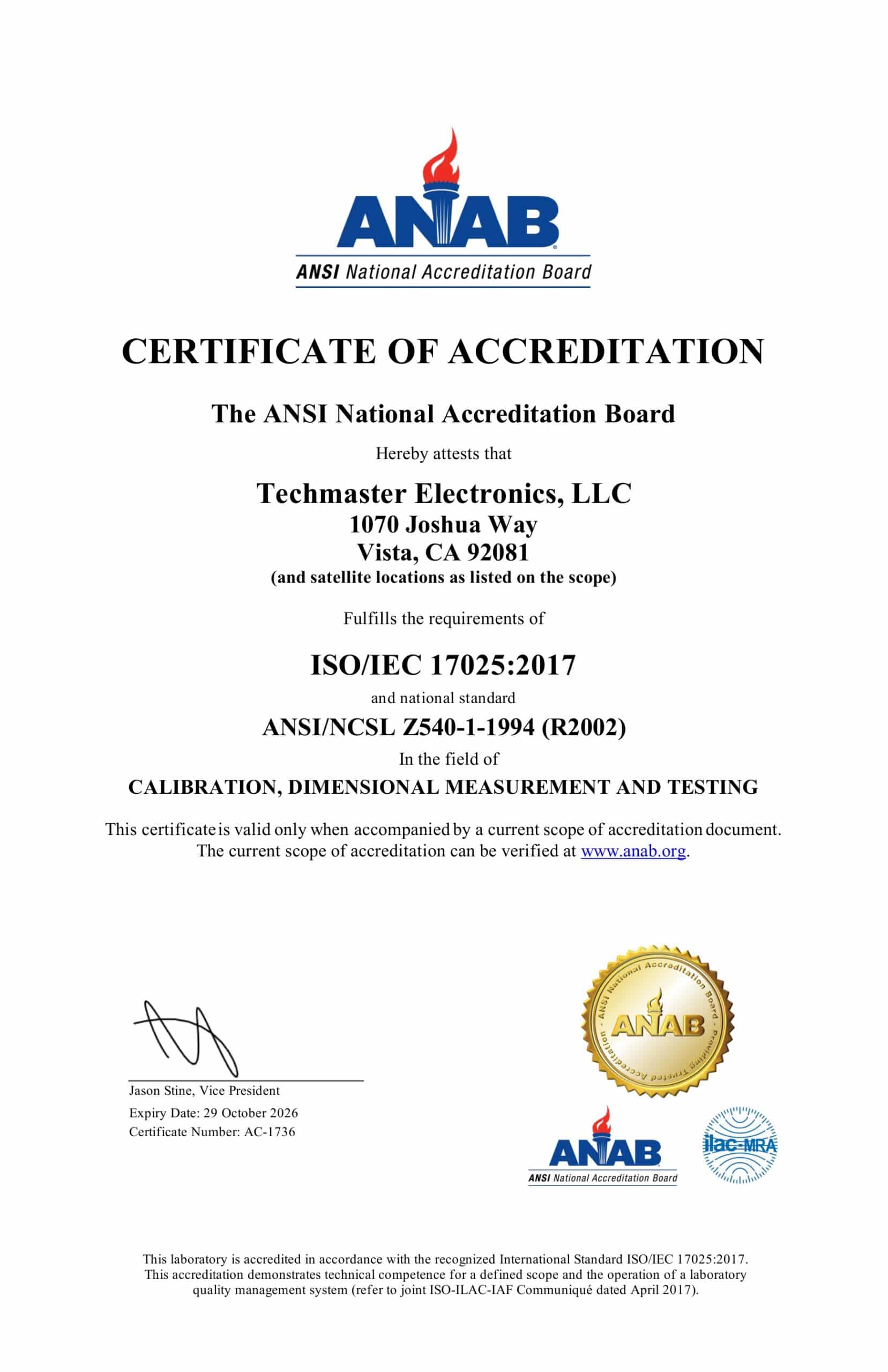
Yes. Techmaster Electronics is ISO/IEC 17025:2017 accredited by ANAB (Certificate AC-1736). Every DC power supply calibration is NIST-traceable and issued with a full measurement-uncertainty budget.
What is the turnaround for DC power supply calibration?
Standard turnaround is 5 business days, with 1–2 business-day expedite available. On-site calibration removes shipping time entirely for DC power supplys that can’t leave the floor.
Do you calibrate DC power supplys on-site or in-lab?
Both. Techmaster runs five US labs (Vista CA, Santa Clara CA, Orlando FL, San Antonio TX, Holly Springs NC) and offers nationwide on-site DC power supply calibration to minimize downtime.

Khanh Nguyen is the Marketing Manager at Techmaster Electronics, a B2B marketing leader covering the test, measurement, and ISO/IEC 17025 accredited calibration industry across the US and Vietnam markets.