
Analytical Balance Calibration
Accuracy across the range
How analytical balance calibration works
- Intake & environmental stabilization
- Repeatability, 10× near capacity
- Eccentricity (off-center load)
- Linearity across the range
- Sensitivity & accuracy
- As-found / as-left certificate
Who we calibrate for
What we measure
| Test | What it detects | How we test | Typical acceptance |
|---|---|---|---|
| Repeatability | Random error / instability | 10 repeat weighings near 50-100% of capacity; compute std dev (s) | s within the balance spec; for USP, 2s / smallest net weight ≤ 0.10% |
| Eccentricity | Corner-load error | Weight (~1/3 capacity) at center then 4 quadrants; record max deviation | Within balance MPE / your tolerance |
| Linearity | Deviation across the range | 5+ points zero to capacity with stacked ASTM weights | Each point within linearity spec |
| Sensitivity / accuracy | Reading vs nominal | Calibrated weights across span | Within MPE after any span adjustment |
In-lab vs on-site calibration
In-lab calibration
- Accredited bench with full reference standards
- Best achievable measurement uncertainties
- Pickup & return logistics handled
- Ideal for precision and reference work
On-site calibration
- We calibrate the analytical balance at your facility
- No shipping risk or transit downtime
- As-found data captured before any move
- Ideal for fixed, large or sensitive assets
In-depth guide
Why Analytical Balance Calibration Matters
Analytical balances are essential in industries such as pharmaceuticals, manufacturing, and laboratory research. These precision instruments measure substances with an accuracy of up to 0.0001g (four decimal places), ensuring consistency in formulations, ingredient weights, and experimental data.
Even minor calibration errors can have serious consequences. In pharmaceutical formulations, a deviation of just 0.001g may alter a drug’s effectiveness or compromise safety. Similarly, incorrect measurements in manufacturing can lead to production defects, financial losses, and regulatory compliance issues. To mitigate these risks, regular calibration is necessary. It guarantees reliable measurements, maintains compliance with industry standards, and enhances operational efficiency.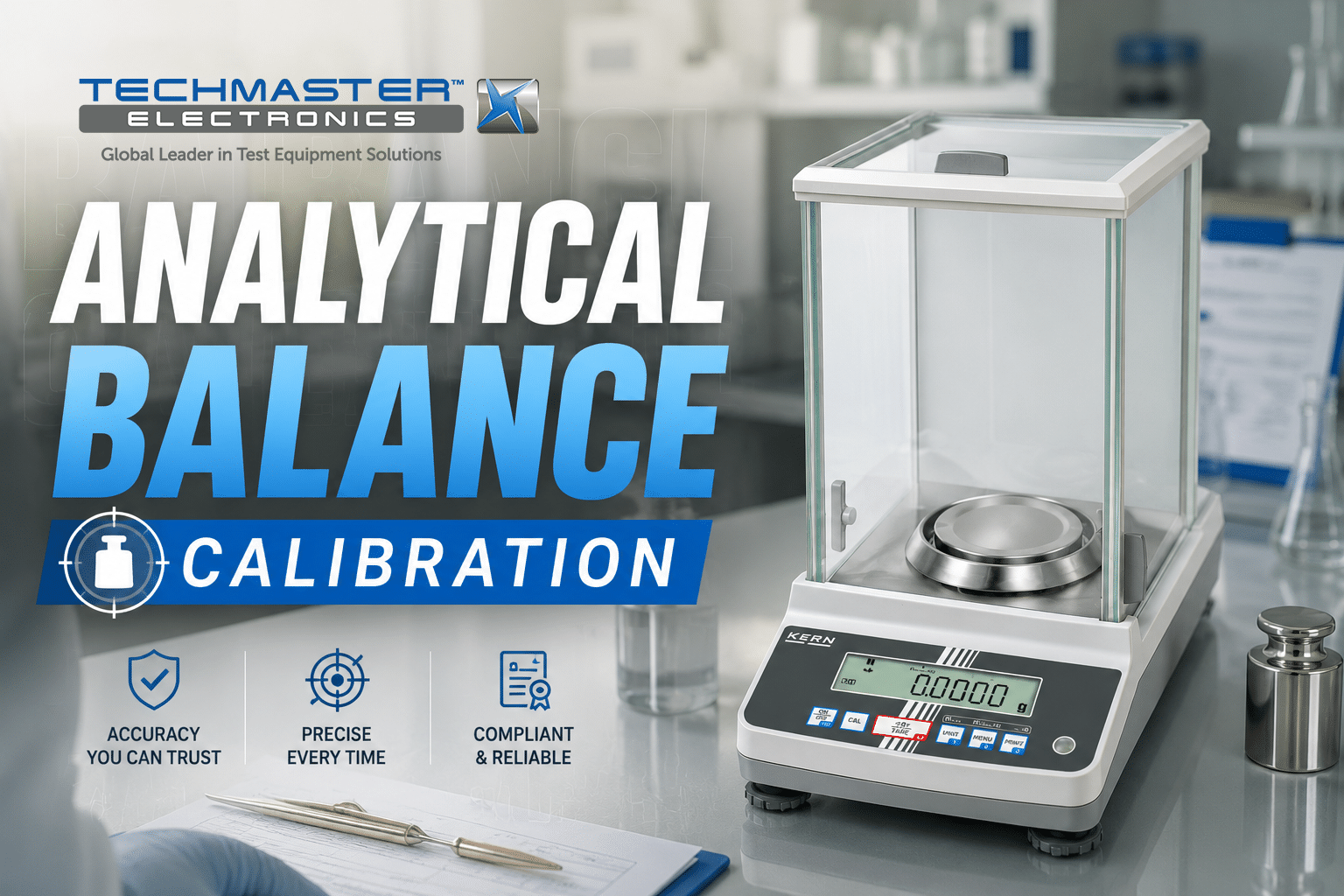
The Risks of an Uncalibrated Analytical Balance
How Calibration Errors Impact Results
A small deviation in an analytical balance’s measurement can lead to critical issues across various industries:- Pharmaceutical industry: Inaccurate drug formulations may impact efficacy and patient safety.
- Manufacturing sector: Weight discrepancies contribute to material waste and defective products.
- Laboratory research: Data inaccuracies undermine experiment validity and scientific credibility.
Calibration Standards for Analytical Balances
To ensure measurement accuracy, analytical balances must comply with internationally recognized calibration standards, such as:- ISO 17025: The global benchmark for calibration and testing laboratories.
- GMP (Good Manufacturing Practice): Mandates precision in pharmaceutical production.
- USP Chapter 41 & 1251: Establishes balance accuracy requirements and calibration frequency for pharmaceutical labs.
How to Calibrate an Analytical Balance Correctly
Methods of Analytical Balance Calibration
There are several effective calibration methods:Recommended Calibration Frequency
Following a structured calibration schedule ensures ongoing accuracy:- Daily: Conduct a quick accuracy check using a certified test weight.
- Monthly: Perform internal calibration using the balance’s built-in feature (if available).
- Every 3-6 months: Schedule professional calibration with an ISO 17025-certified provider.
Ensure Your Balance’s Accuracy Today!
When was the last time your analytical balance underwent professional calibration? Avoid costly errors and maintain compliance with industry standards by scheduling your calibration today. Contact us now for expert Analytical Balance Calibration services and ensure precise, reliable measurements!
Air Buoyancy Correction in Mass Calibration: Altitude, Density and Real Error Budgets
Air buoyancy correction explained with the NIST SOP 2 formula: how altitude and artifact density...
Aug

ASTM E4 vs ISO 7500-1: Which Force Verification Does Your Tensile Tester Need?
ASTM E4-24 or ISO 7500-1:2018? The test method you run decides which force verification your...
Aug
USP <41> Minimum Weight: How to Calculate It on an Analytical Balance
USP minimum weight is calculated, not specified: 2s divided by 0.001 from a 10-weighing repeatability...
Aug
Deadweight Tester vs. Digital Pressure Calibrator: Which Does Your Lab Need?
Deadweight tester or digital pressure calibrator? How each works, the gravity/buoyancy/temperature corrections, typical accuracy, pressure...
Jul
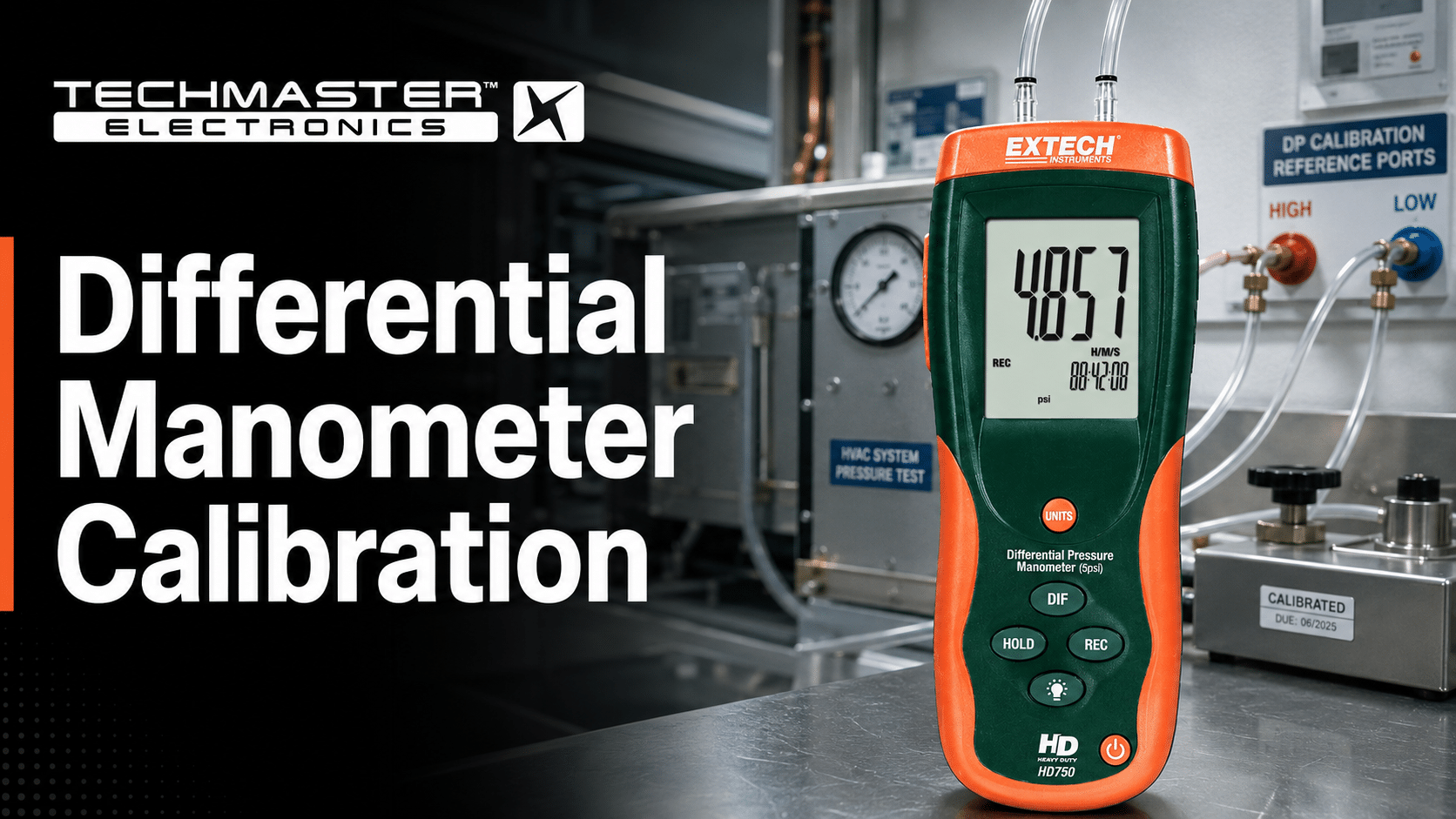
Differential Manometer Calibration: Solve Drift Pain
Home » Analytical Balance Calibration – Fast & ISO 17025 CertifiedIndustrial environments rely on absolute...
Jun
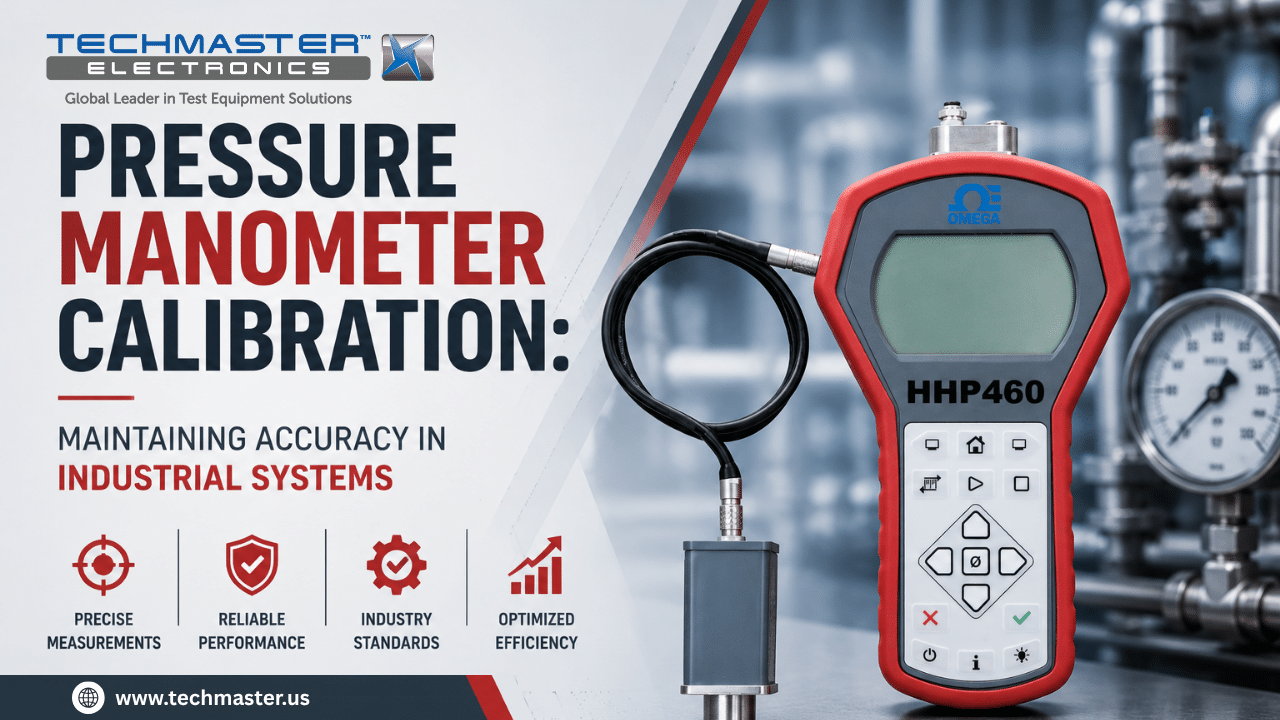
Pressure Manometer Calibration in Industrial Systems
Home » Analytical Balance Calibration – Fast & ISO 17025 Certified Metrology guide · ISO/IEC...
Jun

Techwrench Calibration: The Technical & Compliance Guide
Home » Analytical Balance Calibration – Fast & ISO 17025 Certified Metrology guide · ISO/IEC...
Jun
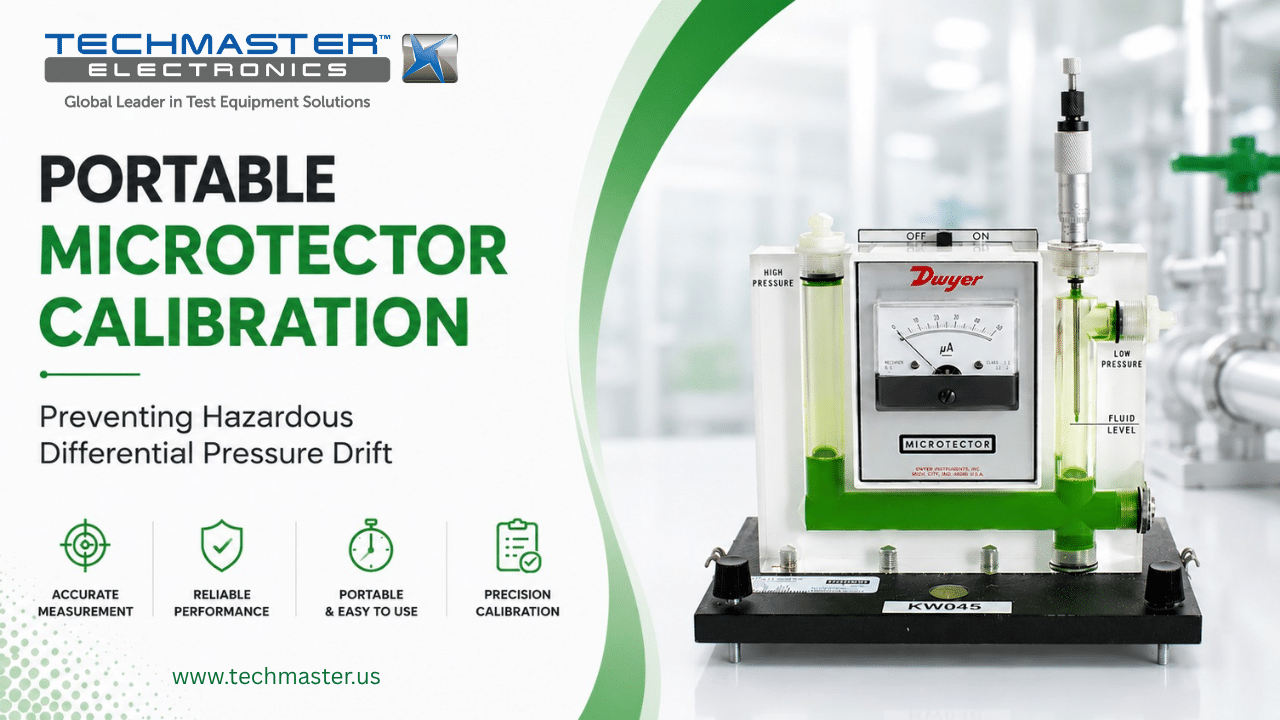
Portable Microtector Calibration: Preventing Pressure Drift
Home » Analytical Balance Calibration – Fast & ISO 17025 Certified Metrology guide · ISO/IEC...
Jun
What an ISO/IEC 17025 Balance Calibration Certificate Should Show
Searching for “ISO 17025 balance calibration” usually means an auditor wants proof that a balance was calibrated by a competent lab, not just checked with a weight. An accredited certificate for an analytical balance should cover these tests:
| Test | What it shows |
|---|---|
| Eccentricity (corner load) | Whether the reading changes when the load is placed off-center on the pan |
| Repeatability | How much repeated weighings of the same weight vary; this drives the minimum weight |
| Linearity / indication error | The error at several loads across the capacity, with as-found and as-left values |
| Measurement uncertainty | The uncertainty of each result, so you can judge it against your process tolerance |
It should also identify the test weights used, their class and their own calibration, and state any adjustment made during the visit.
Acceptance criteria come from your process
The calibration lab reports what the balance does. Whether that is acceptable depends on what you use the balance for. Pharmaceutical labs commonly apply USP <41>: 0.10% limits for repeatability and accuracy, with minimum weight calculated from the repeatability result. See our USP <41> minimum weight guide. Other labs set limits from their method tolerances, or from the balance’s accuracy class. Agree the limits and the decision rule before the calibration, so the certificate states pass or fail on the terms your auditor expects.
Calibration, adjustment and routine checks
Calibration measures and documents the error. Adjustment, including a balance’s internal calibration routine, changes the balance’s response. Routine daily or weekly checks with a single calibrated test weight confirm the balance has not changed between calibrations. All three have a place, but only the calibration produces the traceable, accredited record. Scales and balances are on Techmaster’s ANAB ISO/IEC 17025 scope (certificate AC-1736), with on-site service available so the balance is calibrated where it is used.
Frequently asked questions
What is analytical balance calibration?
How often should an analytical balance be calibrated?
Which weights and standards are used?
What tests are included on the certificate?
Can you calibrate on-site, or do I ship the balance in?
Need analytical balance calibration?
ANAB-accredited, NIST-traceable, fast turnaround, in-lab or on-site across the USA.
Contact us for a quoteReferences & industry standards
- ISO/IEC 17025 testing & calibration laboratory requirements
- NIST calibration services and measurement traceability
- NIST Mass and Force Group
- A2LA / ANAB accreditation for calibration laboratories
External standards bodies. Techmaster Electronics is an ISO/IEC 17025-accredited, NIST-traceable calibration laboratory.
Related reading: How to calculate USP <41> minimum weight on an analytical balance

Khanh Nguyen is the Marketing Manager at Techmaster Electronics, a B2B marketing leader covering the test, measurement, and ISO/IEC 17025 accredited calibration industry in the United States.