
Blog
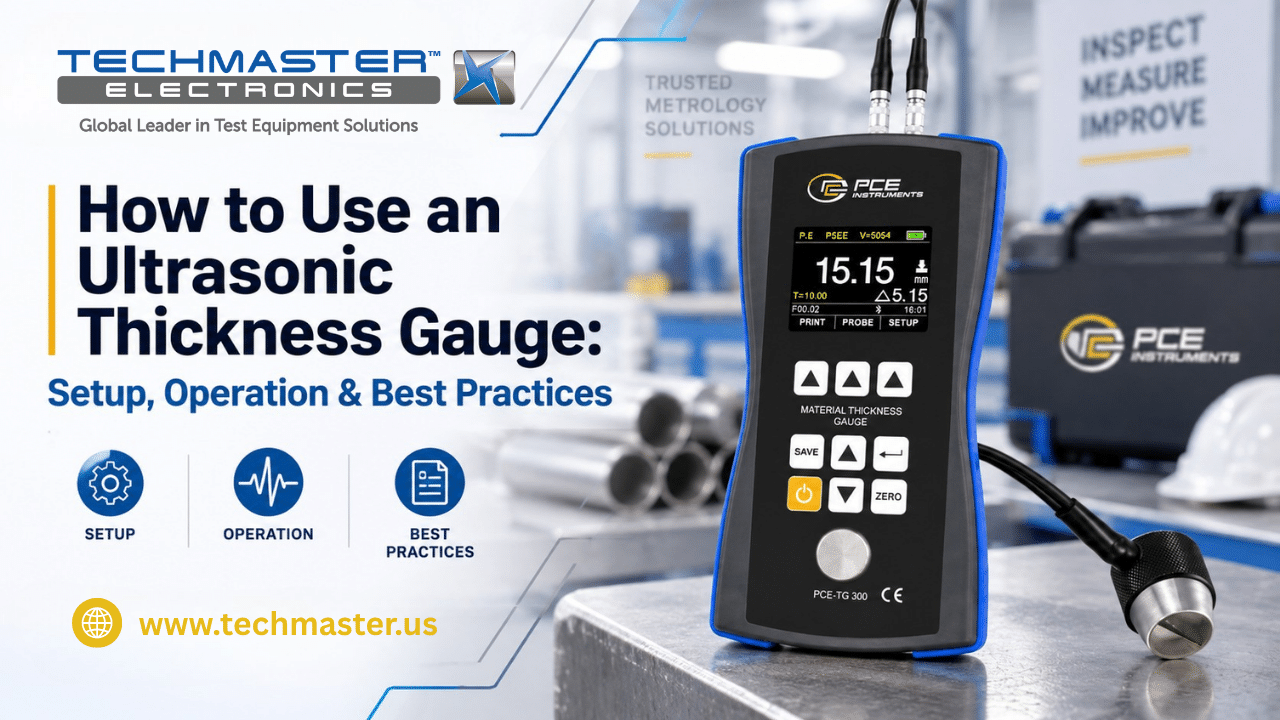
How to Use an Ultrasonic Thickness Gauge?
How to Use an Ultrasonic Thickness Gauge: Setup, Operation & Best Practices Non-destructive testing (NDT)...
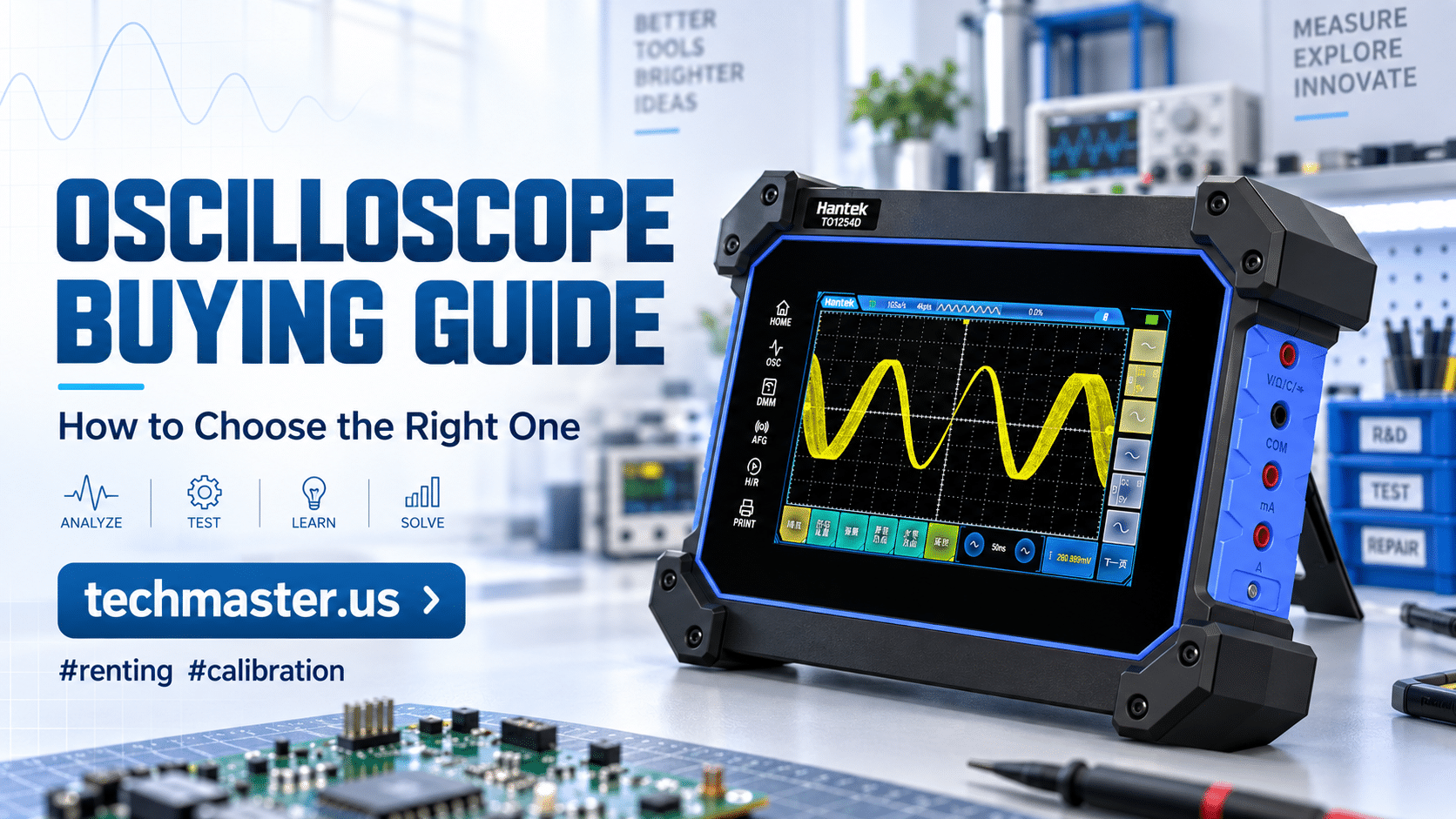
Oscilloscope Buying Guide: How to Choose the Right One
Oscilloscope Buying Guide: How to Choose the Right One In today’s fast tech world, exact...
Calibration Requirements for ISO 9001: Clause 7.1.5 and the 6 Things Auditors Check
TL;DR: ISO 9001 clause 7.1.5 requires that measuring instruments be suitable, maintained, traceable where required,...
Infrared Thermometer Calibration: Emissivity, Blackbodies, and the Size-of-Source Effect
How infrared thermometer calibration works: emissivity, blackbody sources, size-of-source effect, D:S ratio, calibration points, and...
Network Analyzer Calibration Guide: Instrument Cal vs User Cal, Cost, and How Often
A network analyzer calibration has two distinct meanings: laboratory calibration of the instrument itself and...
Power Supply Calibration Guide: What’s Checked, Cost, and How Often
TL;DR: Power supply calibration verifies voltage and current setting accuracy, readback accuracy, ripple and noise,...
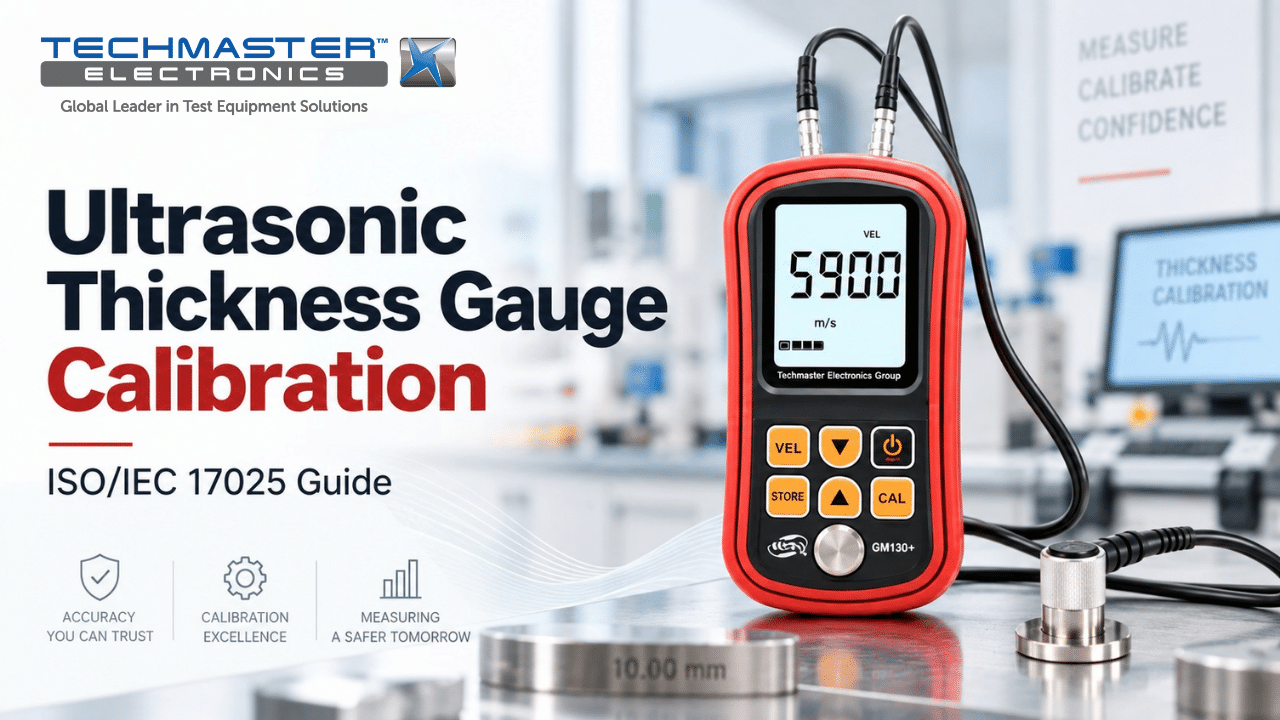
Ultrasonic Thickness Gauge Calibration: ISO/IEC 17025 Guide
Ultrasonic Thickness Gauge Calibration: ISO/IEC 17025 Step-by-Step Guide In non-destructive testing (NDT), asset inspection, and...
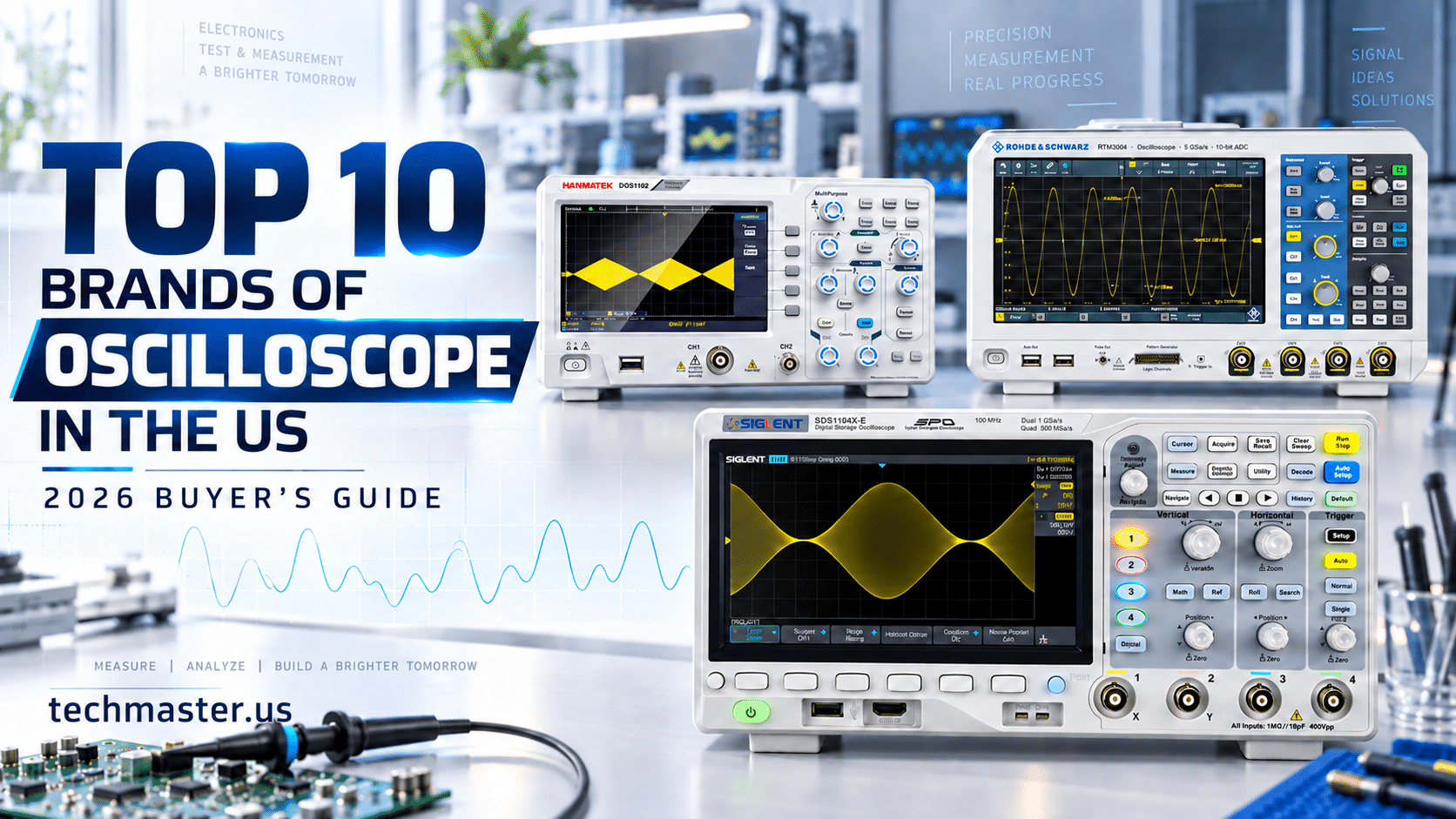
Top 10 Brands of Oscilloscope in the US (2026 Buyer’s Guide)
Top 10 Brands of Oscilloscope in the US: 2026 Buyer’s Guide to the Best Oscilloscope...
Frequency Counter Calibration: Why the Time Base Decides Your Accuracy
A frequency counter is only as accurate as its internal time base. Learn how ISO/IEC...
Signal Generator Calibration Guide: What’s Verified, Cost, and How Often
TL;DR: Signal generator calibration verifies frequency accuracy, output level accuracy, level flatness, modulation accuracy, spectral...