
TL;DR: Six steps, in order: inventory every instrument, classify by criticality, set intervals with a written rationale (12 months as the default), choose labs and certificate levels, build the recall system, and write the procedure and keep records. Most programs fail at step one, you cannot control instruments nobody has counted, and uncounted instruments are the most common audit finding.
This is the post for the company that just won a customer requiring ISO 9001 evidence, or the hardware startup whose bench has quietly grown to forty instruments. Building the program is a week of work; retrofitting it during an audit is considerably worse.
The six steps
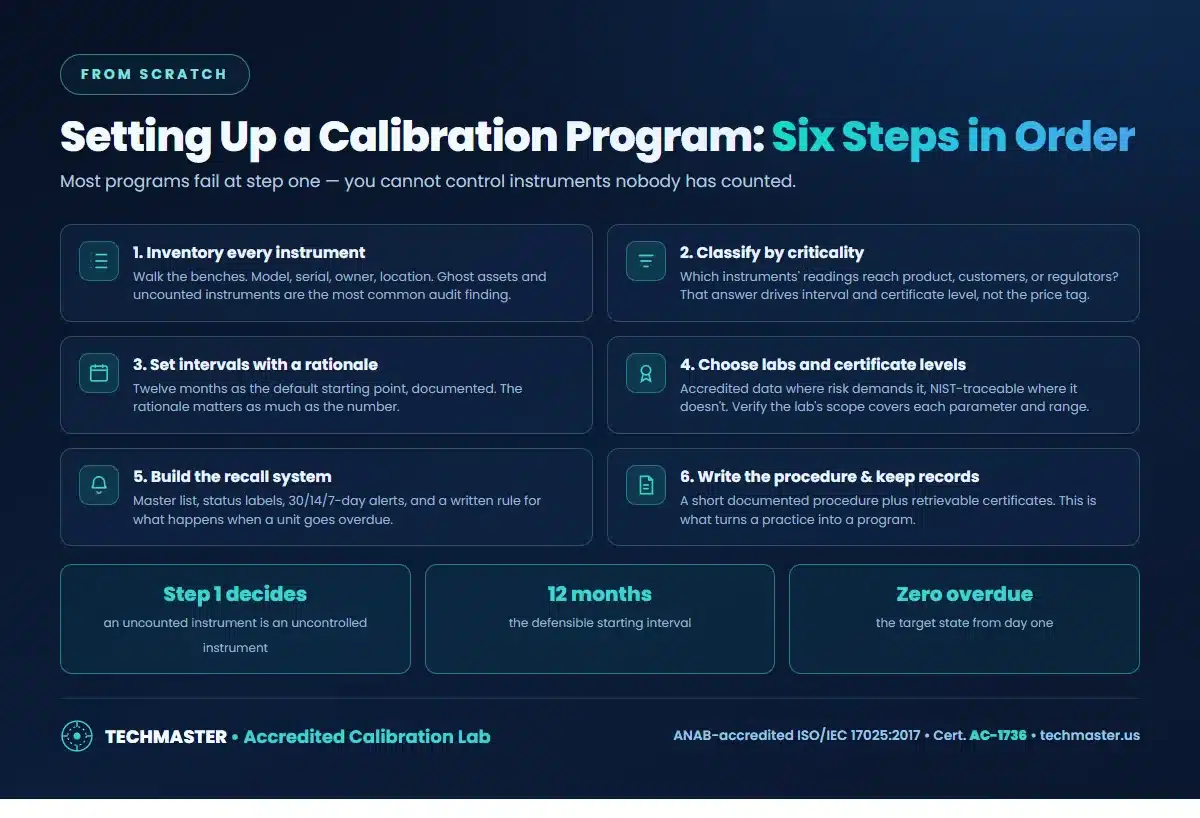
1. Inventory. Physically walk the benches; don’t work from purchasing records. Capture model, serial, owner and location. 2. Classify by criticality, the question is whose decisions the readings touch, not what the instrument cost. 3. Set intervals at 12 months with documented reasoning, per the interval guide. 4. Choose labs and certificate levels: accredited data where risk requires it, NIST-traceable where it doesn’t (what accredited buys you), and always verify the lab’s scope covers your parameters and ranges. 5. Build the recall system, all six components are in how to build a recall system. 6. Document it: a short procedure plus retrievable certificates is what turns a practice into a program.
What the standards actually require
Less than people fear, and more specifically than they expect. ISO 9001 clause 7.1.5 wants identified instruments, defined intervals, traceable calibration and protected records. AS9100, ISO 13485 and FDA 820.72, and IATF 16949 each add requirements on top, supplier evidence, product-impact analysis, MSA. Build to your strictest customer’s requirement once rather than rebuilding later.
Budget and first-year practicalities
Price the fleet by instrument class ($50–800+ market range depending on type) using the budget guide, and reserve 10–15% for out-of-tolerance findings and repairs, a first-year program discovers things. Stagger the first cycle so the whole bench doesn’t leave at once, and decide up front how used and rented instruments enter the system. Spreadsheet or software: the feature guide covers the threshold.
Frequently asked questions
How do I start a calibration program from scratch?
Inventory every measuring instrument first, model, serial, owner, location. Then classify each by criticality, set an interval with a written rationale (12 months is the defensible default), choose your laboratories and certificate levels, build a recall system with alerts and an overdue rule, and write a short documented procedure with retrievable records.
Which instruments need to be in the calibration program?
Any instrument whose readings are used to accept product, verify a specification, support a customer deliverable, or feed a regulatory record. Instruments used only for rough troubleshooting can be labeled ‘indication only’ and excluded, but that decision must be documented and the label must be on the instrument.
What is a reasonable first interval if we have no history?
Twelve months, documented as the starting point pending as-found evidence. Manufacturer recommendations, the instrument’s criticality, and its operating environment can justify shorter. Extending beyond 12 months should wait until you have several cycles of in-tolerance as-found data to support it.
Do we need software to run a calibration program?
Not at first. Below roughly 50 instruments, a disciplined spreadsheet with owner, interval, due date and a weekly review passes audits. Dedicated software becomes worthwhile with multi-site fleets, larger counts, or regulated environments that require audit trails and electronic signatures.
The bottom line
Count everything, classify honestly, set defensible intervals, and put the recall system in before the first due date arrives. Then get audit-ready with the audit preparation checklist, and choose your lab with the 12-point checklist.
Get an accredited calibration quote
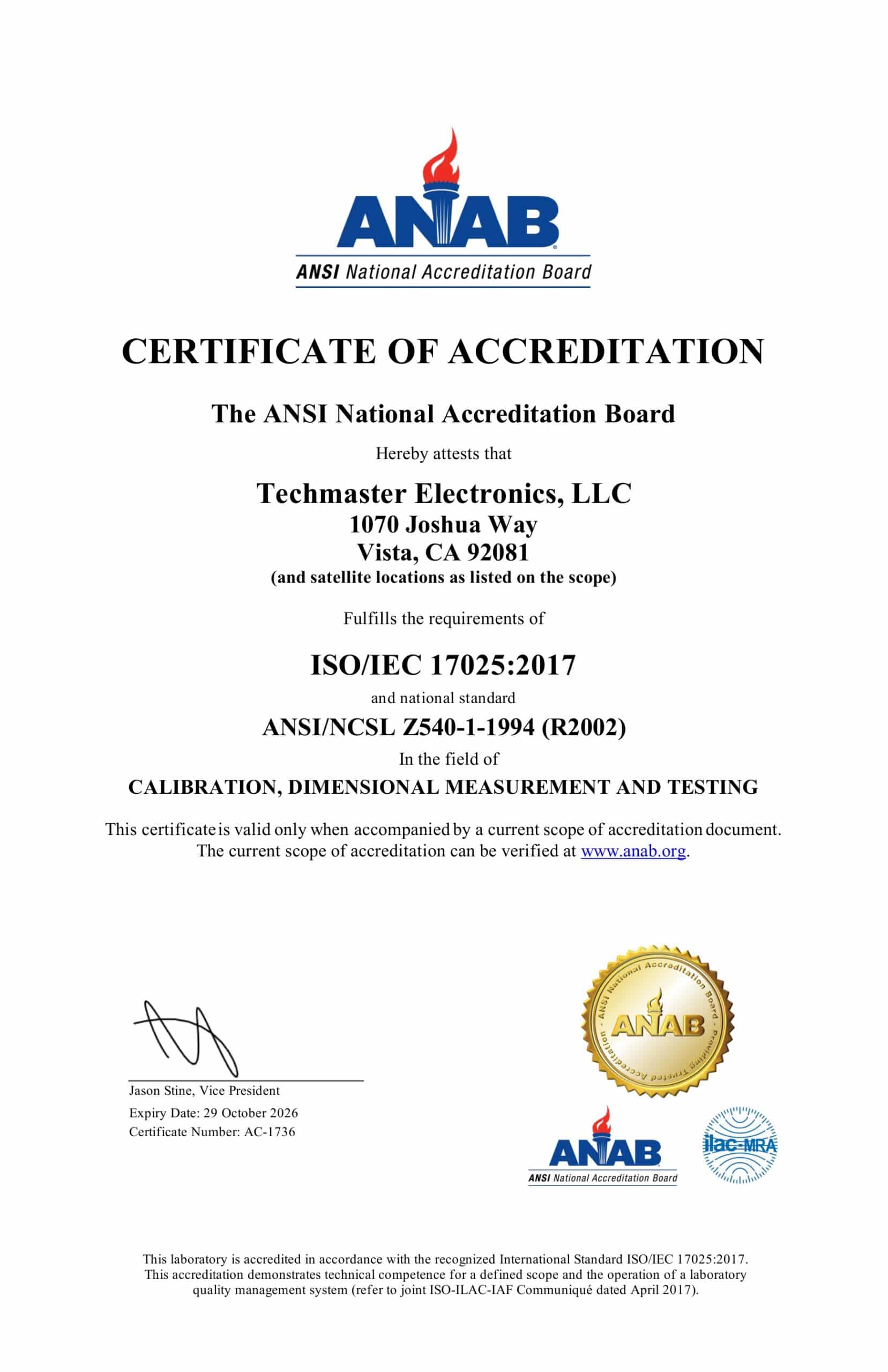
ANAB-accredited ISO/IEC 17025:2017 (Cert. AC-1736) • 5 US labs • 5-day standard, 1–2 day expedite • in-lab or on-site.
Request a quote
Khanh Nguyen is the Marketing Manager at Techmaster Electronics, a B2B marketing leader covering the test, measurement, and ISO/IEC 17025 accredited calibration industry across the US and Vietnam markets.