
AC Power Source Calibration: Ensuring Measurement Integrity
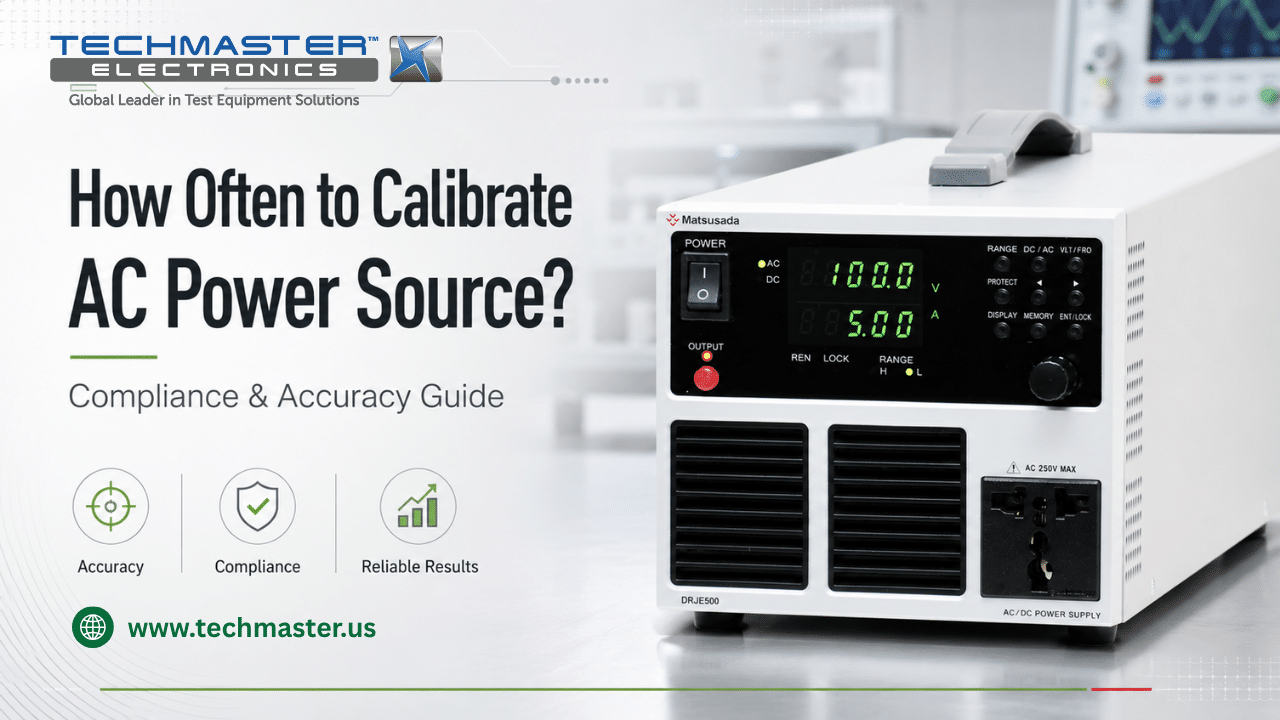
Maintaining the accuracy of an AC power source is critical for engineers and quality managers who depend on stable voltage, frequency, and harmonic output during product testing. In fact, many organizations ask how often calibrate ac power source equipment should be checked. The answer depends on the application’s risk level and the long-term stability of the instrument. Without regular calibration, electronic drift can introduce small measurement errors. As a result, these errors may lead to non-conforming products or regulatory issues.
1. Why Calibration Frequency Matters: Risks and Benefits
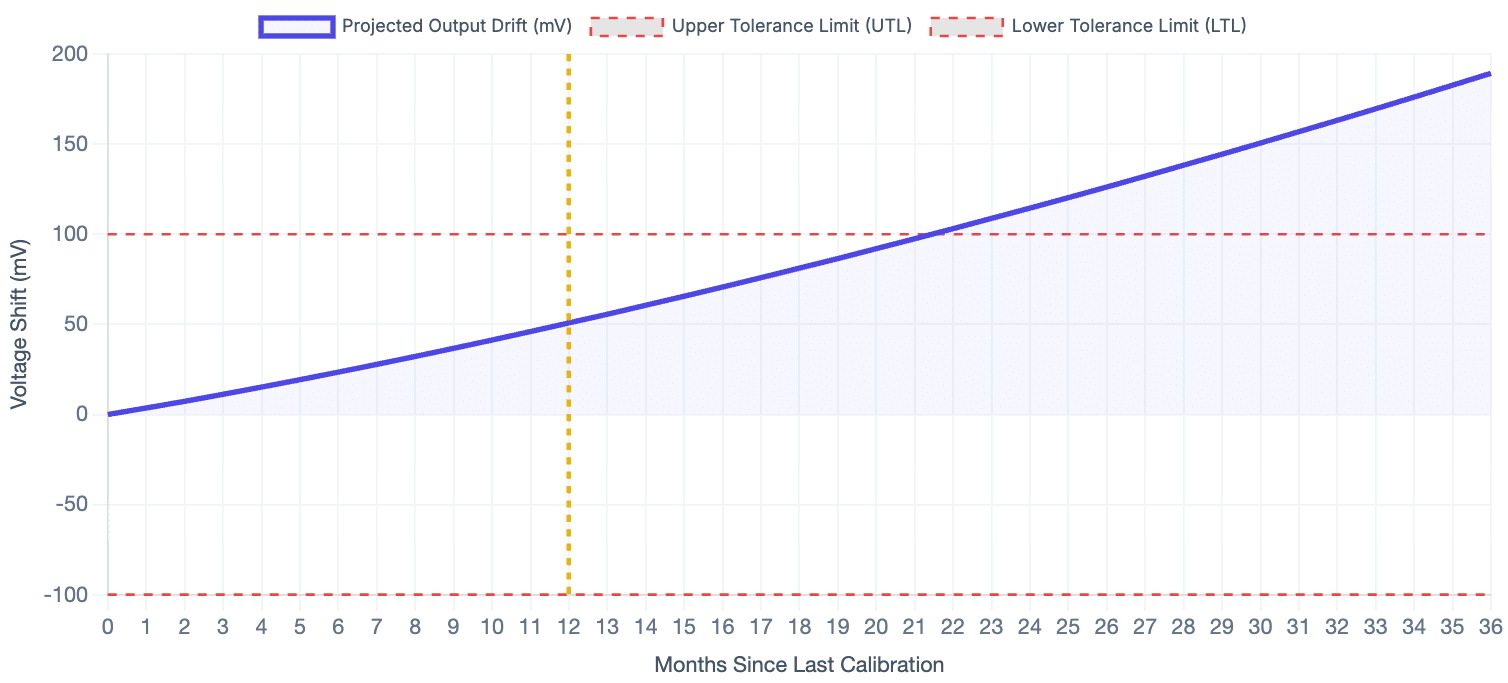
Voltage Output Drift Curve & Tolerance Limits
Physical reference drift of continuous AC output over time relative to the Upper Tolerance Limit (UTL) and Lower Tolerance Limit (LTL).
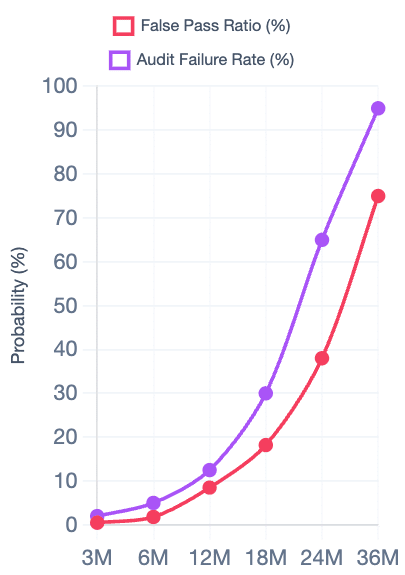
Test Quality & Compliance Risk
Projected rate of critical test errors (False Passes) and probability of failing external ISO audit check-points.
1.1. What are the consequences of delayed calibration?
Failure to adhere to a strict calibration interval leads to “electronic drift,” where internal voltage references and output circuits shift from their nominal values due to thermal stress, component aging, and usage intensity. If this drift goes uncorrected, you face the following critical risks:
-
Invalid Test Data: Measurements become unreliable, leading to false passes or failures in product validation.
-
Regulatory Non-Compliance: Auditors may reject test reports that lack current, NIST-traceable calibration certificates, potentially halting your production or certification process.
-
Increased Rework Costs: Latent errors in output can damage sensitive Devices Under Test (DUTs), leading to costly repairs and production delays.
1.2. Benefits of adhering to your calibration schedule
Maintaining a disciplined calibration program ensures that your equipment remains within its specified accuracy tolerances, providing a defensible technical foundation for your quality management system. By calibrating according to a defined interval, you benefit from:
-
NIST Traceability: Every measurement is linked back to national standards, satisfying the requirements of ISO/IEC 17025.
-
Audit Readiness: You maintain an unbroken chain of documentation that satisfies stringent regulatory bodies and high-stakes aerospace or medical supply chains.
-
Operational Confidence: You ensure that your power source provides consistent, repeatable output, allowing your team to focus on innovation rather than troubleshooting measurement discrepancies.
2. The Calibration Pillar: ISO/IEC 17025 Compliance
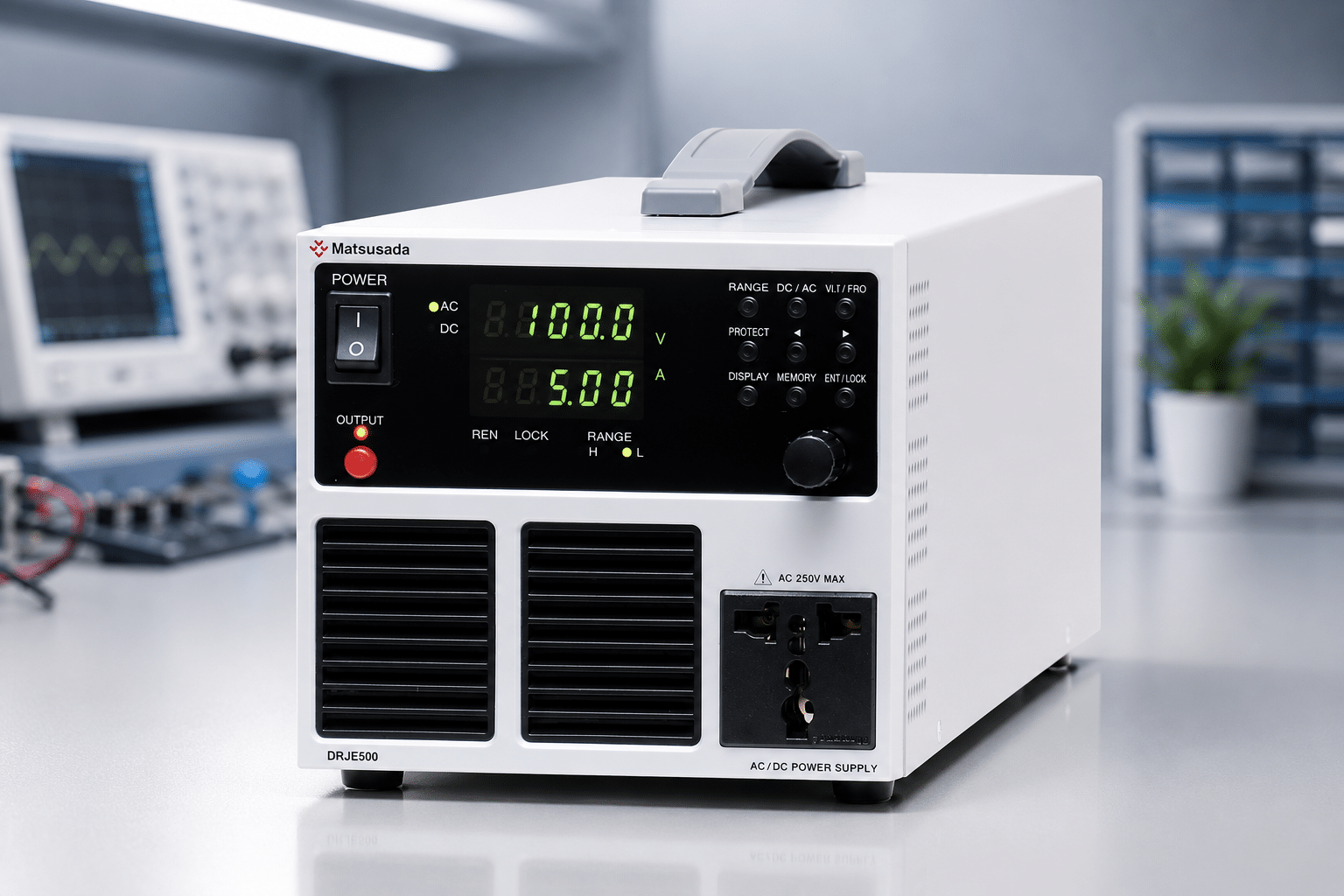
Why is ISO/IEC 17025 essential for electrical calibration?
ISO/IEC 17025 serves as the global standard for calibration laboratories. Specifically, it ensures that measurements remain accurate and traceable to national standards. When you work with an accredited laboratory, you receive documented measurement uncertainty data. This information helps satisfy auditors and strengthen your quality management system.
Moreover, ISO/IEC 17025 requires laboratories to follow controlled procedures and maintain technical competence. Therefore, organizations can trust the validity of their calibration results.
3. How to Determine Your Calibration Interval
How to identify the optimal calibration frequency for your power source?
- Review Manufacturer Recommendations: First, review the maintenance interval recommended by the manufacturer.
- Assess Operational Environment: Next, evaluate environmental conditions. For example, vibration, heat, and heavy use can accelerate drift. Therefore,you may need a shorter calibration interval.
- Evaluate Risk Impact: Then, consider the impact of measurement errors. If your tests support safety-critical products, a six-month or annual interval is often the best choice.
- Monitor Performance Trends: Finally, review previous calibration reports. If the equipment consistently remains within tolerance, you may justify a longer interval based on historical data.
Techmaster US: Expert Metrology Services
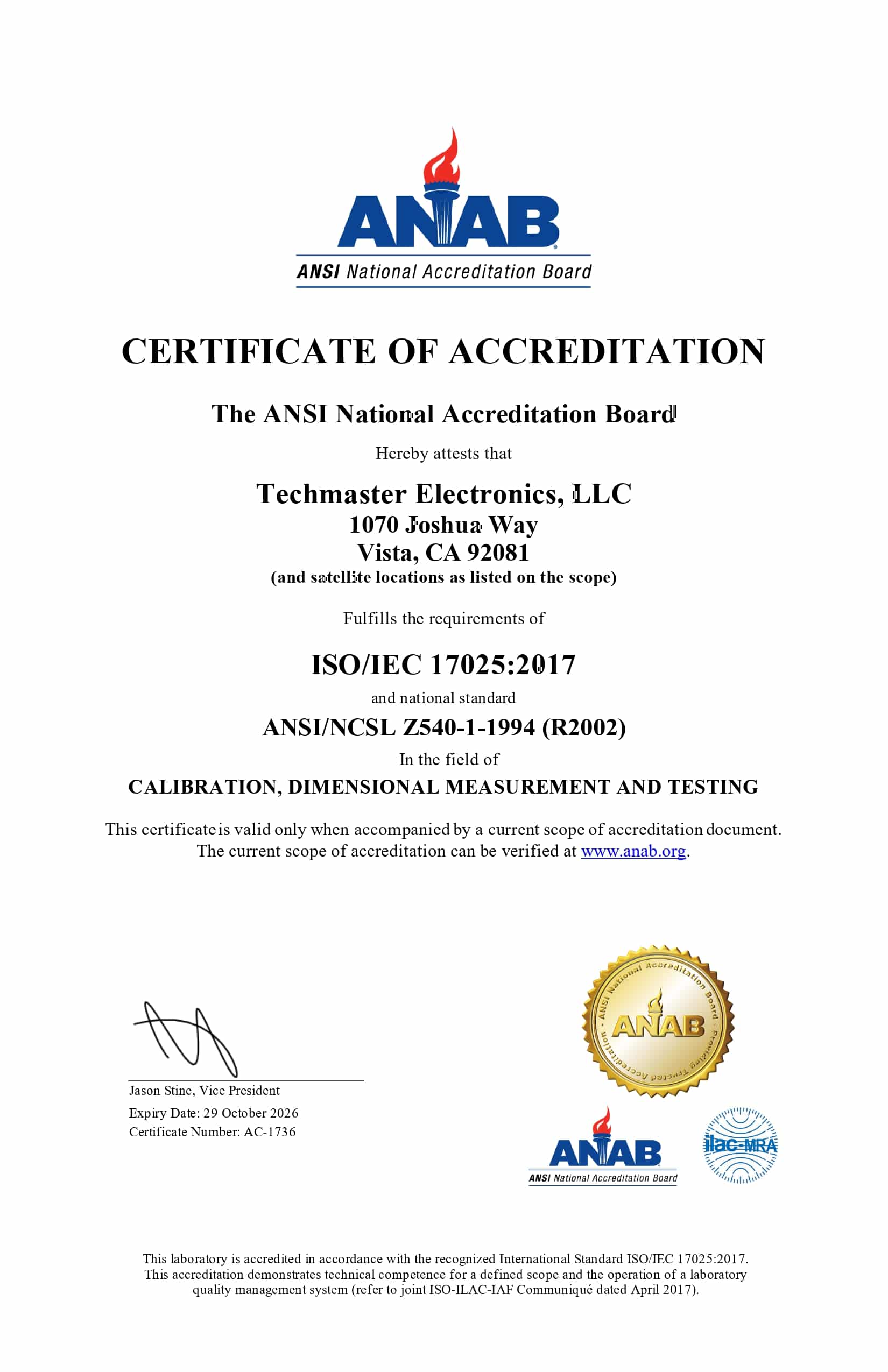
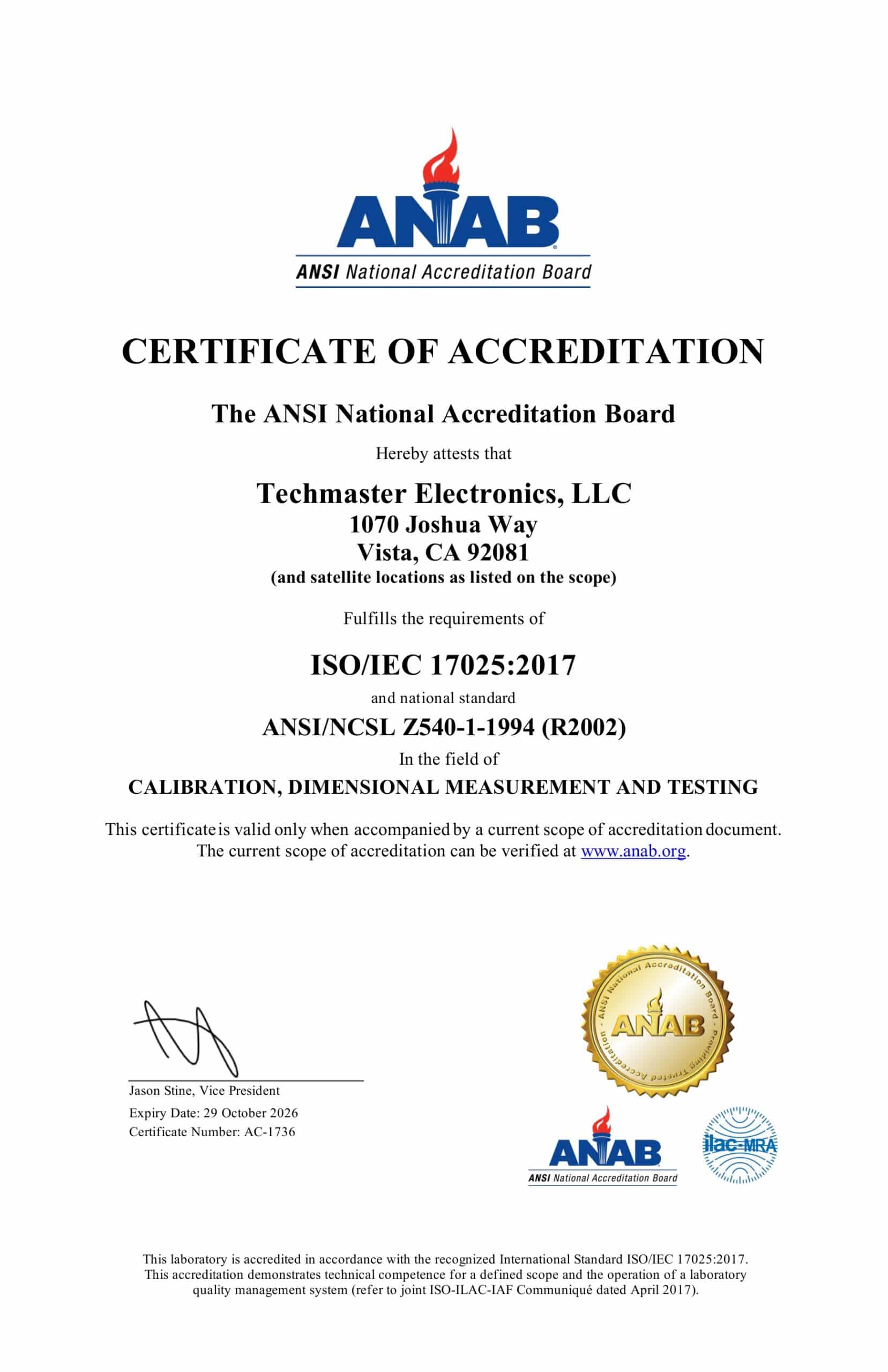
Techmaster Electronics, LLC is an ISO/IEC 17025 accredited calibration laboratory (ANAB cert AC-1736) founded in 1989. Today, we support manufacturers through five accredited laboratories located in California, Florida, Texas, and North Carolina.
In addition, we specialize in high-accuracy electrical calibration using NIST-traceable standards. We provide both laboratory and on-site services. As a result, customers can reduce downtime while maintaining compliance.
Why Trust Techmaster US?
- Full ISO/IEC 17025 Accreditation: Our team follows the ANAB cert AC-1736 quality framework. Therefore, every calibration service meets strict industry requirements.
- On-Site Capability: Additionally, we perform calibration directly at your facility. This approach helps reduce equipment downtime and speeds up verification activities.
- Expertise Across Disciplines: Beyond electrical calibration, we support dimensional and thermodynamic measurements. As a result, customers can work with a single calibration provider.
Whether you need routine calibration or a custom service plan, contact Techmaster US today to discuss your requirements.
Frequently Asked Questions (FAQs)
1. How often should I calibrate my AC power source?
In most cases, an annual calibration interval provides sufficient accuracy and NIST traceability. However, equipment used for critical testing or heavy workloads often requires calibration every six months.
2. What happens if I skip AC power source calibration?
Skipping calibration allows electronic drift to continue unchecked. Consequently, measurement errors may accumulate over time. As a result, product testing can fail, audit findings may increase, and compliance risks can grow.
3. Does calibration cover harmonic distortion?
Yes. In addition to voltage and frequency verification, professional calibration often includes total harmonic distortion (THD) testing. Therefore, technicians can identify degradation within filtering or output circuitry.
4. Can Techmaster US perform on-site calibration for my equipment?
Yes. Techmaster Electronics provides ISO/IEC 17025 accredited on-site calibration services. Furthermore, our technicians bring high-accuracy standards directly to your facility. As a result, you can verify equipment performance while keeping production activities running smoothly.
5. How do I determine the right calibration interval for my facility?
To determine the optimal frequency, review the manufacturer’s recommendations, assess your operational environment (e.g., high-vibration or high-temperature areas), and evaluate the business risk of measurement errors. If your test results support safety-critical applications, a more frequent cycle is usually necessary to maintain the integrity of your data.
6. What proof of calibration does Techmaster US provide?
Techmaster US provides comprehensive, ISO/IEC 17025 compliant certificates for every calibration performed. These certificates include proof of NIST-traceability, detailed as-found/as-left data, and a formal statement of measurement uncertainty, ensuring full compliance for your quality management system and external audits.
7. Does calibration ensure my equipment meets EMC standards?
Yes, calibrating your AC power source is a fundamental step in ensuring your equipment can reliably test to EMC standards. By validating voltage accuracy, frequency stability, and waveform purity (THD), calibration ensures the power conditions used during your EMC testing are precise, reproducible, and compliant with international test requirements.
AC Power Source Interval Planner & Risk Analyzer
An advanced mathematical simulator designed to model voltage output drift, calculate test error probabilities (Beta Risk), and optimize ISO/IEC 17025 calibration frequencies.

Khanh Nguyen is the Marketing Manager at Techmaster Electronics, a B2B marketing leader covering the test, measurement, and ISO/IEC 17025 accredited calibration industry across the US and Vietnam markets.