
Metrology guide · ISO/IEC 17025 · ANAB-accredited
Sound Level Meter Calibration
Sound Level Meter Calibration verifies a Sound Level Meter against NIST-traceable standards under ISO/IEC 17025. Techmaster performs a documented multi-point check, reports measurement uncertainty, and issues an ANAB-accredited certificate — in-lab or on-site across the USA.
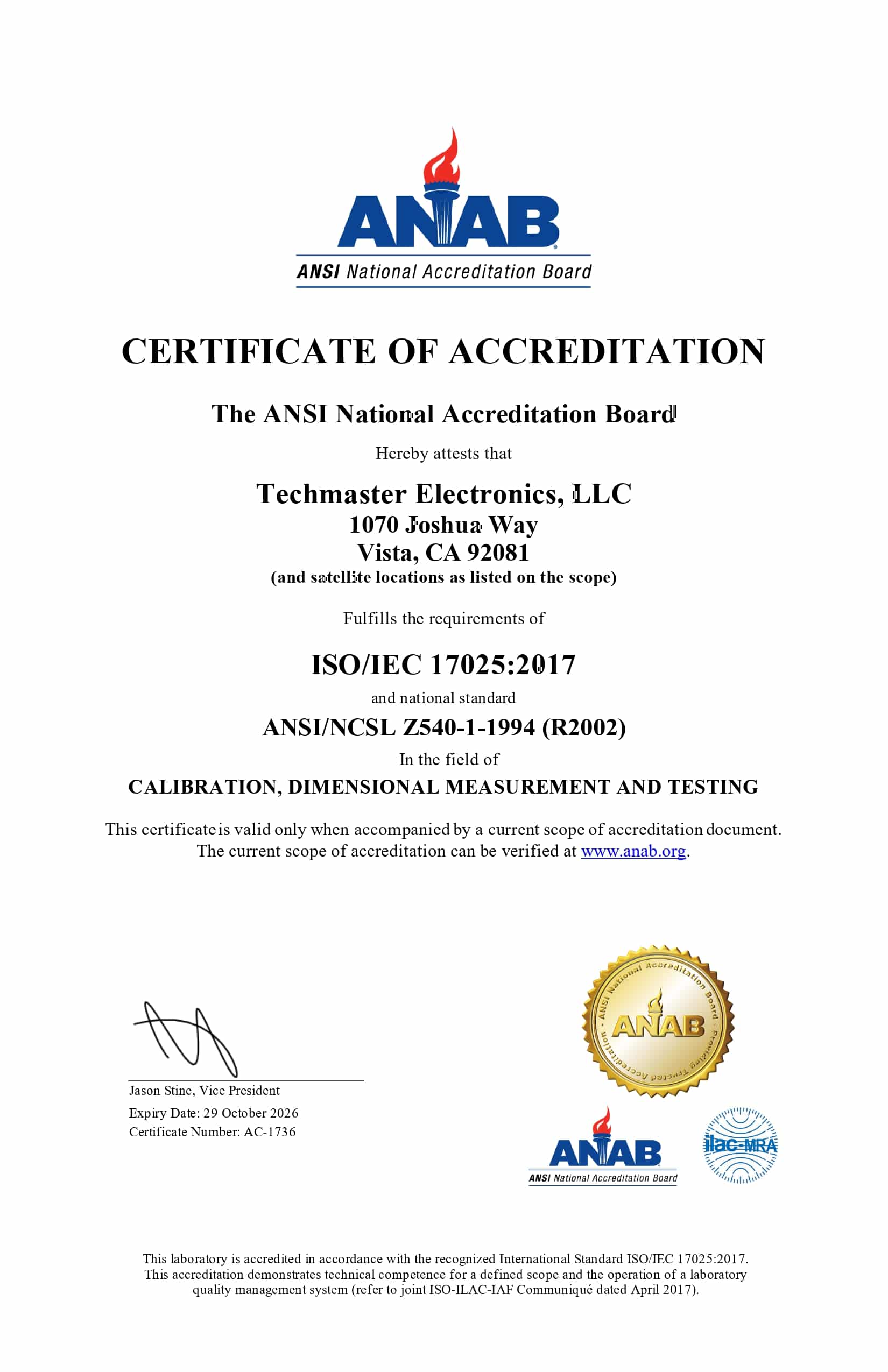
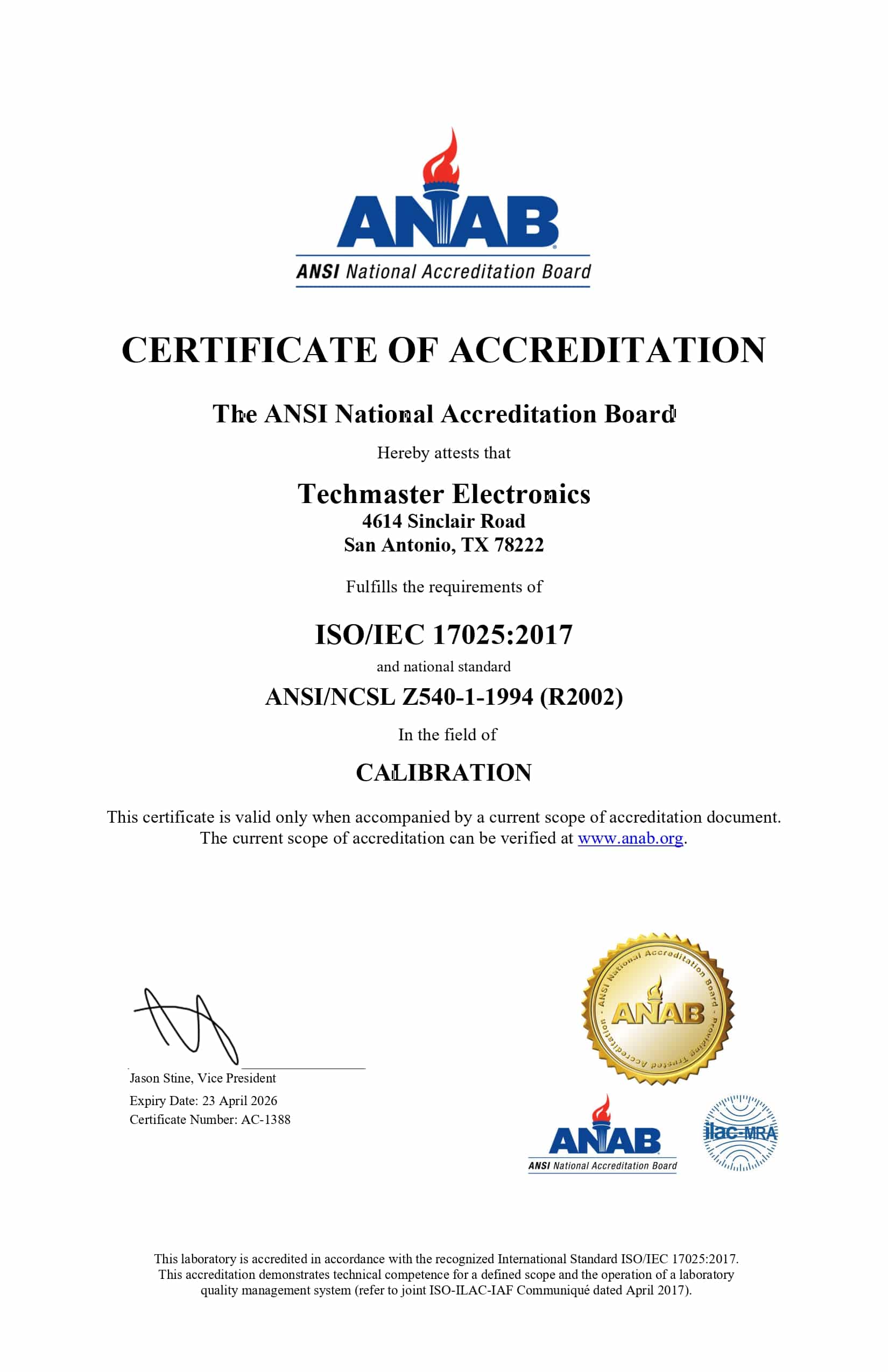
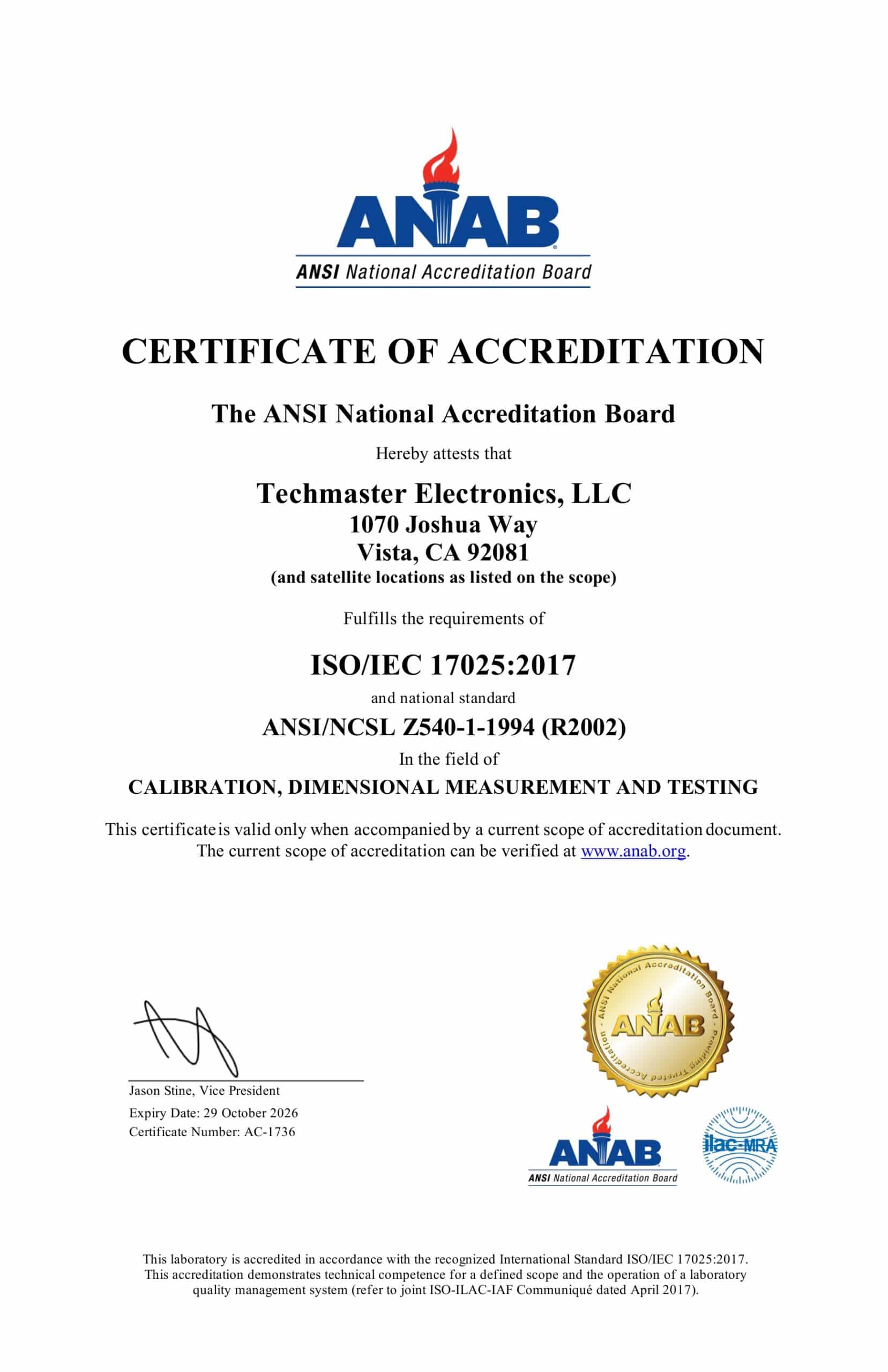
ANAB accredited ISO/IEC 17025 NIST traceable
ISO 17025Accredited method
NISTTraceability
12 moTypical interval
ANABAccreditation
In this guide
Accuracy across the range
Typical as-found results: the indicated error at each test point stays inside the acceptance tolerance band, with measurement uncertainty reported per point.
How Sound Level Meter calibration works
- Intake & visual inspection
- Environmental stabilization
- As-found measurement
- Comparison to NIST-traceable standards
- Adjustment if required
- As-left results & certificate
Your calibration, covered
In-lab calibrationAccredited bench service with pickup
On-site calibrationWe calibrate at your facility
Expedited turnaroundRush options to cut downtime
Accredited certificateANAB ISO 17025 with uncertainty
In-lab vs on-site calibration
In-lab calibration
- Accredited bench with full reference standards
- Best achievable measurement uncertainties
- Pickup & return logistics handled
- Ideal for precision and reference work
On-site calibration
- We calibrate the Sound Level Meter at your facility
- No shipping risk or transit downtime
- As-found data captured before any move
- Ideal for fixed, large or sensitive assets
In-depth guide
Sound level meter calibration is key to getting accurate readings in different industries. In this article, we’ll look at why it’s important and how regular calibration keeps your equipment running smoothly.

What is sound level meter calibration?
Calibration of a sound level meter is the process of adjusting the device to ensure its accuracy in measuring sound levels. This involves comparing the device’s readings against a known reference standard, typically in a controlled environment, to correct any discrepancies. Calibration ensures that the sound level meter gives precise, reliable measurements that comply with international standards and regulations. It is a critical maintenance task for professionals in industries like construction, manufacturing, and environmental monitoring.
Why is calibration necessary?
Ensuring Measurement Accuracy
Calibration is critical for maintaining the precision and reliability of a sound level meter. It involves adjusting the device to a known reference standard, ensuring that the measurements it provides are accurate. Without regular calibration, the meter’s readings may drift over time, leading to inaccurate data. Inaccurate measurements can have serious consequences, especially in industries where precise sound level measurements are crucial for safety, compliance, and operational efficiency. Ensuring that your meter is calibrated guarantees that it delivers consistent, trustworthy results.Compliance with Safety Standards and International Regulations (ISO, IEC)
Many industries are subject to stringent safety and environmental regulations that require adherence to international standards, such as those set by ISO (International Organization for Standardization) and IEC (International Electrotechnical Commission). These regulations dictate that sound level meters must be regularly calibrated to ensure their accuracy and reliability. Calibration ensures that the equipment remains compliant with these standards, which is essential for avoiding regulatory penalties and maintaining safety in the workplace. Adherence to these regulations also helps demonstrate a commitment to quality and best practices in operational procedures.Prolonging Equipment Lifespan
Regular calibration not only ensures accurate measurements but also helps preserve the performance and longevity of the sound level meter. Over time, without proper maintenance and calibration, mechanical parts may wear down, and the internal components could lose their effectiveness. Regular calibration helps identify any issues early, minimizing the risk of unexpected breakdowns and reducing the need for costly repairs or replacements. By maintaining calibration schedules, you optimize the performance of the equipment, ensuring it operates at its best for a longer period, ultimately saving money on replacements and minimizing downtime.When should calibration be done?
- Based on Usage Frequency: Calibrate your sound level meter every 6 months to a year, depending on usage. This ensures continued accuracy.
- After Impact or Drop: If the meter drops or experiences impact, recalibrate immediately. Minor shocks can affect accuracy, so recalibration is vital.
- When Data Becomes Inconsistent: Inconsistent readings may indicate calibration issues. Recalibration restores the device to optimal accuracy, ensuring reliable results.
Long-Term Benefits
Minimizing Risks of Incorrect Measurements
Regular calibration significantly reduces the likelihood of inaccurate measurements, which can lead to unsafe conditions, regulatory violations, or flawed data. In industries where noise levels directly impact health, safety, and compliance, such errors can have serious consequences. By maintaining a consistent calibration schedule, you ensure that your sound level meter delivers reliable and precise readings, reducing risks and maintaining safety standards. This proactive approach helps mitigate potential liabilities, protects workers, and ensures regulatory compliance.Saving on Major Repair Costs
Regular calibration not only ensures the device’s accuracy but also helps identify and address minor issues before they escalate into costly problems. Over time, uncalibrated equipment can experience wear and tear that affects performance, potentially leading to expensive repairs or even the need for a full replacement. By investing in regular calibration, you maintain the sound level meter in optimal condition, extending its lifespan and avoiding the need for large-scale repairs. This preventative maintenance strategy saves money in the long run while ensuring your equipment functions as expected. Now that we’ve discussed the importance of calibration, it’s essential to understand the optimal times to perform it. Regular calibration ensures ongoing accuracy and prevents potential issues that could compromise your results. If you’re looking for guidance on selecting the best sound level meter for your needs, be sure to check out our next article on How to choose the right sound level meter for your requirements. This will help you make an informed decision and ensure you have the right tools for accurate measurements.
Boost Immunity Testing with ESD Simulators Calibration
June 25, 2025 | EMC-EMI
Metrology guide · ISO/IEC 17025 · ANAB-accredited Boost Immunity Testing with ESD Simulators Calibration… Boost...
25
Jun
Jun

EMI Receiver Calibration to Meet Compliance Needs
June 12, 2025 | EMC-EMI
Metrology guide · ISO/IEC 17025 · ANAB-accredited EMI Receiver Calibration EMI Receiver Calibration verifies a...
12
Jun
Jun
Frequently asked questions
What is Sound Level Meter Calibration?
Sound Level Meter Calibration is the documented comparison of a Sound Level Meter against NIST-traceable reference standards under ISO/IEC 17025, measuring its error and measurement uncertainty and confirming it performs within tolerance.
How often should a Sound Level Meter be calibrated?
Most quality systems calibrate a Sound Level Meter every 12 months, and sooner after repair, overload or heavy use. Follow the manufacturer specification and your ISO 9001/13485/AS9100 program.
What standards apply to Sound Level Meter Calibration?
Calibration is performed under ISO/IEC 17025 with NIST-traceable references and the relevant manufacturer specification. Techmaster is ANAB-accredited.
What is included on the certificate?
An ANAB-accredited ISO/IEC 17025 certificate with as-found and as-left results and the measurement uncertainty for each point.
Can you calibrate the Sound Level Meter on-site?
Yes. Techmaster offers in-lab calibration with pickup and on-site service across the USA to minimize downtime.
Need Sound Level Meter calibration?
ANAB-accredited, NIST-traceable, fast turnaround — in-lab or on-site across the USA.
Contact us for a quoteReferences & industry standards
- ISO/IEC 17025 testing & calibration laboratory requirements
- NIST calibration services and measurement traceability
- NIST Acoustics
- A2LA / ANAB accreditation for calibration laboratories
External standards bodies. Techmaster Electronics is an ISO/IEC 17025-accredited, NIST-traceable calibration laboratory.
