
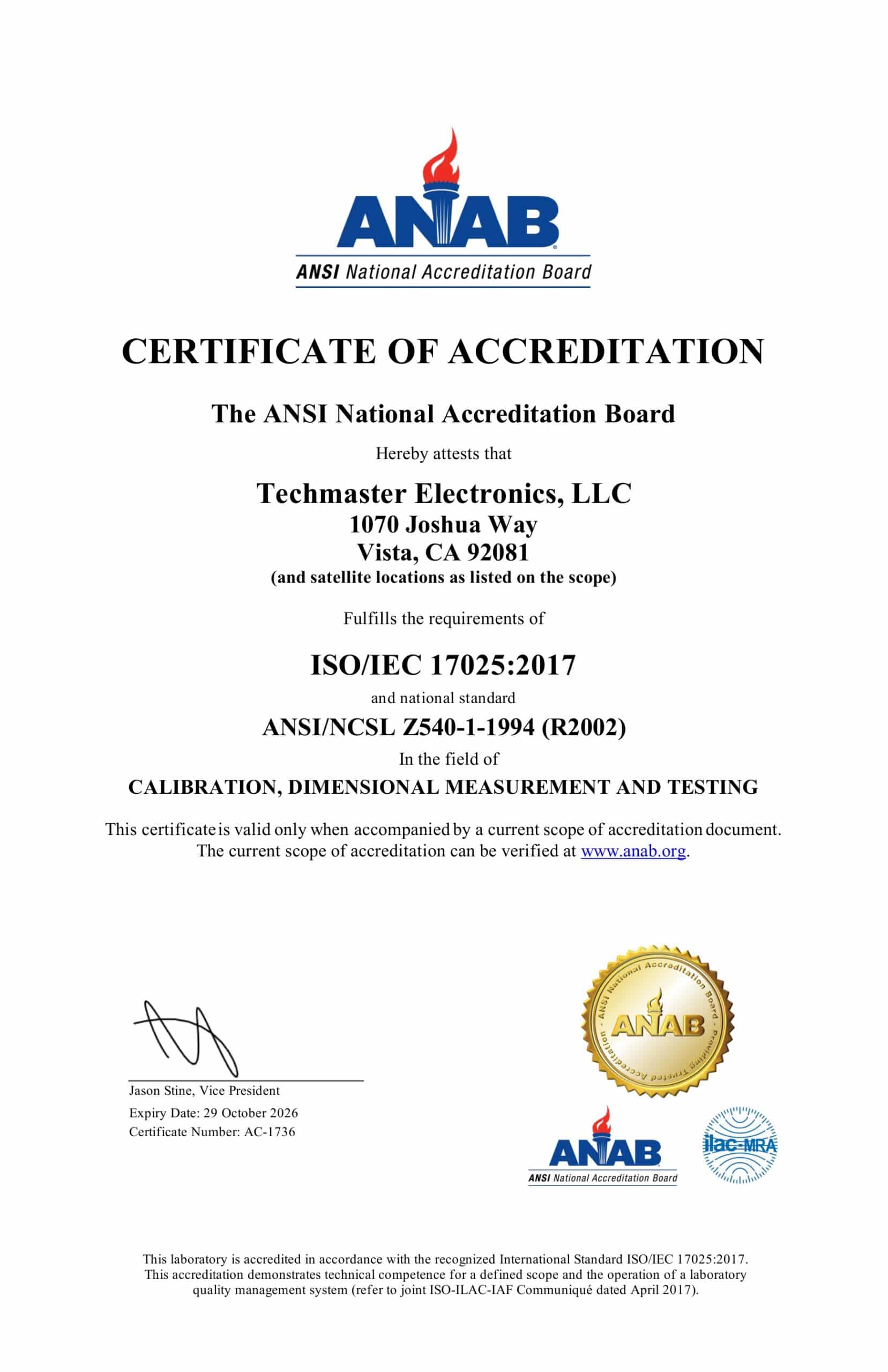
Temperature and Humidity Sensor Calibration…
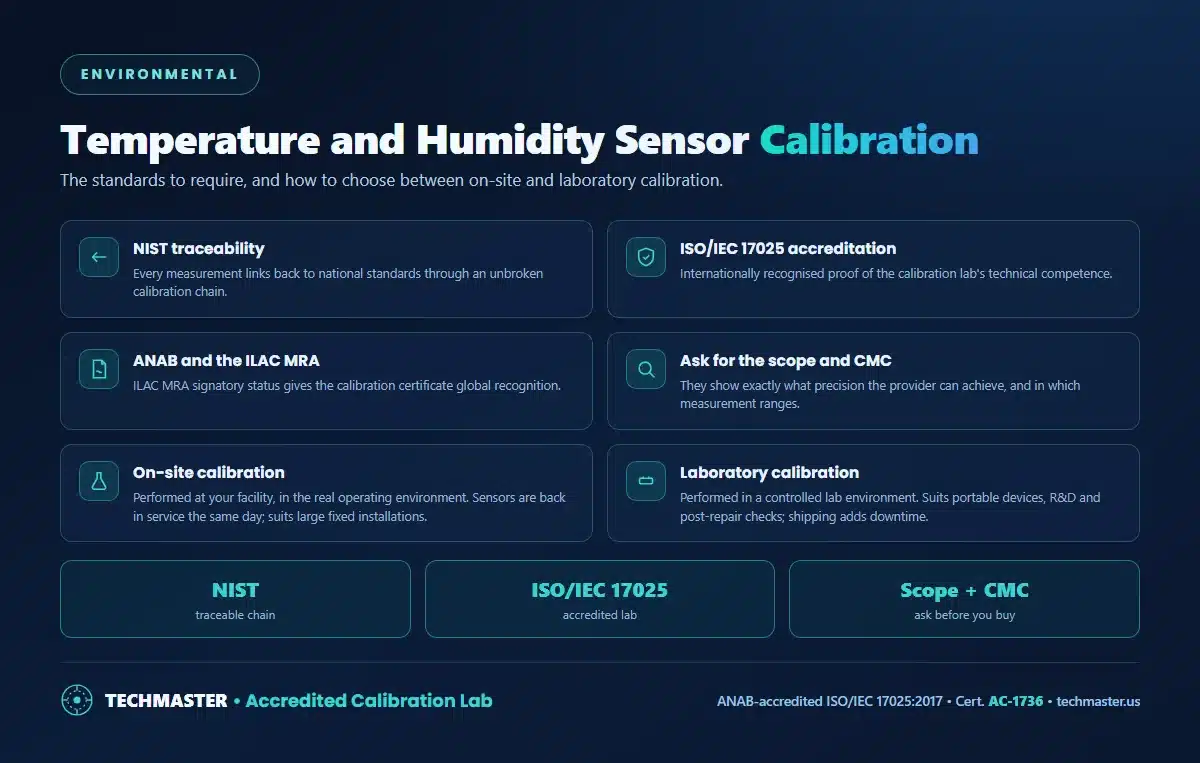
Why calibration intervals matter
How Temperature and Humidity Sensor calibration works
- Intake & visual inspection
- Environmental stabilization
- As-found measurement
- Comparison to NIST-traceable standards
- Adjustment if required
- As-left results & certificate
Your calibration, covered
In-lab vs on-site calibration
In-lab calibration
- Accredited bench with full reference standards
- Best achievable measurement uncertainties
- Pickup & return logistics handled
- Ideal for precision and reference work
On-site calibration
- We calibrate the Temperature and Humidity Sensor at your facility
- No shipping risk or transit downtime
- As-found data captured before any move
- Ideal for fixed, large or sensitive assets
In-depth guide
Introduction: The High Cost of a Small Error
Temperature and humidity sensor calibration might sound like a routine maintenance task, but consider this: What if your sensor is off by just 1°C?
In industries where precision is non‑negotiable, pharmaceuticals, food storage, cleanroom manufacturing, this small deviation can lead to spoiled batches, failed audits, costly downtime, and damaged trust.
According to MarketsandMarkets, the global calibration services market is projected to reach USD 6.3 billion by 2025, fueled by stricter regulations and the growing demand for high‑accuracy measurements.
Techmaster has been helping companies avoid these pitfalls for over 30 years, delivering ISO/IEC 17025 accredited calibration with full NIST traceability. Whether you manage a single lab or oversee a global supply chain, keeping your sensors accurate is a strategic safeguard, not just a maintenance checkbox.
Pro tip: Check your sensors every 6–12 months. It’s one of the simplest, most cost‑effective ways to prevent large‑scale quality and compliance issues.

Why Calibration Is More Than Just a Regulatory Requirement
The Silent Guardians of Quality
Temperature and humidity sensors are the invisible sentinels of your quality system. In different sectors, they safeguard critical processes:
-
Pharmaceutical manufacturing – Ensuring vaccine potency and stability.
-
Food processing and cold chain logistics – Protecting consumer safety by preventing spoilage.
-
Cleanroom operations – Maintaining strict environmental control for electronics and biotech production.
Even modern IoT‑enabled devices experience sensor drift over time. Factors like temperature cycling, humidity, vibration, and long‑term wear can push them out of tolerance. Without calibration, these small shifts can cascade into major quality issues.
When Small Errors Become Big Problems
Consider this real‑world scenario:
A pharma company monitored its cold storage with high‑end sensors but skipped calibration for over 18 months. One unit drifted by just 1.5°C. On reports, all seemed fine; in reality, the storage temperature fell outside acceptable limits for several weeks.
The fallout:
-
Entire product batch quarantined and destroyed.
-
Disruption to distribution schedules.
-
Damaged credibility with both regulators and clients.
The tangible losses were significant, but the cost of opportunity, missed contracts, delayed launches, and brand damage, was far greater.
Beyond Compliance: The ROI of Calibration
Regular calibration delivers a measurable return on investment:
-
Waste prevention – Minimize product loss, rework, and wasted labor.
-
Audit readiness – Pass inspections without costly last‑minute fixes.
-
Decision accuracy – Trust your data for process optimization.
NIST studies confirm: Over 80% of uncalibrated instruments drift out of tolerance within a year.

Choosing the Right Calibration Approach: At a Glance
Selecting the right calibration approach isn’t just about convenience, it’s about balancing accuracy, downtime, compliance, and ROI.
While both on‑site and laboratory calibration aim for the same end goal, accurate, reliable measurements, the path to get there can look very different.
Here’s a side‑by‑side comparison to help you decide which works best for your needs:
| Criteria | On‑Site Calibration | Laboratory Calibration |
|---|---|---|
| Service Location | Performed at your facility | Performed at provider’s lab |
| Downtime Impact | Minimal – sensors back in service same day | Longer – shipping & scheduling add downtime |
| Environmental Conditions | Real‑world operating environment | Controlled lab environment |
| Best For | Large fixed installations, critical uptime environments | Portable devices, R&D, post‑repair checks |
| Compliance Level | Can be ISO/IEC 17025 accredited (ask your provider) | Can be ISO/IEC 17025 accredited |
| Operational Disruption | Very low | Moderate – depends on shipping time |
| Cost‑Efficiency | High – no extra logistics | Variable – may involve shipping & handling |
| Example Use Case | Hospital cold storage sensors, cleanroom environmental monitoring | Precision lab thermometers, R&D humidity probes |
How to Approach Temperature and Humidity Sensor Calibration
Choosing how and where to calibrate is as important as the calibration itself.
On‑Site Calibration
A trained technician performs calibration directly at your facility.
Advantages:
-
Reduced downtime – Your equipment stays in place and returns to service immediately.
-
Real‑world validation – Sensors are tested in their actual operating environment.
-
Ideal for: Large systems, fixed installations, or environments that can’t afford interruptions.
Techmaster difference: Few providers offer ISO/IEC 17025 accredited calibration on‑site. Techmaster does, delivering accredited results without equipment leaving your premises.
Laboratory Calibration
Performed in a controlled lab environment with advanced reference equipment.
Advantages:
-
Stable conditions – Eliminate environmental variability for ultra‑precise work.
-
Extended capabilities – Access to a wider range of reference standards.
-
Best for: Portable sensors, R&D instruments, and post‑repair verification.
Real‑World Example: Minimizing Downtime in Healthcare
A large hospital relied solely on lab calibration for environmental monitoring. Each cycle meant packing, shipping, and waiting days for return. During that downtime, they had to rely on backup equipment, less reliable and less convenient.
Switching to Techmaster’s ISO 17025 on‑site service cut downtime by 50%, kept monitoring continuous, and reduced operational stress. That’s real ROI without adding cost overhead.
Standards That Protect Your Compliance
If your provider can’t demonstrate traceability and recognized accreditation, your compliance and quality risks grow exponentially.
Key Standards to Require
-
NIST Traceability – Ensures all measurements link back to recognized national standards through an unbroken calibration chain.
-
ISO/IEC 17025 Accreditation – Internationally recognized proof of technical competence for calibration labs.
-
ANAB Accreditation – ILAC MRA signatory status for global recognition of your calibration certificates.
Pro Tip: Always ask for your provider’s Scope of Accreditation and review their Calibration and Measurement Capability (CMC) data. This tells you exactly what precision they can achieve and in which measurement ranges.
Why This Matters for Audits
Regulators and customers increasingly demand documented, traceable proof of calibration. Certificates from non‑accredited sources may not stand up in:
-
FDA inspections.
-
International supply chain audits.
-
High‑value customer tenders.
By working with an ISO/IEC 17025 accredited provider, you ensure your calibration documentation will pass scrutiny anywhere in the world.
Digital Tools That Make Compliance Easy
Calibration isn’t just about accuracy, it’s also about managing the process efficiently.
The Techmaster Portal
Techmaster’s online portal turns calibration management from a headache into a efficient process:
-
24/7 access to your calibration certificates.
-
Automatic alerts before your next due date.
-
Centralized equipment tracking for all your assets.
This reduces admin time, eliminates spreadsheet errors, and keeps your team audit‑ready year‑round.

Why Techmaster Stands Out
Decades of Proven Expertise
With over 30 years in calibration, Techmaster has built trust with clients across industries, pharma, aerospace, manufacturing, healthcare, and more.
Their global network of labs in the USA, Mexico, Thailand, and Vietnam means they can support local and multinational operations alike.
A Complete Calibration Ecosystem
-
Calibration – ISO/IEC 17025 accredited, on‑site or in‑lab.
-
Repair – Restore failed instruments without changing vendors.
-
Sales & Rentals – Keep your operations moving even during service.
This one‑stop approach minimizes complexity and maximizes operational uptime.
Protecting ROI Through Reliability
The true cost of poor calibration isn’t the service fee, it’s:
-
Unexpected downtime that halts production.
-
Regulatory penalties and loss of certification.
-
Erosion of customer trust.
Regular, accredited calibration is an insurance policy against those risks.
Case Study: Turning Compliance Risk Into Strength
A major food processing plant discovered inconsistent sensor readings ahead of a scheduled inspection.
Techmaster deployed a same‑day on‑site team, corrected the drift, and provided ISO/IEC 17025 documentation.
Not only did the plant pass inspection, it also used the calibration data to optimize process control, improving yield and reducing waste.
Practical Tips for a Strong Calibration Program
-
Set a clear schedule – Most sensors need recalibration every 6–12 months.
-
Log and track equipment – Use a digital tool or portal to avoid missed dates.
-
Verify after repairs – Always recalibrate after maintenance or part replacement.
-
Keep records accessible – Certificates should be retrievable within minutes for audits.
-
Work with accredited providers – Non‑accredited calibration is a compliance gamble.
Final Thoughts: Quality and Compliance Go Hand in Hand
Temperature and humidity sensor calibration is more than a technical chore, it’s a cornerstone of operational excellence.
By partnering with a proven, accredited provider like Techmaster, you get:
-
Accurate readings you can rely on.
-
Compliance documentation that stands up globally.
-
Operational uptime without compromise.
-
Long‑term ROI through waste reduction and improved efficiency.
Next step: Visit the Techmaster Portal to manage your calibration program with ease, or contact us for expert guidance tailored to your industry.
How Often Calibrate a Battery Analyzer?
1How Often Should You Calibrate a Battery Analyzer? Calibration Intervals, Accuracy & Compliance Guide Knowing...
Oct
How to Use a Battery Analyzer: Setup, Operation & Best Practices
1 How to Use a Battery Analyzer: Setup, Operation & Best Practices In backup power...
Oct
Battery Analyzer Calibration: ISO/IEC 17025 Guide
1 Battery Analyzer Calibration: ISO/IEC 17025 Step-by-Step Guide In electric vehicle (EV) manufacturing, data center...
Sep

Bench DMM Calibration: What a 6½-Digit Multimeter Test Actually Covers
What an accredited 6½-digit bench DMM calibration actually covers: 40–100 test points, artifact calibration vs...
Sep

Rogowski Coil Calibration: Why Flexible AC Current Probes Drift
Rogowski coil calibration verifies the coil and its integrator as one system. Here is why...
Aug
How often to calibrate a Source Measure Unit?
1 Source Measure Unit Calibration: Intervals, Accuracy & Compliance Guide Knowing how often to calibrate...
Aug
How to Use a Source Measure Unit?
1 How to Use a Source Measure Unit: Setup, Operation & Best Practices For test...
Jul
Source Measure Unit Calibration: ISO/IEC 17025 Guide
1 What is Source Measure Unit Calibration and How Does It Ensure Accuracy? Techmaster Electronics,...
Jul
Frequently asked questions
What is Temperature and Humidity Sensor Calibration?
How often should a Temperature and Humidity Sensor be calibrated?
What standards apply to Temperature and Humidity Sensor Calibration?
What is included on the certificate?
Can you calibrate the Temperature and Humidity Sensor on-site?
Need Temperature and Humidity Sensor calibration?
ANAB-accredited, NIST-traceable, fast turnaround, in-lab or on-site across the USA.
Contact us for a quoteReferences & industry standards
- ISO/IEC 17025 testing & calibration laboratory requirements
- NIST calibration services and measurement traceability
- NIST Thermodynamic Metrology Group
- A2LA / ANAB accreditation for calibration laboratories
External standards bodies. Techmaster Electronics is an ISO/IEC 17025-accredited, NIST-traceable calibration laboratory.

Khanh Nguyen is the Marketing Manager at Techmaster Electronics, a B2B marketing leader covering the test, measurement, and ISO/IEC 17025 accredited calibration industry across the US and Vietnam markets.